
Lesson 1138: Establishing Self-Help and Mutual-Help Strategies

Duration:70 minutes
Topic Introduction:Self-help and mutual support strategies provide daily support in addition to professional assistance. Personal coping manuals, contact lists, and mutual support group rules can help people know what to do, who to turn to, and how to protect themselves during periods of instability. When learning, allow yourself to experience fluctuations, and allow yourself to rest first. The important thing is to ensure safety first, and then gradually restore your daily routine. Please reduce self-blame and allow understanding to gradually come to you.
○ Course Topic Audio
Lesson 1138: Establishing Self-Help and Mutual-Help Strategies
Click to view the read-aloud text
Today, let's gently explore "Establishing Self-Help and Mutual-Help Strategies." These strategies involve integrating recovery tools into daily life. Personal coping manuals, contact lists, crisis response procedures, and support group rules can all help prevent complete disorientation during periods of stress. When someone experiences a sudden shock, the body may react before the mind, entering a fight-or-flight, freeze-up, or appeasement state. These reactions are not intentional or signs of weakness, but rather the nervous system's effort to protect itself after danger. Therefore, when learning this section, please don't rush to judge yourself or others, and certainly don't demand that the injured person "recover immediately." A gentler approach is to first confirm the safety of the surrounding environment, then address sleep, eating, breathing, and interpersonal connections. If emotions arise, try to see the colors around you, feel your feet on the ground, and slowly exhale to let your body know the danger is gone. If you feel overwhelmed while listening, pause, look at three real objects around you, and feel your palms or soles. The most important aspect of trauma learning is not understanding everything at once, but reducing self-blame through understanding and gradually regaining a sense of choice in a safe environment. May you treat what you hear today as a gentle support, not a new source of pressure. Please keep today's practice within your comfort zone. If a word makes you nervous, don't force yourself to continue; pause, do some stretching, or bring your attention back to the present. Stopping gently is also an important form of self-protection. If you are with someone else, remember to stabilize yourself first. True support isn't about solving all their problems, but about providing clear, practical, and reliable companionship while respecting boundaries. This way, help won't become new pressure. May you gradually learn that traumatic reactions have their reasons, and recovery has its own rhythm. Today, just a little understanding, a little care, a little stability is enough to be appreciated. You can also write down a sentence after listening: What support do I need most right now? The answer can be small, such as quiet, companionship, hot water, rest, less information, or asking for help. Small choices can help restore direction to a chaotic life.

AI Healing Q&A
When answering questions, please describe your personal coping manual, support group rules, contact person, and daily support procedures as much as possible. You can also just mention the most difficult aspect right now. AI will help you break down the problem into smaller parts and stabilize the situation first. For matters involving diagnosis, medication, first aid, or crisis management, please refer to offline professional resources. Just do a little today. Don't force yourself. Safety first. You are not alone. You can pause now. May you be supported. Take it slow. Take care of yourself first. Just do a little today.

○ Music therapy guidance
When establishing self-help and mutual aid strategies, please choose a consistent piece of music as the starting signal for your personal coping manual. After playing it, review your contacts, reassurance actions, and mutual aid rules. A steady voice will remind you: I have steps, I have support, and I have the right to pause. Do just a little today. Don't force yourself. Put safety first. You are not alone. You can pause now. May you be supported. Take your time. Take care of yourself first. Do just a little today. Don't force yourself. Put safety first.

○Eastern and Western Healing Teas
○ Western Healing Tea: Lemongrass Tea Introduction: Lemongrass tea has a refreshing lemon aroma and is widely used to soothe anxiety and improve mood. It is rich in antioxidants, which can reduce inflammation, promote relaxation, and help alleviate symptoms caused by anxiety and depression. How to use: Steep lemongrass roots or leaves in hot water for 5-10 minutes. Add a little honey to taste before drinking. Suitable for drinking twice daily, especially during times of anxiety and stress.
○ Healing Recipes
○ Japanese-style therapeutic dish: Tofu hot pot with fried tofu (replenishes plant protein and warms the body)
Recommended dishes:Braised Tofu with Miso (A good source of plant-based protein and a warming dish) Recommended reasons:Yuyaki tofu miso hot pot is warm and comforting, perfect for those looking to reduce meat consumption after a sudden event but still needing protein and calories. Yuyaki and tofu provide plant-based protein, while the miso broth offers a familiar fermented aroma. It's a low-calorie, warming hot pot. Recipe (1–2 servings): practice: You can enjoy the hot pot slowly; there's no need to rush. Watch the tofu and oil float in the broth, feel how it supports them. Remind yourself: I too can be supported; I don't have to struggle alone all the time. Before eating, please pause for three breaths and feel the weight of the bowl and plate, the temperature of the food, and the surrounding environment. You can gently remind yourself: I don't need to go back to how I was before, I just need to give my body some stability with this meal. Take your first bite slowly, savoring the temperature, softness, and whether it's light or savory. Let your body know that there is food, space, and the possibility of settling back into its place. Video Title:Braised Tofu with Miso - A gentle and nourishing meal suitable for calming the mind and body after a sudden event. hint:If you experience strong flashbacks, self-harming thoughts, persistent insomnia, significant physical discomfort, or emotional instability, please contact offline professional resources promptly.Click to view healing recipes
◉ Japanese-style therapeutic dish: Tofu hot pot with fried tofu (replenishes plant protein and warms the body)
I. Recommended Dietary Therapy and Reasons
2. Recipe and Method
3. Small rituals for body and mind
4. Dietary Therapy Experience Record
V. Instructional Videos (approximately 3–5 minutes)
6. Precautions

○Mandala Healing
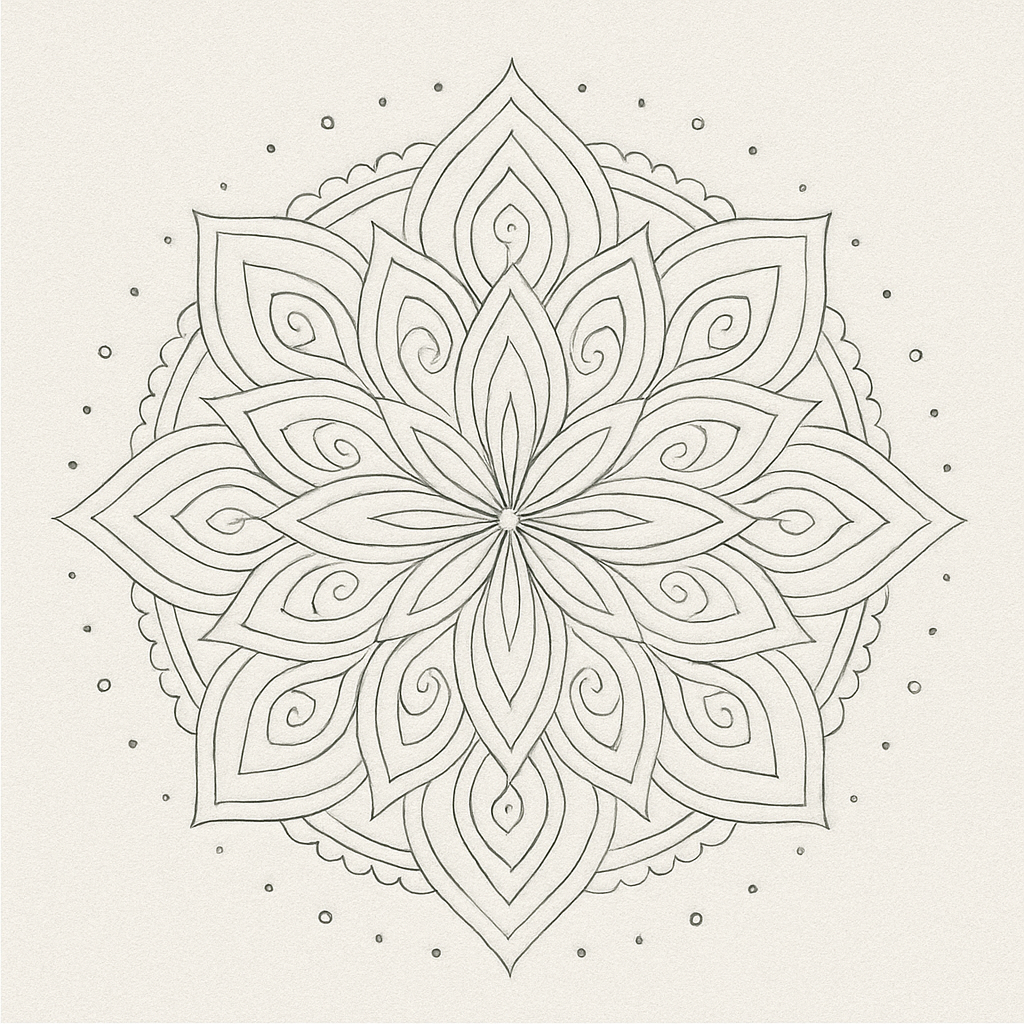
When establishing self-help and mutual aid strategies, view the mandala as a personal coping manual. Place the most urgent reassurance methods in the center, and contacts, mutual aid rules, and daily support in the outer circles. When reviewing, only confirm the circle that is most needed today. Clear steps reduce panic. Do only a little today. No need to push yourself. Safety first. You are not alone. You can pause now. May you be supported. Please take your time. Take care of yourself first. Do only a little today. No need to push yourself. Safety first.
● AI Dynamic Geometric Vision Focus and Emotion Regulation Engine ●
AI Dynamic Geometric Vision Focus and Emotion Regulation Engine · v7.0.0
Before we begin, I'd like to know how you feel right now.
There is no standard answer; just choose the one that best reflects how you feel right now.
The experience is over. Tell us how you feel now.
There is still no standard answer; just choose the one that best reflects how you feel right now.
#FF5252
After the fluorescent line crawling is completed and stopped, first select a color, then click on the closed area in the graphic to fill in the color.
AI Digital Mandala Static Focus EngineAZ Image Coloring · 60 Colors
AI Digital Mandala Interactive Focus Engine
A–Z Free Selection · Layered Lines · 60 Color Fills

○ Calligraphy and engraving therapy practice
When developing self-help and mutual-help strategies, you can use writing and engraving as a starting point. Practice before reviewing the coping manual, contact person, or mutual-help rules. This sequence will reduce physical panic. Clear steps, stopable actions, and practical support will support you. Do just a little today. Don't push yourself too hard. Put safety first. You are not alone. You can pause now. May you be supported. Take it slow. Take care of yourself first. Do just a little today. Don't push yourself too hard. Put safety first.


○ Art Therapy Guidance
Self-help and mutual aid strategies can be illustrated with a cover for a personal coping manual. Inside, include reassuring gestures, contacts, mutual aid rules, pause signals, and daily support. Don't make it complicated; just make it clear and usable. The visuals will remind you how to take care of yourself step-by-step during sudden fluctuations. Do just a little today. Don't force yourself. Put safety first. You are not alone. You can pause now. May you be supported. Take it slow. Take care of yourself first. Do just a little today. Don't force yourself. Put safety first.
Please log in before submitting your drawings and feelings.

○ Diary Healing Suggestions
Today, please write a short coping guide for yourself: what to do first when triggered, who to contact, which information to pause, and when to seek professional help. Don't make it too complicated; the clearer it is, the easier it will be to use in a panic. Both self-help and mutual aid require actionable steps. Do just a little today. Don't force yourself. Put safety first. You are not alone. You can pause now. May you be supported. Take your time. Take care of yourself first. Do just a little today. Don't force yourself. Put safety first. You are not alone. You can pause now. May you be supported. Take your time.
Please log in to use.
May you gradually return to a more stable, clear-headed, and gentler version of yourself through today's practice.