
Lesson 398: Balancing Creativity and Health

Course duration:70 minutes
Creativity and health are not mutually exclusive. This course establishes the rule of "inspiration also follows a routine," using recording, delayed execution, segmented creation, and rest boundaries to allow creativity to continue without disrupting stability. Upon completion, record a genuine discovery to integrate the learning content back into daily life. If setbacks occur, view them as part of the recovery curve, not failures. These exercises can help you gradually regain a sense of control and security amidst emotional fluctuations.
○ Course topic audio
Lesson 398: Balancing Creativity and Health
Click to view the read-aloud text
This lesson focuses on "the balance between creativity and health." The key to learning about bipolar disorder is not to demand immediate recovery, but to first understand your state, placing rhythms, signals, and risks back within a framework that allows for observation, recording, and seeking help. Establish rules for both inspiration and daily routines, allowing creativity and stability to coexist. For practice, it's recommended to prepare a logbook: write down physical signals on the left, emotions and thoughts in the middle, and daily behavior on the right. For example: Did you speak faster? Did you want to do many things at once? Did you suddenly not want to see people? Did you feel particularly hopeless about the future? Recording is not for self-judgment, but to allow doctors, therapists, and yourself to see more authentic trends. You can also do a simple "rhythm check." Ask yourself: How long did you sleep last night? Are you more excited or more lethargic today than usual? Do you have urges to make quick decisions, commit quickly, or completely avoid things? Answers don't need to be perfect, just truthful. Each record adds a little evidence to the path to stability. This lesson also reminds you: Don't equate symptoms entirely with personality, and don't interpret your entire life with labels. A more prudent approach is to record the extent of sleep, energy, mood, behavior, and functional impairment, and discuss it in professional therapy. Clear documentation is often more effective in driving change than repeated self-blame. At the end of this lesson, you can write down the most useful sentence: Stability is not about suppressing all emotions, but about retaining the ability to observe, choose, and seek help amidst fluctuations. May you use today's exercise as a small fulcrum to continue slowly approaching balance. Regarding "the balance between creativity and health," you can write down today's focus as a keyword and then observe its performance in real life over a week. If you don't achieve it one day, don't interpret it as a failure; simply return to the three basic actions of recording, resting, and seeking help. Long-term stability comes from repeated small steps, not from one-time drastic changes. This reading is suitable for listening to slowly, or you can pause in sections to give your body time to process it. Regarding "the balance between creativity and health," you can write down today's focus as a keyword and then observe its performance in real life over a week. If you don't achieve it one day, don't interpret it as a failure; simply return to the three basic actions of recording, resting, and seeking help. Long-term stability comes from repeated small steps, not from one-time drastic changes. This reading is best listened to slowly, or you can pause in segments to give your body time to process it. Focusing on "the balance between creativity and health," you can write down today's key point as a keyword and then observe its impact on real-life situations over a week.

AI Healing Q&A
AI-powered healing Q&A can help you establish a balance between creativity and health. You can ask how to record inspiration, break down your work into segments, delay execution, and set rest boundaries to allow creativity to continue without disrupting stability. Answers are for learning and organization purposes only; important decisions should still be discussed with professionals. If the content triggers strong discomfort, please pause your practice and contact someone you trust. The focus is not on immediately solving all problems, but on finding a safer next step.
○ Music therapy guidance
To balance creativity and health, music should avoid pushing inspiration to the point of over-excitement. Choose background sounds with a stable rhythm, and while listening, jot down creative ideas and rest boundaries, allowing inspiration to follow your natural rhythm rather than disrupting it. After practicing, record your physical reactions, emotional changes, and the appropriate volume level. If the music causes excitement or discomfort, pause immediately and switch to a lower-stimulating sound. The focus is not on being moved by the music, but on giving your body more stability and a space for observation.
○East-West Healing Tea Drinks
Recommended tea: Peppermint Orange Blossom Tea. The refreshing peppermint and soothing orange blossom make it ideal for balancing creativity and health. It maintains alertness without overstimulating the senses, helping you capture inspiration, set boundaries for rest, and prevent creative blocks from disrupting your flow. After drinking, you can track your body's reactions, mood changes, and the optimal time for your process. If the tea causes excitement, stomach discomfort, or disrupts sleep, reduce the amount or stop drinking it. Sip slowly in small amounts each time to avoid turning tea drinking into a new source of stress.
○ Healing Recipes
Pumpkin Kheer
Pumpkin porridge is a suitable healing recipe after this lesson. The soft pumpkin and mild porridge are perfect for use after a creative and healthy balance exercise. It helps slow down the body, allowing inspiration to be recorded and processed in segments, rather than sacrificing rest. After consumption, you can track your stomach's feeling of fullness and mental stability. If spices cause excitement or stomach upset, reduce the amount or opt for a milder version. The key is not to rely on food to solve problems, but to make eating part of a stable rhythm.
Nourishing desserts, pumpkin porridge, and creative stability
Open the healing recipe
◉ Eastern Food Therapy · Indian Ayurveda · 398. Pumpkin Kheer
I. Recommended Dietary Therapy and Reasons
Recommended dishes:Pumpkin Kheer
Recommended reasons: Pumpkin Kheer is an Ayurvedic nourishing dessert, suitable as a small, gentle sustenance when feeling down, low on energy, or after a spiritual retreat. Nuts, grains, milk, dates, or honey provide a mild sweetness and a feeling of fullness, helping the body experience a sense of being cared for. It's not meant to be eaten in large quantities, but rather as a slow, savored ritual, allowing the sweetness to provide a stable and non-irritating support.
2. Recipe and Method
Recipe (1–2 servings):
- 300 ml of milk, yogurt or coconut milk
- 120g of rice noodles, pumpkin, or fruit
- A little honey or coconut sugar
- A pinch of cardamom
- A little bit of chopped nuts
- 120 ml of clean water (optional)
practice:
- Prepare the nuts, bean flour, rice flour, or fruit ingredients.
- For powders or nuts that need to be sautéed, stir gently over low heat.
- Add milk, coconut milk, honey, or date puree, and stir slowly.
- Keep the heat low and allow the ingredients to gradually melt into a soft texture.
- Add cardamom, shredded coconut, or a small amount of chopped nuts to enhance the aroma.
- Turn off the heat after it has set or thickened, and let it cool to lukewarm.
- Consume in small amounts slowly; do not consume excessive amounts at once.
3. Small rituals for body and mind
When preparing pumpkin kheer, you can first observe the color, aroma and texture of the ingredients, and gradually shift your attention from external matters back to the actions in your hands.
During heating, stirring, or slow cooking, slow down and feel the spices and ingredients gradually blend together. You can remind yourself: I don't need to be perfectly stable right away; I just need to gently care for my body in the present moment.
When you take your first bite, focus on the warmth, softness, aroma, or chewiness to let your body know that it is safe and tolerable, and you can relax a little.
4. Dietary Therapy Experience Record
- Record the time of consumption, whether it is breakfast, lunch, dinner, or a supplement after mood swings, fatigue, or course practice.
- Observe whether there are any changes in stomach burden, fullness, refreshment, and mental stability within 30–60 minutes after consumption.
- If you are feeling down, stressed, have trouble sleeping, or have an unsteady appetite, you can keep track of whether pumpkin kheer helps you restore your body's rhythm.
V. Instructional Videos (approximately 3–5 minutes)
Video Title:Pumpkin Kheer – A mild and stable Ayurvedic diet
6. Precautions
- It is recommended to eat it warm, and it is not recommended to eat a large amount of the cold version when you are tired or have an upset stomach.
- Turmeric, cumin, ginger, curry spices, etc., should be used in small amounts to avoid excessive stimulation.
- Desserts are recommended to be enjoyed in small amounts, and blood sugar managers should control the amount of honey, coconut sugar, and dried fruit used.
- Do not eat too much at one time to avoid overeating or putting extra strain on your stomach.
- If you have a chronic illness, are pregnant, have allergies, are taking medication, or have special dietary restrictions, please consult a professional first.
hint:This recipe is for daily physical and mental well-being and is not a substitute for any medical diagnosis or treatment. If you have chronic illnesses, are pregnant, have food allergies, are taking medication, or have special nutritional restrictions, please prioritize following the advice of your healthcare provider and nutritionist.

Mandala Viewing Healing
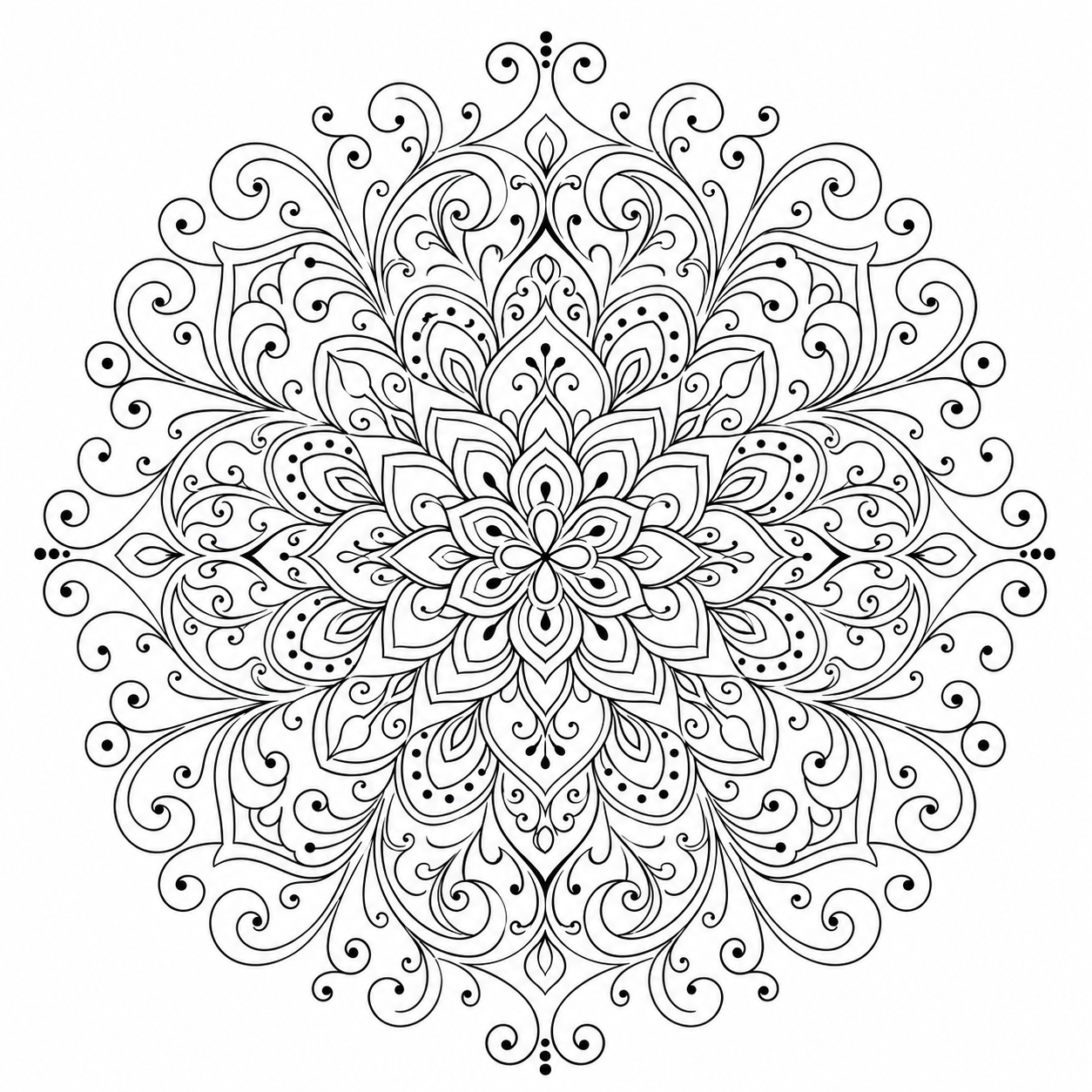
When balancing creativity and health, maintain boundaries when viewing mandalas. Appreciate the inspiration and order of the patterns, but don't immediately jump into high-intensity creation. After viewing, write down creative ideas, rest times, and stopping rules to allow inspiration to follow its rhythm. Record your physical reactions, emotional changes, and most comfortable visual position after viewing. If the image excites or makes you uncomfortable, shorten the time and switch to a softer image. The focus is not on finding meaning, but on gradually stabilizing your gaze, breathing, and body. Each viewing session doesn't need to be too long; maintaining low stimulation and sustainability is more important.
● AI Dynamic Geometric Vision Focus and Emotion Regulation Engine ●
AI Dynamic Geometric Vision Focus and Emotion Regulation Engine · v7.0.0
Before we begin, I'd like to know how you feel right now.
There is no standard answer; just choose the one that best reflects how you feel right now.
The experience is over. Tell us how you feel now.
There is still no standard answer; just choose the one that best reflects how you feel right now.
#FF5252
After the fluorescent line crawling is completed and stopped, first select a color, then click on the closed area in the graphic to fill in the color.
AI Digital Mandala Interactive Focus Engine
A–Z Free Selection · Layered Lines · 60 Color Fills
AI Digital Mandala Static Focus EngineAZ Image Coloring · 60 Colors

○ Calligraphy and engraving therapy practice
This calligraphy and seal engraving therapy exercise is themed "Balanced Creativity." First, write down your inspiration, then your daily routine, and finally, your rules for stopping. The design should be dynamic yet have boundaries, reminding you that creativity can continue, but it needs sleep, rest, and good health to sustain it. After each practice session, record the sensations in your hands, changes in your breathing, and your most stable stroke. It doesn't need to be beautiful; the focus is on gradually stabilizing your movements, rhythm, and body. If writing heightens your emotions, pause and look at the words or gently touch the paper. Each practice session should be short, gentle, low-stimulation, and sustainable.


○ Art Therapy Guidance
This guided art therapy session is themed around the "Balance of Creation and Rest." On one side, place inspiration, colors, and ideas; on the other, place sleep, diet, and boundaries. Through this balance, you'll see that creativity needs to be supported by health, preventing creation from becoming uncontrollable. After completion, record your color choices, physical reactions, and the most comfortable position within the image. It doesn't need to be beautiful; the focus is on using the image to help you see rhythm and the next step. If drawing heightens your mood, pause and switch to lines or lighter blocks of color. Each practice session should be low-stimulation and sustainable, avoiding turning creation into new stress.
Please log in before submitting your drawings and feelings.

○ Diary Healing Suggestions
Journaling is a therapeutic approach that suggests creating a balance between creative work and health. The left column records inspiration, plans, and desired projects; the right column lists sleep, diet, rest, and stop-work rules. Remind yourself that creation can continue, but must be supported by a healthy rhythm. After finishing, record your body's reactions, emotional changes, and an actionable next step. It doesn't need to be complete; the key is to put vague feelings back into observable text. If writing triggers strong discomfort, pause and contact someone you trust. Keep each entry low-burden and sustainable, avoiding turning journaling into new stress.
Please log in to use.
May you gradually return to a more stable, clear-headed, and gentler version of yourself through today's practice.