

Lesson 522: Why do I react so strongly to small things?

Course duration:70 minutes
When small things trigger a huge reaction, you might doubt whether you're too fragile. This course starts by addressing accumulated stress, past experiences, and a damaged sense of security, helping you understand the physical and mental reactions when your threshold is too low. You'll learn to shift from "Why did I do this again?" to "I was triggered," reducing self-blame and increasing self-care. The course will place complex experiences back into real life, allowing you to see beyond just the loss of control to the underlying exhaustion and needs. It will help your heart gradually find direction. You deserve to be treated gently.
○ Course topic audio
Lesson 522: Why do I react so strongly to small things?
Click to view the read-aloud text
Now, let's pause, relax, and get back to today's topic. This lesson's theme is "Why do I react so strongly to small things?" You may have wondered why a casual remark or a delayed reply can instantly sink your mood. This reaction is often related to accumulated stress, past experiences, lack of sleep, and long-standing negative memories. It's not unreasonable; it's that the body perceives a small stimulus as a significant threat. What we need to do is acknowledge this amplification process, not continue to blame ourselves. Therefore, the focus of learning isn't on training ourselves to be emotionless, but on allowing ourselves more space when emotions arise. You can also consider today's topic within a real-life context: what did I see and hear at that moment, and how did I interpret it? Finally, write down the sentence that resonates most with you today. It doesn't have to be beautiful, just genuine. May you pause more and have more strength to protect yourself the next time you're triggered. Every observation adds new possibilities. You don't need to explain everything at once. Your feelings can be taken seriously. This process of reflection is itself a form of self-care. Give your emotions a place, and give yourself a way out. May this awareness gradually become a new habit in your life. Please treat this as practice, not an exam. You can continue learning with uncertainty. It's okay to stop for a moment.

AI Healing Q&A
When you feel you're overreacting to small things, you can tell the AI the specific "small thing." The AI will help you see if it's encountering old experiences, low self-esteem, or physical fatigue. It won't rush to criticize you, but will instead help you understand why your threshold has lowered and your reaction has become more intense.

○ Music therapy guidance
When you feel you're overreacting to small things, listen to a piece of calm, repetitive, light music. Let the melody act like a steady line, guiding you through a review of what just happened. Don't use the music to suppress your emotions; simply let it help you slow down and see the distance between the stimulus, your physical reaction, and your true needs.

○East-West Healing Tea Drinks
Licorice and ginger tea is suitable for when feeling down, experiencing a cold stomach, or feeling weak after a reaction. Ginger provides warmth, while licorice softens the flavor. Don't force yourself to cheer up; simply treat this tea as a comfort to your body. While drinking, gently ask yourself: "Is my reaction so strong because my body is too tired?"
○ Healing Recipes
Tea-soaked rice is suitable when you feel you're overreacting to small things or your body has been under constant tension. Warm rice with light tea or broth is light, easy to digest, and also suitable for calming the body when you have a weak stomach. Please eat slowly, allowing the aroma of tea and warmth to help you return to the present moment from your heightened reaction and gently acknowledge your fatigue.
Open the healing recipe
◉ Japanese Food Therapy: Ochazuke (rice with tea)
I. Recommended Dietary Therapy and Reasons
Recommended dishes:Tea-soaked rice (easy to digest for those with weak stomachs)
Recommended reasons:This lesson helps us understand the physical and mental mechanisms behind low thresholds and overreactions. A light and easily digestible diet can reduce the burden on the body, preventing further irritation of the digestive system after a high response, and making it easier to gently recognize your own fatigue.
2. Recipe and Method
Recipe (1–2 servings):
- 1 small bowl of soft rice
- 250 ml of light green tea or kelp broth
- A small amount of seaweed strips
- A little bit of roasted sesame seeds
- A pinch of salt
practice:
- Wash the main ingredients thoroughly, and prepare the parts that need to be soaked, peeled, sliced, or cut into small pieces first.
- Pour hot tea or broth into soft rice, add a small amount of seaweed and sesame seeds, and keep it light and warm.
- If using fish, shellfish, or chicken, ensure the ingredients are fresh and fully cooked; if you have a sensitive stomach, prioritize steaming, boiling, or slow cooking.
- Keep the seasoning light, with less salt, sugar, and oil, and avoid using spicy or strong flavors that overpower the ingredients.
- During the cooking process, you can slow down your movements and treat washing, cutting, boiling, and serving as a small exercise to return to the present moment.
- Let it cool slightly after serving before eating to avoid it being too hot or too cold, thus reducing additional irritation to the stomach.
- Take your first bite slowly to appreciate the temperature, aroma, and texture. If you have a poor appetite that day, you can eat a small amount without forcing yourself to finish it.
3. Small rituals for body and mind
When preparing ochazuke (rice with tea), you can first arrange the ingredients neatly, noticing their color, shape, and texture. This small action can help you gradually shift your attention away from emotional reactions, relationship stimuli, or self-blame back to the present moment.
While waiting for the food to soften or for the soup to rise, give yourself three slow breaths. You don't need to explain, respond, or fix everything immediately; just let your body know that it's safe at this moment.
When you take your first bite, focus on the temperature, aroma, and soft texture. You can gently tell yourself: I'm taking care of myself; I'm willing to slow down; I can choose my next step again.
4. Dietary Therapy Experience Record
- Record the time of consumption: whether it is breakfast, lunch, dinner, or a meal to settle down after emotional fluctuations.
- Observe changes in stomach comfort, body temperature, mental stability, and mood intensity within 30–60 minutes after consumption.
- If you consume it on days with high emotional reactions, relationship triggers, or significant self-blame, you can record whether it helps you slow down or gives your body a greater sense of security.
V. Instructional Videos (approximately 3–5 minutes)
Video Title:Tea-soaked Rice: Japanese Dietary Therapy for Digestive Health and Emotional Well-being
6. Precautions
- Dietary therapy for gastrointestinal issues should be small, mild, and light. It is not recommended to force yourself to finish a meal when you have an upset stomach.
- If you are allergic to fish, shellfish, soy products, yams, sesame, tea, or fermented foods, please substitute with suitable ingredients.
- Those with gastritis, gastrointestinal diseases, pregnancy, chronic diseases, special nutritional restrictions, or currently taking medication should prioritize following the advice of medical professionals and nutritionists.
hint:This recipe is for daily physical and mental well-being and is not a substitute for any medical diagnosis or treatment. If you experience emotional distress, noticeable or persistent physical symptoms, please seek professional help promptly.

Mandala Viewing Healing
When you feel you're overreacting to small things, visualize a mandala with clearly defined layers. View the outermost layer as external stimuli, the middle layer as bodily alarms, and the center as genuine needs. Don't blame yourself; simply practice seeing: the strong reaction might stem from a long-term lack of security in the body.
● AI Dynamic Geometric Vision Focus and Emotion Regulation Engine ●
AI Dynamic Geometric Vision Focus and Emotion Regulation Engine · v7.0.0
Before we begin, I'd like to know how you feel right now.
There is no standard answer; just choose the one that best reflects how you feel right now.
The experience is over. Tell us how you feel now.
There is still no standard answer; just choose the one that best reflects how you feel right now.
#FF5252
After the fluorescent line crawling is completed and stopped, first select a color, then click on the closed area in the graphic to fill in the color.
AI Digital Mandala Interactive Focus Engine
A–Z Free Selection · Layered Lines · 60 Color Fills
AI Digital Mandala Static Focus EngineAZ Image Coloring · 60 Colors

○ Calligraphy and engraving therapy practice
This calligraphy and seal engraving practice does not involve specific writing content, nor does it pursue perfect character forms. When small things cause significant fluctuations, please focus your attention on holding the pen, placing the pen, pausing, and breathing. Let each stroke become a gentle pause, helping your nerves slowly return from heightened reactivity to the present moment. Don't rush to explain right or wrong; simply give yourself some safety, boundaries, and space to reconsider within stable movements. Even if the practice is short, it's still taking care of yourself. Please take your time; there's no need to prove yourself today.

○ Art Therapy Guidance
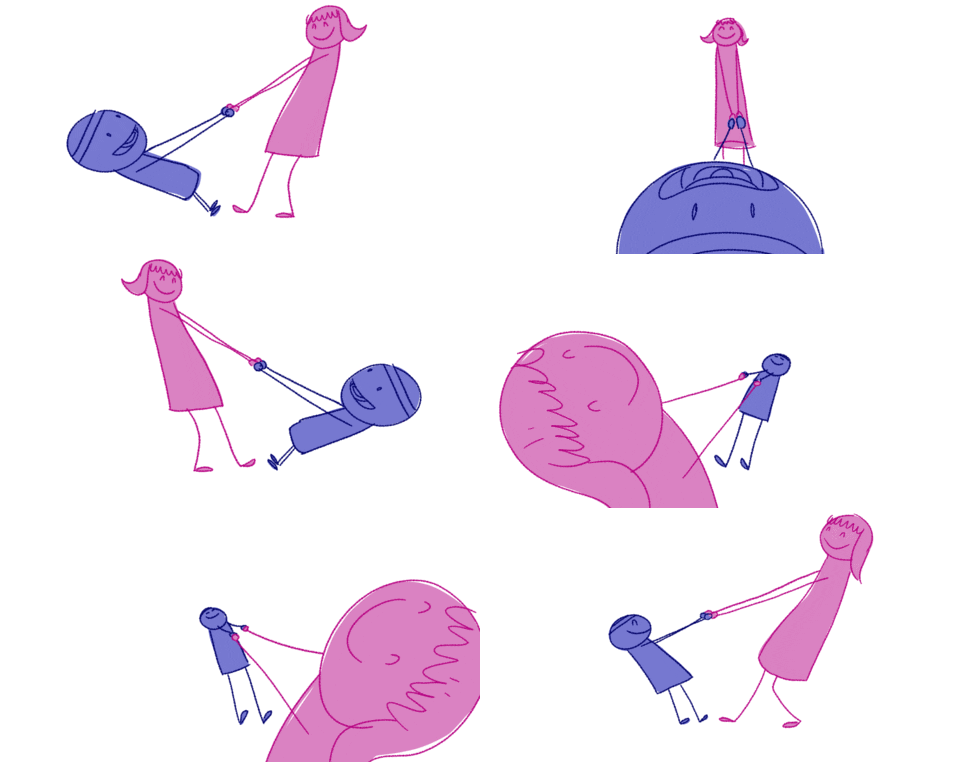
Please draw a low threshold line. Above the line, draw small stimuli that amplify your reaction. Below the line, draw accumulated fatigue, past experiences, and insecurity. After drawing, don't blame yourself. Simply draw a soft support point next to it to remind yourself: a strong reaction may indicate that your system is overworked.
Please log in before submitting your drawings and feelings.
○ Diary Healing Suggestions
Write down that one "small thing" that aggravated your reaction today. Then continue writing: Did it trigger old experiences, feelings of insecurity, fatigue, or neglect? Don't rush to blame yourself; just observe why your threshold lowered. Finally, write down a small action that can make your body feel safer.
Please log in to use.
May you gradually return to a more stable, clear-headed, and gentler version of yourself through today's practice.