
Lesson 593: The Role of Meditation and Relaxation in Emotion Regulation

Course duration:70 minutes
Meditation and relaxation aren't about clearing your mind, but about giving your nervous system a chance to cool down. You can ask AI to provide short, gentle, and non-coercive practice suggestions based on your current state. This is also the beginning of taking care of yourself again. Let Q&A be a gentle resting place. If necessary, please contact offline professional support promptly. Your feelings deserve to be taken seriously. Understand first, then choose; it will be more stable. Keep your actions small, and it will be easier to stick to them. This understanding will protect your recovery rhythm.
○ Course topic audio
Lesson 593: The Role of Meditation and Relaxation in Emotion Regulation
Click to view the read-aloud text
Today, I want to gently guide you through the topic of meditation and relaxation in emotional regulation. Many people, upon hearing about meditation, assume they must immediately clear their minds, achieve complete silence, and be free of distractions. When they can't, they feel unsuitable and even become more anxious. In reality, meditation isn't about eliminating thoughts, but rather providing an additional perspective for observing them; relaxation isn't about commanding the body to immediately loosen, but rather giving the nervous system some safety signals, allowing it to gradually release pressure. When facing difficulties coping with emotions, we are often driven by reactions: worry leads to continuous thinking, anger leads to immediate responses, fear leads to avoidance, and shame leads to self-attack. The significance of meditation and relaxation practices lies in creating a little space between reaction and action. Today, we'll practice three gentle methods. First, breath observation. Find a comfortable posture; you don't need to sit cross-legged or close your eyes. Simply feel the air entering and exiting your nasal cavity, or the slight rise and fall of your chest and abdomen. When your mind wanders, don't blame yourself; simply say softly: "I'm back." Second, progressive relaxation. Begin with your fingers, gently clenching and then releasing, then move to your arms, shoulders, face, abdomen, and legs. The key is not to exert force, but to allow the body to feel the difference between tension and relaxation. Third, the present moment anchor. Choose a sound, a touch, or an object as a point of focus for your attention. When emotions pull you away, return to this anchor. Start with three minutes; don't aim for twenty minutes at first. After practicing, write down any changes in your body: Is your breathing slower, your shoulders lower, or do you feel more space in your mind? Even without obvious changes, it's not a failure. The nervous system needs repetition to learn. Remember, meditation is not about escaping reality, but about returning to your body before facing reality; relaxation is not about giving up action, but about allowing action to no longer be driven solely by tension. If you experience discomfort during practice, open your eyes, stop, stand up, and see your surroundings. Safety is always the first priority. After reading aloud, write a sentence: I am willing to use just a few minutes of breathing, relaxation, and the present moment anchor to help myself return to my body and the present moment.

AI Healing Q&A
Meditation and relaxation aren't about clearing your mind, but about giving your nervous system a chance to cool down. You can ask AI to provide short, gentle, and non-coercive practice suggestions based on your current state. This is also the beginning of taking care of yourself again. Let Q&A be a gentle resting place. If necessary, please contact offline professional support promptly. Your feelings deserve to be taken seriously. Understand first, then choose; it will be more stable. Keep your actions small, and it will be easier to stick to them. This understanding will protect your recovery rhythm.
○ Music therapy guidance
When practicing meditation and relaxation, please choose music without lyrics and with a steady rhythm. Follow the sound to observe your breathing, or perform progressive relaxation. If your mind wanders, don't scold yourself, just gently bring it back. The music here is not a performance background, but rather an additional vantage point to help you observe your emotions.

○East-West Healing Tea Drinks
Chamomile tea is suitable for meditation and relaxation practices. It is gentle and calming, making it ideal for drinking in the evening or when under stress. Observe your breathing amidst the aroma of the tea; do not attempt to empty your mind, but simply gently bring your attention back to the present moment after your thoughts wander.
○ Healing Recipes
Rosemary potatoes are suitable for consumption before and after meditation and relaxation practices. The soft, filling potatoes and the refreshing aroma of rosemary help to gently bring attention back to the present moment. After eating, observe your breathing for a few minutes; don't try to empty your mind, just practice gently returning to the present.
Open the healing recipe
◉ Healing Recipe: Rosemary Potato Stew
I. Recommended Dietary Therapy and Reasons
Recommended dishes:Rosemary Potatoes (a practice for calming the mind and relaxing)
Recommended reasons:This lesson introduces the role of meditation and relaxation in mood regulation. Rosemary-cooked potatoes are simple, satisfying, and have a refreshing aroma, making them suitable for consumption before or after a short period of relaxation. Potatoes stabilize the body, while rosemary helps bring attention back to the present moment, reminding you that you don't need to empty your mind, just gently return. Don't try to change your mood immediately while eating; simply treat this food as a gentle pause, allowing your body to receive support first, making it easier for your mind to make new choices.
2. Recipe and Method
Recipe (1–2 servings):
- 2 potatoes
- A little rosemary
- Appropriate amount of clean water
- A few drops of olive oil
- A pinch of salt
practice:
- Wash the main ingredients and prepare the parts that need to be cut into pieces, steamed, boiled until soft, or prepared in advance.
- Cut potatoes into chunks and cook until tender. After cooking, add a little olive oil and rosemary.
- Use low heat, stir gently, or bake at a low temperature to allow the ingredients to meld together in a gentle rhythm.
- Keep the seasoning light, with less salt, sugar, and oil, and avoid using strong, pungent flavors that overpower the ingredients.
- Let it cool slightly after serving before eating. Take your first bite slowly to appreciate the temperature, aroma, and texture.
3. Small rituals for body and mind
When preparing rosemary stewed potatoes, you can first arrange the ingredients neatly, noting their color, shape, and texture, allowing your attention to gradually shift from emotional reactions, relational stimuli, event interpretations, or self-blame back to the present moment.
During the process, take three slow breaths. Don't rush to explain, respond to, or fix all the problems. Just let your body know: I am doing something small that can be accomplished.
When you take your first bite, first feel the temperature and texture, then gently tell yourself: I am taking care of myself, I am willing to take it slow, and I can choose to take the next step again.
If you're still feeling emotional, stop and don't force yourself to continue. What's truly important isn't eating a complete meal, but rather sending your body a safe, gentle signal that it's time to pause.
4. Dietary Therapy Experience Record
- Record the time of consumption; is it a regular meal or a meal to settle down after emotional fluctuations?
- Observe changes in stomach comfort, body temperature, and mood intensity within 30–60 minutes after consumption.
- Write a sentence: After this dietary therapy, what new action do I want to take care of myself?
V. Instructional Videos (approximately 3–5 minutes)
Video Title:Rosemary Potato Stew: Gentle Food Therapy Support in the Emotional Coping Disorder Course
6. Precautions
- Dietary therapy should be small, mild, and light; there is no need to force yourself to finish a meal when you are not feeling well.
- If you are allergic to grains, beans, nuts, eggs, dairy, fish, honey, or vanilla, please substitute this food.
- This recipe is for daily health maintenance and is not a substitute for medical diagnosis and treatment; please follow medical advice for special physical conditions.
hint:If you experience emotional distress, noticeable or persistent physical symptoms, please seek professional help promptly.

Mandala Viewing Healing
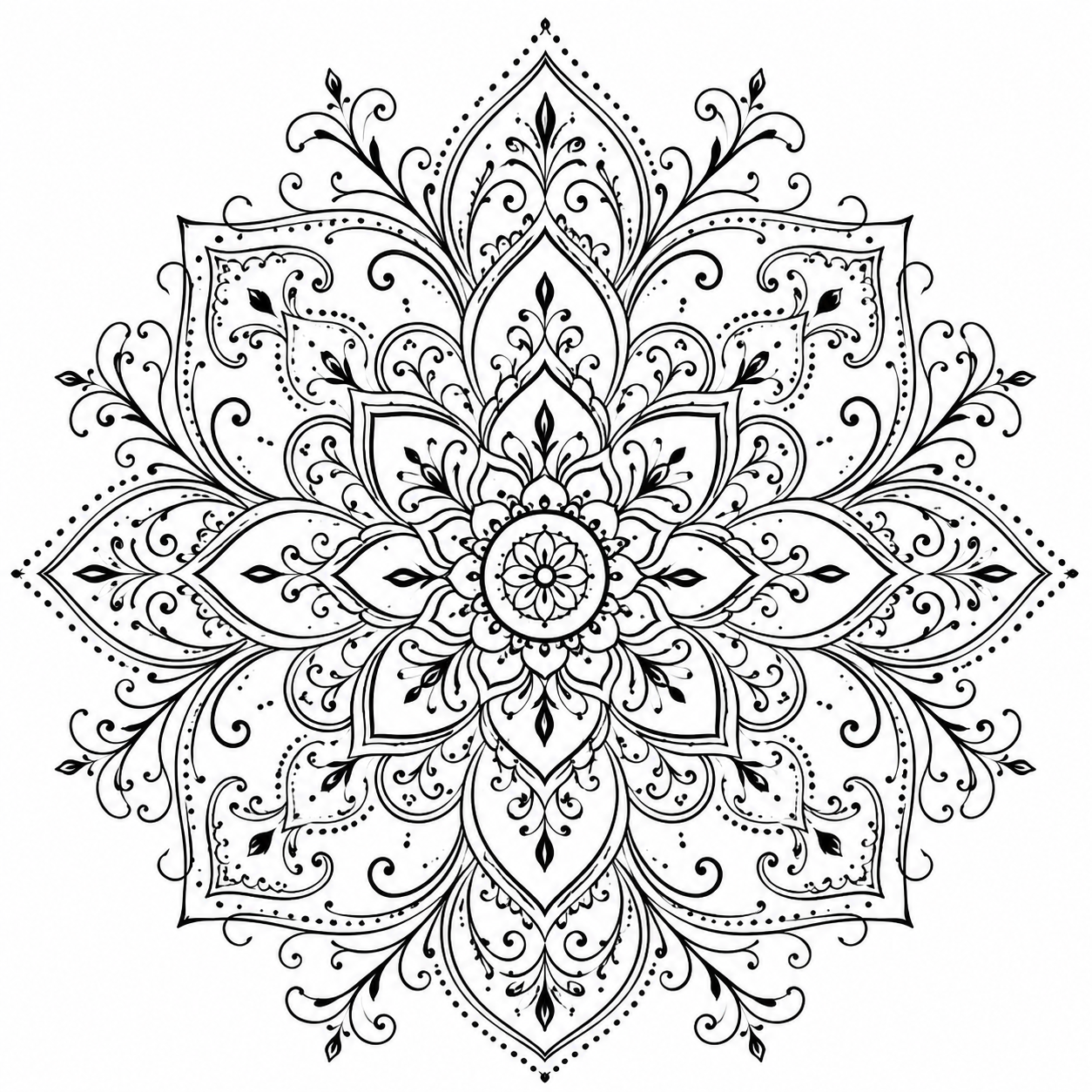
When meditating and relaxing, focus your gaze on the quiet mandala in the center. If your mind wanders, don't scold yourself; simply bring your gaze back to the center. Each return is a practice: I don't need to empty my mind; I just need another place to observe my emotions.
● AI Dynamic Geometric Vision Focus and Emotion Regulation Engine ●
AI Dynamic Geometric Vision Focus and Emotion Regulation Engine · v7.0.0
Before we begin, I'd like to know how you feel right now.
There is no standard answer; just choose the one that best reflects how you feel right now.
The experience is over. Tell us how you feel now.
There is still no standard answer; just choose the one that best reflects how you feel right now.
#FF5252
After the fluorescent line crawling is completed and stopped, first select a color, then click on the closed area in the graphic to fill in the color.
AI Digital Mandala Interactive Focus Engine
A–Z Free Selection · Layered Lines · 60 Color Fills
AI Digital Mandala Static Focus EngineAZ Image Coloring · 60 Colors

○ Calligraphy and engraving therapy practice
In meditation and relaxation, treat writing or engraving as a form of dynamic focus. No specific content is needed; simply follow the movement itself. When your mind wanders, return to the touch of the pen tip, the paper, or the material. It helps you return to the present moment without emptying your mind.

○ Art Therapy Guidance
Draw a quiet observation point around which thoughts, emotions, and bodily sensations pass. Don't draw them away; just let them flow around the center. This exercise reminds you that meditation is not about eliminating thoughts, but about adding another point of view to observe them.
Please log in before submitting your drawings and feelings.
○ Diary Healing Suggestions
Please record one meditation or relaxation exercise. Write down whether your mind wandered, what changes occurred in your body, and whether you felt any emotional space after the exercise. Don't try to eliminate all thoughts; just write down how you reconnect with your body each time you return.
Please log in to use.
May you gradually return to a more stable, clear-headed, and gentler version of yourself through today's practice.