

Lesson 1004: The Application of Cognitive Behavioral Therapy in Adjustment Disorders
Duration:75 minutes
Topic Introduction (Overview):
Following acute stress or sudden events, many people enter a state of "adjustment disorder"—characterized by mood swings, decreased attention span, sleep disturbances, a loss of control over the future, and even thought patterns such as self-blame, avoidance, or excessive worry. Cognitive behavioral therapy (CBT) is one of the most effective psychological interventions for this stage. It helps the brain return from hypervigilance to a more manageable state by identifying "automatic negative thoughts," reinterpreting behaviors, and training behavioral rhythms.
This course will guide you on how to use CBT (Conditional Therapy) in managing adjustment disorder. It's not an abstract theory, but a very concrete approach to life: how to recognize when you're amplifying threats, how to stop catastrophic imaginings, how to distinguish between facts and emotions, how to shift from "stuck and avoidant" to small, incremental actions, and how to use your body and behavior to stabilize your mind. You will gradually learn to see your thoughts, instead of being led astray by them. Mandala drawing isn't about creating images, but about observation—observing how thoughts arise, change, spread, and then gradually stabilize; observing how you return from fear to control.
▲ AI Interaction: Recognizing Your "Automation Thoughts"“
Write down the three most frequent automatic negative thoughts that have occurred to you recently, such as: "I can't take it anymore," "Things are going to get worse," and "It's all my fault."
Then write down the situations in which these thoughts arise: Upon waking? At night? While talking to someone? When the body is tense?
Finally, write down the evidence and counter-evidence: Are they entirely true? Are they amplified by emotions?
Click the button to let AI help you "reflect on your thoughts" and "examine reality".
○ CBT Auxiliary - Rhythm Music Stabilization Method
CBT training is more effective when the body can maintain a stable rhythm. Choose music with a clear, soothing, but not sad, rhythm.
Exercise: Listen to music for 2 minutes, focusing only on the "rhythm" and not judging the emotions; listen for another 2 minutes, and gently sway your shoulders or fingers to get your body into action mode.
Music acts as a "stop rumination" interruptor, helping you break free from mental traps.
🍵 Herbal healing teas: gentle mediators for stabilizing emotions
Recommended recipe:Lemon balm + rose + chamomile.
Melissa stabilizes tense nerves, rose relieves chest pressure, and chamomile reduces stomach and diaphragm contractions. The combination of these three helps to achieve "mind-body synchronization" in CBT training.
Suitable for drinking before practice, it makes the mind more relaxed and the mind clearer.
○ German Whole Grain Therapy: The Energy Foundation for Small, Stable Actions
CBT emphasizes "behavior drives mindset," but many people with adjustment disorder find it difficult to begin taking action due to fatigue, weakness, and poor appetite. The core of the German whole grain therapy—stabilizing blood sugar and energy release—perfectly supports CBT's "small steps": at least one whole grain meal daily, such as rye porridge, oatmeal, or warm whole grain porridge, paired with a small amount of nuts or honey, helps the body restore sustained energy, preventing fatigue from hindering action.
The stable release structure of whole grains can reduce large fluctuations in mood, providing a more reliable physiological basis for cognitive training.
Healing Recipes
/home2/lzxwhemy/public_html/arttao_org/wp-content/uploads/cookbook/kao-hong-shu-pei-hei-dou.html(Please confirm that the file has been uploaded: kao-hong-shu-pei-hei-dou.html)
🎨 Dream Mandala Healing · Mi Xiangwen 1004 · The Circle of Thought
You dream that you are sitting in the center of a huge circular room, surrounded by flashing thoughts like specks of light, some bright, some blurry, some flickering. At first you try to grasp them, but the more you try, the more chaotic they become. Later you decide to sit down and simply watch—the specks of light begin to slowly align, like lines spreading outwards.
Imagine the circular room transforming into a mandala: the center is your stable sitting posture, the dots of light are your thoughts, and the outer ring is your observation. You no longer chase after any thoughts, but simply let them move on their own. The mandala is not about drawing anything, but about observing—observing the coming and going of thoughts, seeing them merely as dots of light, not as commands.

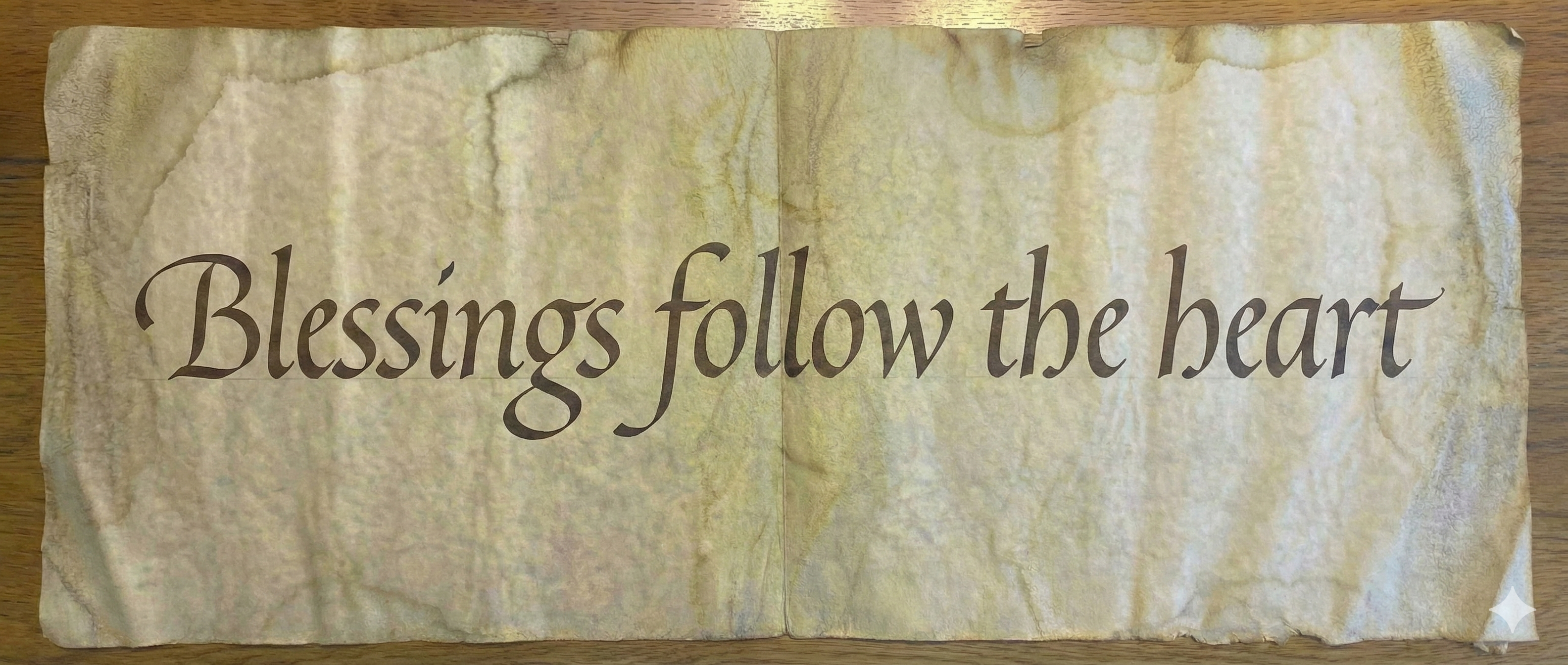
○ Running script - Writing sentences for cognitive stability
The rhythm of running script can help CBT achieve "stable self-dialogue".
- Sentence writing:A thought is just a thought.
- English equivalent:Thoughts are just thoughts.
- hint:Slow down your writing speed, especially at the points of "thinking" and "remembering," and let your wrist relax in sync with your breathing.
Lesson 1004: Thought Observation & Drawing Guidance
Objective: To visualize patterns of "automated thoughts" and help you detach from them.
Steps: Draw a large circle on a piece of paper, and write "I am watching" at the center. Draw several small dots or spots of light at different positions inside the circle, each representing a thought. Use different sizes, shades, and line directions to distinguish their intensity and speed. Then draw a stable, uniform halo around the outside of the circle, symbolizing the "observer's boundary." The key is not how well you draw it, but that by looking at this image, you see yourself as no longer the thought itself.
Please log in before submitting your drawings and feelings.
○ 1004. Cognitive Behavioral Therapy: Journal-Based Guidance Suggestions
① What was the most frequent negative thought you had today? Write one sentence.
② What happened to your body when this thought arose? (Tightness, numbness, heat, cold, soreness, etc.)
③ Write down its evidence and counter-evidence (at least one piece of each).
④ Write down an "alternative idea," such as: "I am learning to adapt, not fail."“
⑤ Record a small action you took today.
⑥ Conclusion: Thoughts are not commands; I have the right to choose what to believe.
Please log in to use.
When you learn to observe your own thoughts, you have already taken the first step towards change; you are not the thought, you are the one observing it.
 EN
EN  ZH
ZH  ES
ES  FR
FR  JA
JA