

Lesson 101: The First Step in Exposing Reality

Duration:70 minutes
Topic Introduction:Specific anxiety is fear of a specific object, while generalized anxiety is persistent worry about many things. Distinguishing between the two helps in choosing a more suitable practice path. When practicing, keep your goals small; observe only one reaction, complete a gentle movement. You don't need to change yourself immediately, just understand a little more within safe limits. Each recording and pause is the beginning of rebuilding a sense of stability. When practicing, keep your goals small; observe only one reaction, complete a gentle movement.
○ Course Topic Audio
Lesson 101: The First Step in Exposing Reality
Click to view the read-aloud text
This lesson focuses on the difference between specific fears and generalized anxiety. We're not practicing simply enduring fear, but rather transforming it from an unspeakable, overwhelming shadow into something that can be named, categorized, recorded, and gradually approached. Specific fears target a specific object or scenario, while generalized anxiety is worrying about many things throughout the day. This lesson helps you choose a more suitable practice path. When fear is triggered, you might experience a racing heart, trembling hands, chest tightness, nausea, or even the urge to flee immediately. Remember, this isn't a lack of courage; it's the amygdala and sympathetic nervous system activating survival mechanisms. Your body doesn't know it's a practice session; it only knows that past dangerous memories have been awakened. The first step in this lesson is to concretize the fear. Don't just write "I'm scared," but clearly state: what I'm afraid of, what the most terrifying image is, what I'm worried about happening, and how I would usually escape. Writing down the fear transforms it from mental fog into observable material. The second step is establishing safe boundaries. No exposure practice should begin with the most intense scenario. You can start by creating an anxiety level chart from 0 to 10, progressing from looking at a picture, saying its name, getting closer, pausing for a few seconds, to actual contact, level by level. Each level should have an exit signal, a recovery action, and a support method. A sense of security is not weakness; it's the foundation for retraining the brain. The third step is learning to pause and reflect. When your body's anxiety intensifies, you don't need to immediately prove you're okay. Just stay a little longer within your tolerance range and record the facts: how long you paused, how your fear level decreased, and what actually happened. Reflection can gradually rewrite the disaster narrative of "I almost died" into "I experienced a strong physical reaction, but I survived." If the practice causes persistent insomnia, panic, a strong urge to harm yourself, or significant triggering of past trauma, please stop practicing and seek help from a therapist, doctor, or trusted supporter. Healing is not about pushing yourself to the brink of collapse, but about relearning under sufficiently safe conditions. Finally, give yourself a reassuring reminder: fear is not everything; it's just a protective mechanism your body has learned. Today, simply naming a fear, completing a minimal exposure, or gently reflecting on the experience afterward is already establishing a new relationship with that fear. After reading aloud, please write down a minimum-intensity exercise and a recovery movement after exposure. Next time you face fear, don't strive for immediate courage; just remember to breathe, pause, record, and reflect. You are not learning to eliminate bodily reactions, but rather to retain some options when they arise. Each safe, small exposure allows the brain to update its risk assessment slightly. After reading aloud, please write down a minimum-intensity exercise and a recovery movement after exposure. Next time you face fear, don't strive for immediate courage; just remember to breathe, pause, record, and reflect.

AI Healing Q&A
The smaller the initial exposure to reality, the better—small enough that your body is willing to try. You can tell the AI where the safest starting point is, and it will help you break down the task. Perhaps it's just looking at an image, standing a little further away, or passing by, instead of directly facing it. Today's small action can be stopping after a small contact, without escalating further. It's important to let your body experience what's "tolerable." Every small approach helps the brain learn new safe experiences. If the pain is intense, please contact a professional in person immediately.

○ Music therapy guidance
The first step in revealing reality can be accompanied by a short, steady piece of music. Listen to it once before starting to remind your body to prepare; listen again afterward to help you return to focus. Don't turn the music up very loud while practicing, lest you escape the reality of your experience. Today's small action can be stopping after completing the lightest step, letting your body remember: I approached, and I returned safely. Today, just take one small step; there's no need to force yourself to succeed. Take it slow; being able to hear yourself is already a form of self-care. Let the music help you stay grounded, not rush you.

○Eastern and Western Healing Teas
This lesson recommends choosing mild, light, and non-irritating hot teas to help stabilize the body after learning the difference between specific fears and generalized anxiety. You can choose light black tea, osmanthus oolong, chamomile tea, or warm water, sipping slowly in small amounts. Avoid drinking it too strong, too hot, or too quickly; treat the first sip as a signal to stop.
○ Healing Recipes
Roman Mixed Vegetables
Roman Mixed Vegetables is a suitable healing meal after this lesson. It's gentle, stable, and low-burden, replenishing the body after learning the difference between specific fears and generalized anxiety, and reducing the amplification of specific fear experiences caused by hunger, fatigue, and tension. Eat slowly, observing the intensity of the fear, your breathing, hunger, satisfaction, and feelings of relaxation. It doesn't aim for elaborate plating, but rather serves as a gentle replenishment after fear exposure exercises.
○Mandala Healing
Before taking the first step into reality, look at the mandala for a while to prepare your body. After practicing, look at it again, as if telling yourself: I've returned to safety. The mandala isn't here to help you escape, but to help you gather your experiences. Each safe return adds a new memory to your mind. Take it slow; safety is always ahead. If you feel uncomfortable, pause and rest. Even a little stability is worth acknowledging. Today, you only need to pause for a short while. Give yourself gentle space.
● AI Dynamic Geometric Vision Focus and Emotion Regulation Engine ●
AI Dynamic Geometric Vision Focus and Emotion Regulation Engine · v7.0.0
Before we begin, I'd like to know how you feel right now.
There is no standard answer; just choose the one that best reflects how you feel right now.
The experience is over. Tell us how you feel now.
There is still no standard answer; just choose the one that best reflects how you feel right now.
#FF5252
After the fluorescent line crawling is completed and stopped, first select a color, then click on the closed area in the graphic to fill in the color.
AI Digital Mandala Static Focus EngineAZ Image Coloring · 60 Colors
AI Digital Mandala Interactive Focus Engine
A–Z Free Selection · Layered Lines · 60 Color Fills
○ Calligraphy and engraving therapy practice
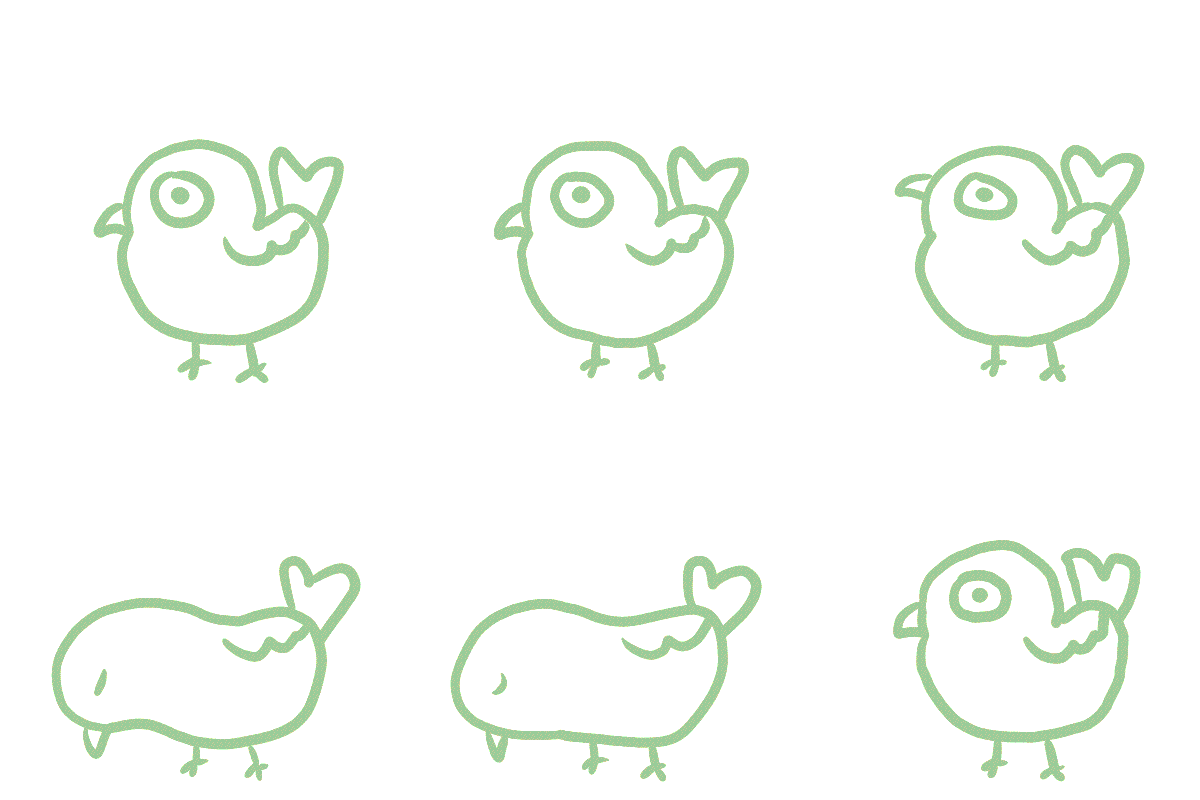
After the first step of exposing reality, writing inscriptions can help the body return to a state of calm. Don't dwell on the details or write down specific actions; simply use gentle movements to tell yourself you're back in a safe place. Slow down your hands, and your mind may slow down a little too. Even a short practice session deserves recognition because you've genuinely come closer. If you feel uncomfortable, please stop. Take it slow. Safety is always paramount. Even a little bit counts. Please be gentle with yourself. If you feel uncomfortable, please stop. Take it slow.
○ Art Therapy Guidance
After the first step of confronting reality, draw a picture of "I'm back." This can be represented by a road, a doorway, or a body sitting comfortably. Don't dwell on the details or draw the object of your fear; just draw the feeling of returning to safety. The image will help your brain remember: after getting closer, I can come back too. Take your time. See it gently. It doesn't need to be perfect. Even a little bit counts. If you feel uncomfortable, stop. Take your time. See it gently. It doesn't need to be perfect.
Please log in before submitting your drawings and feelings.

○ Diary Healing Suggestions
The smaller the first step in confronting reality, the better. Today, write down the most touching point from the course, and also the minimum level of contact you're willing to attempt. It can be as small as a glance, a quick walk by, or a few seconds of pause. Please don't turn today's small action into a huge challenge. What your body needs is a manageable new experience, not another experience that scares you away. After writing, give yourself a gentle affirmation: I'm learning, and I don't need to be perfect the first time. If you can only accomplish a little today, acknowledge that little bit counts too. Please schedule your small actions lightly, so that you truly have a chance to achieve them tomorrow.
Please log in to use.
After learning to differentiate between the two types of anxiety, remind yourself: only by clearly understanding the patterns can you choose the more suitable practice methods.