

Lesson 1011: Psychological Reconstruction After a Traumatic Event
Duration:75 minutes
Topic Introduction (Overview):
The impact of a traumatic event often doesn't end in a day, but rather leaves layers of "unfinished echoes" in the heart. Some people collapse immediately after the event, while others, after several days of calm, suddenly feel uneasy, powerless, prone to tears, angry, numb, or even experience a strange emptiness. The core of psychological reconstruction is not "forgetting" or "being strong," but rather realigning the body, emotions, and thoughts, and regaining trust in the world and control over oneself. This course will guide you to understand the natural healing mechanisms of the mind after trauma, helping you find clarity from the chaotic fragments and move from passive reaction to active recovery.
The process of psychological reconstruction comprises three key stages: first, "stabilization," allowing the body to temporarily return to a rhythm capable of thought; second, "meaning integration," gradually understanding the impact, value, and changes the event brought; and third, "reconnection," reconnecting with the relationships, rhythm, and hope of daily life. Trauma is not a painting that needs to be quickly covered up, but a mandala that needs to be gently observed and gradually understood. A mandala is not about what is drawn, but about observation—observing how the broken heart rearranges itself with time and care, observing the inner strength that is forming within you. Psychological reconstruction begins with this observation.
▲ AI Interaction: The First Step in Reconstruction – “Where am I now?”
Try answering three questions to position yourself on the rebuilding path:
① When I think about the event, what is my body's first reaction? Tightness? Numbness? Emptiness? Chaos?
② What troubles me most is not the event itself, but which part? Fear? Shame? Loss of control? Helplessness? Anger?
③ What do I hope my future self will get closer to each day? Peace? Security? A sense of meaning? Power?
Click the button below to find your starting point for psychological reconstruction with the help of AI.
○ Post-traumatic stabilization: Music therapy
The brain is prone to oscillation between "overactivation" and "complete numbness" after trauma. Please choose instrumental music with a stable rhythm, such as piano, handpan, or low-frequency drum beats.
Practice steps:
① Focus your attention on the most stable rhythm line of the music.
② Whenever an image or memory pops up, don't suppress it; just gently bring your attention back to the rhythm.
③ Repeat three times to complete the "safe rhythm reset".
🍵 Herbal Healing Tea: Stability and Support During Mental Recovery
Recommended tea recipe:Rose + Chamomile + Verbena.
Functions: Helps relieve chest heaviness, restore breathing depth, and reduce startle reflex and nighttime tension.
Tip: While drinking, practice "4 seconds of inhalation and 6 seconds of exhalation" to gradually return your nervous system to reconstruction mode.
○ German-style Whole Grain Therapy: Post-Trauma Energy Recovery Meal
After trauma, the body is often in a state of "energy leakage": it tires easily with slight tension and is depleted by slight stimulation. The core of German whole grain therapy is "warm, solid, and slow release of energy." Rye, oats, wheat germ, buckwheat, and other grains can stabilize glucose supply, providing the brain with continuous energy and thus better supporting psychological reconstruction.
It is recommended to add a serving of warm whole grain porridge to your daily diet, such as oatmeal apple porridge, rye pumpkin porridge, or buckwheat honey porridge, to help repair the nervous system damaged by stress.
Healing Recipes
/home2/lzxwhemy/public_html/arttao_org/wp-content/uploads/cookbook/kao-hong-shu-pei-hei-dou.html(Please confirm that the file has been uploaded: kao-hong-shu-pei-hei-dou.html)
🎨 Dream Mandala Healing · Mi Xiangwen 1011 · Fragments of the Heart Rearranged
In your dream, you walk into a circular pattern scattered by the wind, its lines broken and colors blurred; you don't know what it originally was. You bend down, pick up a fragment, and discover delicate patterns on it, like breath, like a heartbeat.
When you try to put the fragment back in the center, it automatically fits back together, as if it remembers its position. You slowly pick up the second piece, then the third, and the mandala's texture begins to recover. You suddenly realize: it's not that you are repairing the mandala, but that the mandala is telling you, "I am willing to rebuild with you."
A mandala is not about drawing something, but about observing—observing how broken things can be rearranged, observing how healing begins with willingness.

○ Running script - Writing sentences for psychological reconstruction
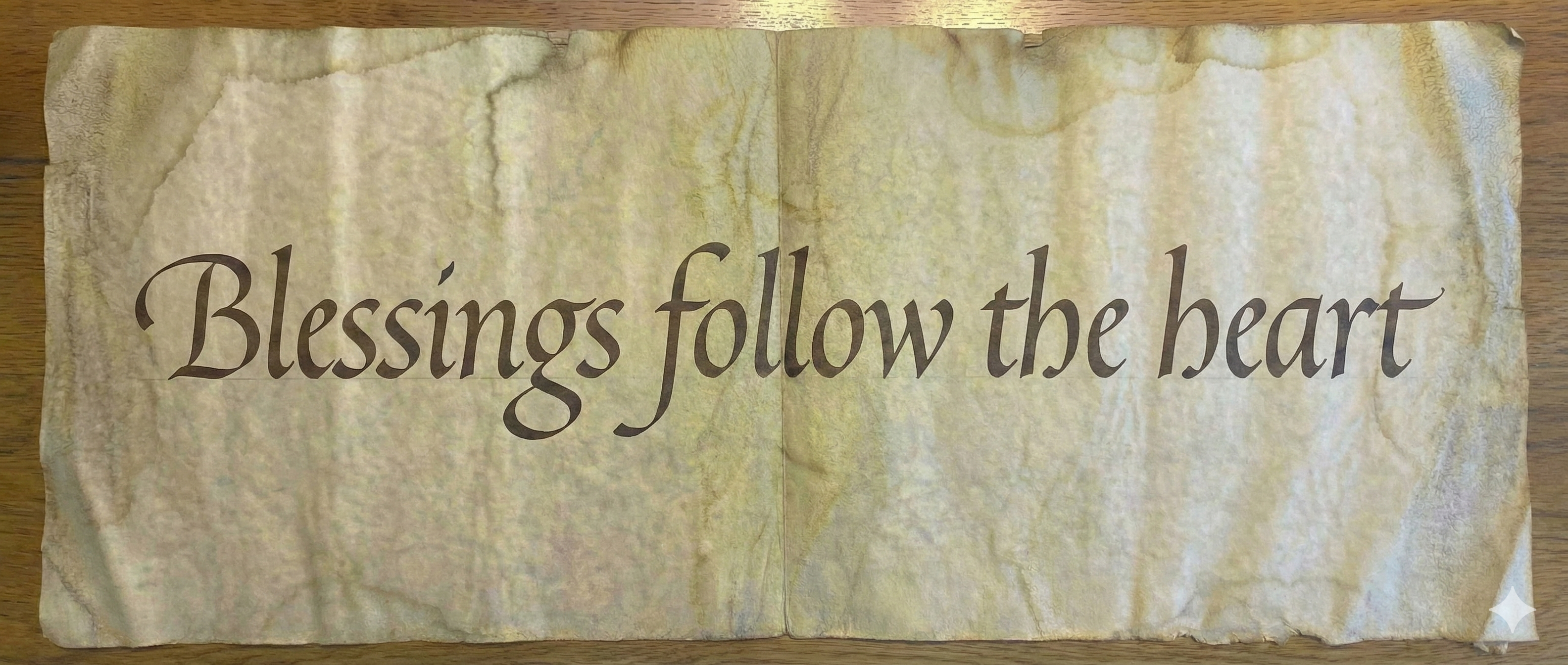
The fluidity of running script symbolizes "the reconnection after fragmentation".
- Sentence writing:Fragments can also become new wholes.
- English equivalent:Even fragments can form a new wholeness.
- hint:When writing the character “片”, slow down and let the breaks and connections of the lines symbolize the power you are rebuilding.
Lesson 1011: Psychological Reconstruction - Art-Guided Learning
Objective: To make the reconstruction process visible and tangible.
Steps: Draw a circular pattern that appears to be blown away by the wind on a piece of paper. It doesn't need to be realistic.
● Draw the fragments in different shapes to symbolize your emotions, memories, fear, and helplessness.
● Then, starting from the center, gently draw the "area" you're willing to work on back to its original position.
● Finally, looking at the rearranged parts, write: "I am restoring."“
You don't need to put it all together at once, but one piece at a time.
Please log in before submitting your drawings and feelings.
○ 1011. Psychological Reconstruction: Journaling Guidance Suggestions
① After the incident, what part of your life recovered first? Your body? Your sleep? Your emotions? Your relationships?
② Which part still needs more support?
③ Write down which "small piece" you would like to start rebuilding from.
④ Write down a sentence to support yourself: "I'm slowly coming back." or your own sentence.
⑤ Today's reconstruction micro-actions: drink warm tea, write a few sentences, take three deep breaths, and complete a small task.
Please log in to use.
Psychological reconstruction is not about restoring yourself to the original state, but about making you a more stable, deeper, and more complete version of yourself.
 EN
EN  ZH
ZH  ES
ES  FR
FR  JA
JA