

Lesson 1013: The Influence of Sociocultural Factors on Psychological Adaptation
Duration:75 minutes
Topic Introduction (Overview):
Psychological adaptation after a stressful event is never a process "relying solely on personal effort"; it is deeply embedded in the socio-cultural context. Society's definitions of emotions, resilience, vulnerability, seeking help, responsibility, success, and failure directly influence how an individual interprets their pain, expresses their needs, and copes with a disrupted life rhythm. Some cultures emphasize "endurance" and "not troubling others"; some families emphasize "self-reliance" and "not showing weakness"; some social environments present emotional distress with shame, misunderstanding, or stigmatization. These cultural messages can subtly increase the burden of adjustment difficulties, making recovery not only a psychological process but also a process of "re-understanding one's place in the world."
This course will guide you through how sociocultural factors shape your emotional responses, behavioral choices, and self-worth. You will learn to distinguish which cultural voices are helping you and which are amplifying your stress; and how to find new freedom within cultural frameworks. A mandala is not about drawing something, but about observing—observing how culture is etched into your thoughts, your actions, and your silence; observing how you rediscover the path to breathing and recovery within these imprints.
▲ AI Interaction: Identifying the Impact of "Cultural Voices" on You
Please consider the following questions:
① What are the definitions of "vulnerability" and "strength" in your upbringing?
② After a stressful event, did you delay seeking help because of "what others think"?
③ Which cultural message that most often resonates in your mind (such as "Don't cry," "You need to be mature," "Rely on yourself") is most likely to amplify your stress?
Click the button below to let AI help you dissect the cultural influence chain.
○ Cultural Stress Awareness & Music Breathing Exercises
Choose a piece of music that is unrelated to your cultural background, such as instrumental music or world music, to allow yourself to temporarily escape the constraints of your cultural framework.
Close your eyes and listen for 3–5 minutes. Observe: When external sounds no longer define you, does your breathing become easier?
🍵 Herbal healing teas: Relaxing drinks to relieve social and cultural stress
Recommended tea recipe:Lemon verbena + chamomile.
Lemon verbena helps clear the brain of excessive "cultural belief noise," while chamomile can relieve the chest pressure caused by the "must perform well" mentality.
Suitable for drinking when communicating with family, preparing for work, or repositioning oneself after a stressful event.
○ German Whole Grain Therapy: Stabilizing the Energy Base Under Social Stress
German whole grain therapy emphasizes a stable and continuous source of energy, rather than short-term stimulation. Sociocultural pressures often put the body in a highly compensatory state of "meeting the expectations of others," making it extremely easy to become fatigued.
Whole grains such as rye, whole oats, and spelt provide sustained energy, preventing people from collapsing quickly when faced with social evaluations.
It is recommended to include a whole-grain breakfast, such as rye honey porridge or a whole-grain fruit bowl, on days when you will be facing a "cultural stress field" (interview, family gathering, social occasion).
Healing Recipes
/home2/lzxwhemy/public_html/arttao_org/wp-content/uploads/cookbook/kao-hong-shu-pei-hei-dou.html(Please confirm that the file has been uploaded: kao-hong-shu-pei-hei-dou.html)
🎨 Dream Mandala Healing · Mi Xiangwen 1013 · The Texture of Culture
You dream of a huge mandala covering an entire wall, the pattern composed of countless fine lines, each line resembling a phrase you've heard since childhood:
“"Be sensible," "Don't cry," "You must succeed," "What others think is very important."
The closer you get, the denser the lines become; the further you step back, the clearer the pattern becomes.
Later, you sit down, no longer trying to change the pattern, but quietly observing. You suddenly realize that while some lines are deeply engraved, others have begun to loosen. A mandala is not about drawing something, but about observing—observing how culture shapes, and observing how you grow your own form from it.

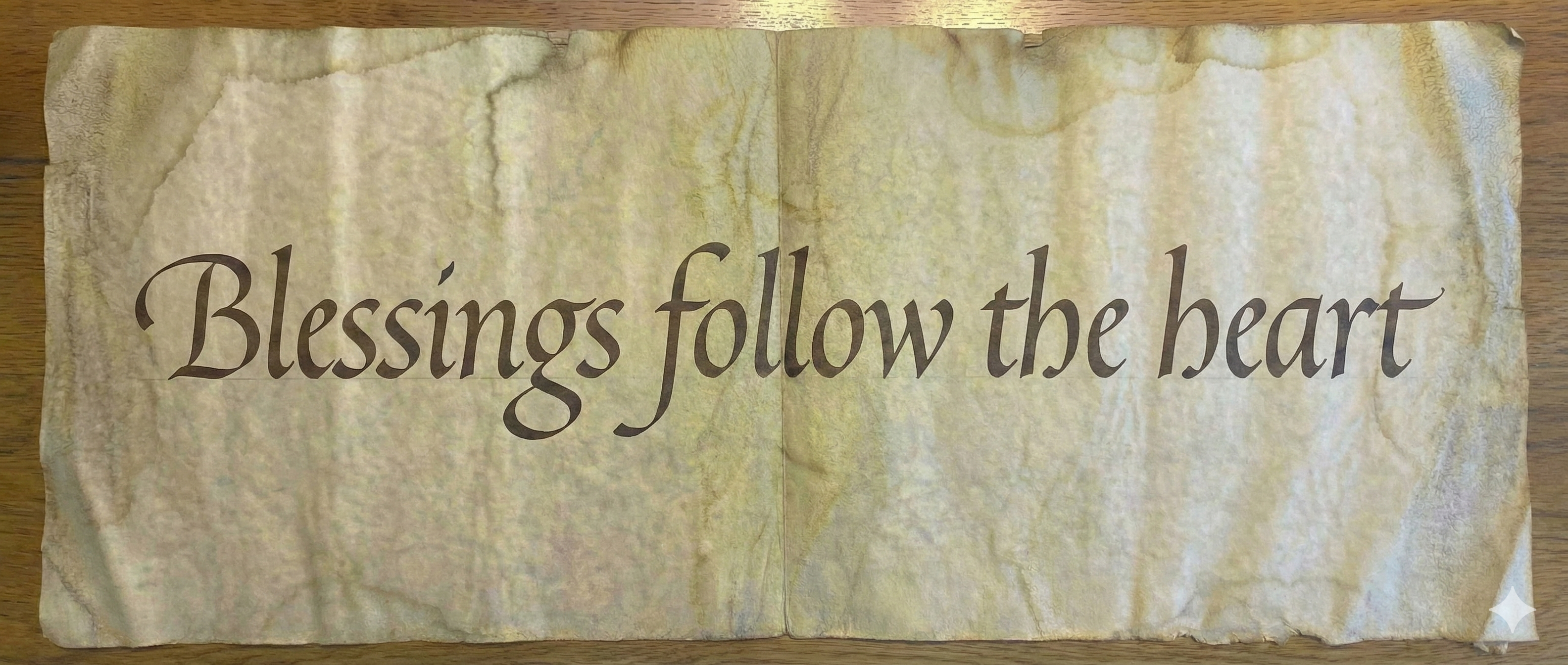
○ Running script – Practice writing to loosen cultural boundaries
The "lifting and pressing" of running script symbolizes the flexibility between cultural pressure and personal space.
- Sentence writing:I breathe within the culture, and I also breathe outside of the culture.
- English equivalent:I breathe within culture, and also beyond it.
- hint:When writing "breath," let the brushstrokes flow, symbolizing finding one's own rhythm within a cultural framework.
Lesson 1013: Cultural Textures - Drawing Guidance
Objective: To see how culture leaves its mark on you.
step:
● Draw a circle in the center of the paper to symbolize "self".
● Draw multiple thin lines extending inwards outside the circle, each line representing a cultural message, such as "Be strong" or "Don't fail."
● Use different colors to distinguish between "Support Your Culture Line" and "Restrict Your Culture Line".
● Finally, add a soft halo around your self-circle to symbolize that you are creating new breathing space.
Please log in before submitting your drawings and feelings.
○ 1013. Socio-cultural Influences: Suggestions for Journal Guidance
① Write down three cultural phrases that you have heard since childhood that are related to "must/should".
② How do these words affect you when you experience stressful events?
③ Which sentence makes you most anxious or guilty?
④ If you could rewrite one of these sentences, what would you change it to?
⑤ Today's micro-action: Choose a moment and try to act at your own pace rather than the pace of the culture.
Please log in to use.
When you realize that culture shapes you, you have already begun to gain freedom from it. Seeing is the first step to change.
 EN
EN  ZH
ZH  ES
ES  FR
FR  JA
JA