

Lesson 1027: Early Attachment Patterns and Traumatic Responses
Duration:75 minutes
Topic Introduction (Overview):
Many people find their reactions "seemingly stronger than others" after experiencing acute stress or traumatic events: they are more afraid of being abandoned, find it harder to settle down, are more prone to catastrophic thinking, or exhibit behaviors such as excessive dependence, excessive withdrawal, or excessive people-pleasing in interpersonal relationships. These are not personality defects, but often stem from deep imprints of early attachment experiences. In infancy and early childhood, we learn "whether the world is safe," "whether I can be caught," and "whether my needs are worth meeting" through the responses of our primary caregivers. When the attachment system is incongruous, neglected, over-involved, or traumatized in early life, the brain automatically activates old survival strategies when faced with stressful events, making the reaction stronger than the situation itself.
This course will guide you to understand the different manifestations of various attachment styles (secure, anxious, avoidant, disorganized) under acute stress: Is there a greater need for closeness, or an instinctive withdrawal? Is there an emotional outpouring, or a loss of feeling? It will also explore how to gradually correct old attachment patterns through present relationships, practice, body awareness, and psychological support. A mandala is not about drawing something, but about observing—observing your reactions not just as they belong to the "present," but as echoes of the past trying to be understood and placed.
▲ AI Interaction: See the Echo of Your Attachment
When stress strikes, are you more inclined to "approach" or "stay away"? Please write down your most recent significant emotional fluctuation and what happened. Did you approach, cling, and seek reassurance, or shut down, calm down, and refuse to connect?
Try asking yourself a key question: Was this reaction familiar to me in my childhood?
You don't need to "correct" immediately; just let yourself stop blaming and start understanding the first time.
Click the button below to explore with AI how your attachment patterns affect stress responses.
○ Echoes of Affection: Music Therapy
Choose a piece of music with a slow melody and a slightly gentle, uncertain feel, like the distant imagery of a childhood lullaby.
Observe your body while listening to music: When you hear a certain melody, do any parts of your body tense up? Or do any parts suddenly soften?
Promise yourself: Today, I will not demand change, but only allow myself to be "seen".
🍵 Herbal Healing Tea: Stabilizing and Harmonizing Emotions
Recommended recipe:Rose + Orange Blossom + Lemon Verbena.
Roses soothe the mind, orange blossoms support the feeling of being held after trauma, and lemon verbena regulates anxious stomach reactions.
When brewing tea, treat the aroma as a gentle "response," symbolizing a sense of security that you once lacked but are now willing to give yourself.
○ German Whole Grain Therapy: The Physical Foundation for Emotional Stability
When the attachment system is activated, the body experiences fluctuations: a sudden drop in blood sugar, stomach tightness, and disrupted sleep. German whole grain therapy emphasizes using whole grain foods that "release energy continuously"—such as rye bread, oats, buckwheat, and whole-wheat porridge paired with nuts and plant-based milk—to provide a stable material basis for mood.
The slow energy delivery of whole grains prevents you from experiencing a sudden emotional breakdown due to low blood sugar or rapid energy depletion, and also helps the brain stay clear under stress.
A warm, whole-grain meal tells your body, "I'm here to support you." This is one of the gentlest ways to mend old wounds of attachment.
Healing Recipes
/home2/lzxwhemy/public_html/arttao_org/wp-content/uploads/cookbook/kao-hong-shu-pei-hei-dou.html(Please confirm that the file has been uploaded: kao-hong-shu-pei-hei-dou.html)
🎨 Dream Mandala Healing · Mi Xiangwen 1027 · Highlights in Old Echoes
In your dream, you see an unfinished mandala, its edges broken and irregular, like fragments that might fall apart at any moment; the closer you get to the center, the softer and more stable the lines become, as if gently supported by someone. Standing before it, you suddenly realize: these breaks are not your fault, they are traces of your past struggles to survive.
Focus your attention on the warm, luminous spot at the center. It's small, yet it shines continuously. That's your original ability, the part of you that you want to connect with. A mandala isn't about drawing something; it's about watching—watching how the cracks in your early attachments are gently illuminated by your present self, instead of being swallowed up again.

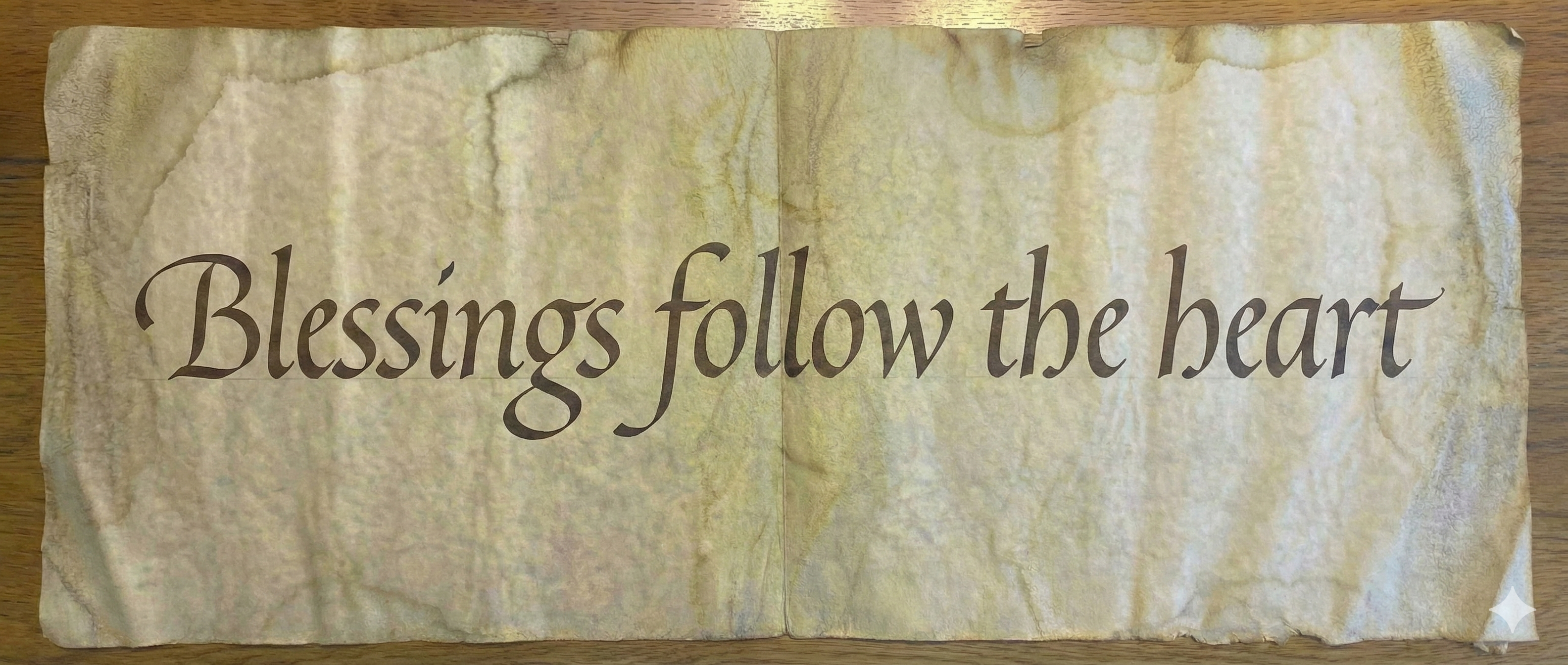
○ Humanist Calligraphy: Writing Inner Connective Sentences
Humanist Script emphasizes clear structure, soft lines, and letters that seem to "support" each other, making it ideal for attachment repair-related content.
- Sentence writing:I am allowed to be held.
- hint:When writing "I", make the vertical line slightly wider to symbolize stability; when writing "held", make the strokes slightly curved inward to symbolize acceptance.
- Please maintain slow, even breathing while writing, and practice the feeling of being supported through your pen strokes.
Lesson 1027: Attachment Trauma - Art Guidance
Objective: To allow you to visually perceive "old reactions" and "new possibilities".
step:
● Draw a thin, zigzagging line on the left side of the paper to symbolize unmet needs from childhood.
● Draw a slightly curved line in the center that extends forward, symbolizing your growth in stress and healing.
● Draw a soft-centered mandala on the right side. It doesn't need to be complicated; just symbolize "I am willing to be my own safe haven."
● Finally, write a sentence, such as "I am learning to be my own support".
There's no need to judge whether the lines are beautiful or not; rather, let them record your inner history.
Please log in before submitting your drawings and feelings.
○ 1027. Attachment and Stress Response: Journaling Guidance Suggestions
① When pressure comes, is your first reaction more like "approaching" or "retreating"? Write down an example.
② Are you familiar with this reaction from your childhood? Write down the earliest memory you can recall.
③ Write down a sentence you wish you could hear from yourself at that time.
④ Write down a sentence you would like to say to yourself right now.
⑤ Finally, write "I am practicing..." to conclude today.
Please log in to use.
Attachment is not destiny; it is a history. And you are rewriting your relationship with yourself in a new way.
 EN
EN  ZH
ZH  ES
ES  FR
FR  JA
JA