

Lesson 1031: Mechanisms of Storage and Re-experiencing Traumatic Memories
Duration:75 minutes
Topic Introduction (Overview):
Traumatic memories differ from ordinary memories. They are not stored in the brain in a linear, narrative form, but rather remain in the nervous system in a fragmented, sensory, and non-verbal manner. When an event is too sudden and exceeds the psychological threshold, the amygdala forcibly takes over consciousness, storing the visual, auditory, olfactory, tactile, and heart rhythm sensations of that moment as "unorganized raw files." Later, any similar clues can instantly trigger these fragments, making the person feel as if they are "back at the scene," even if the environment is completely safe, the body and nervous system will still perceive a recurrence of danger.
This course will guide you through understanding the storage mechanisms of traumatic memories in the brain, the formation principles of re-experiencing (flashbacks, emotional flooding, somatic memories), and why trauma is not an "unforgettable story" but rather an "experience that resides in the body." We will combine the calming effects of herbal healing teas, the long-term support of the nervous system provided by German whole grain therapy, the slow writing rhythm of humanistic calligraphy, and the observational exercise of "mandala is not about drawing something, but about observing," to help you gradually transform traumatic memories from "untouchable flames" into "fragments of stories that can be gently embraced."
▲ AI Interaction: Why do traumatic memories always "strike suddenly"?“
Traumatic memories often do not appear as "remembering an event," but rather as a sudden physical reaction: rapid heartbeat, chest tightness, sweaty palms, and disordered breathing.
Please describe your most recent similar experience:
① In what context did it happen?
② What is your first reaction? Does your body react first or your emotions?
③ What would it look like if this wasn't "your current reaction," but rather "your past self reacting"?
After you finish writing, click the button below to work with AI to analyze the replay mechanism of traumatic memories in more detail.
○ Reassuring Traumatic Memories: Music Therapy
Choose a piece of music with sustained notes, layered structure, but not overly exciting, and focus your attention on the "fade-in and fade-out" of the sound.
While listening, observe the parts of the body that react first: chest? back? stomach? hands? These usually correspond to the "entry point" of the traumatic memory.
You don't need to force yourself to calm down; just accompany these reactions with the music: don't suppress, don't speed up, and don't analyze.
🍵 Herbal healing tea - Stabilizes the nervous system after a trigger
Recommended recipe:Chamomile + Elderflower + a touch of mint.
Peppermint helps improve breathing, elderflower supports the nervous system in returning to stability, and chamomile gradually loosens tightness in the diaphragm and stomach.
It is recommended to drink slowly after triggering the reaction, using the temperature to remind the body: "Things are different now; you are safe now."“
German-style whole grain therapy: "Rebuilding the foundation" of the nervous system after trauma.“
The nervous system is often in an unstable, hypersensitive state after trauma, and fluctuations in blood sugar are more likely to trigger anxiety, palpitations, and re-experiencing of traumatic events. German whole grain therapy emphasizes a stable, low-glycemic-impact diet of grains (such as rye, oats, whole wheat flour, and farro) to help the body restore basic energy. A warm serving of whole grain porridge or rye bread with nuts daily can help restore the nervous system from a state of constant alertness to one of stable energy levels. This is a crucial foundation for long-term recovery: physical stability comes first, then emotional well-being can return to normal.
Healing Recipes
/home2/lzxwhemy/public_html/arttao_org/wp-content/uploads/cookbook/kao-hong-shu-pei-hei-dou.html(Please confirm that the file has been uploaded: kao-hong-shu-pei-hei-dou.html)
🎨 Dream Mandala Healing · Mi Xiangwen 1031 · Fragments of Memory and Light
Imagine you're standing in a dimly lit room, with fragments of varying sizes scattered on the floor: some like glass, some like metal, some like small pebbles. Stepping on them hurts, makes you flinch, and leaves you unsure where to put your foot.
You draw a circle in the center, place the fragments inside the circle, giving them a precise place, rather than letting them float around you. A mandala isn't about drawing something, but about observing: observing how these fragments once caught you off guard, and observing how you can "place" them in this moment. When the fragments are seen, light can shine in, instead of suddenly piercing you from darkness.

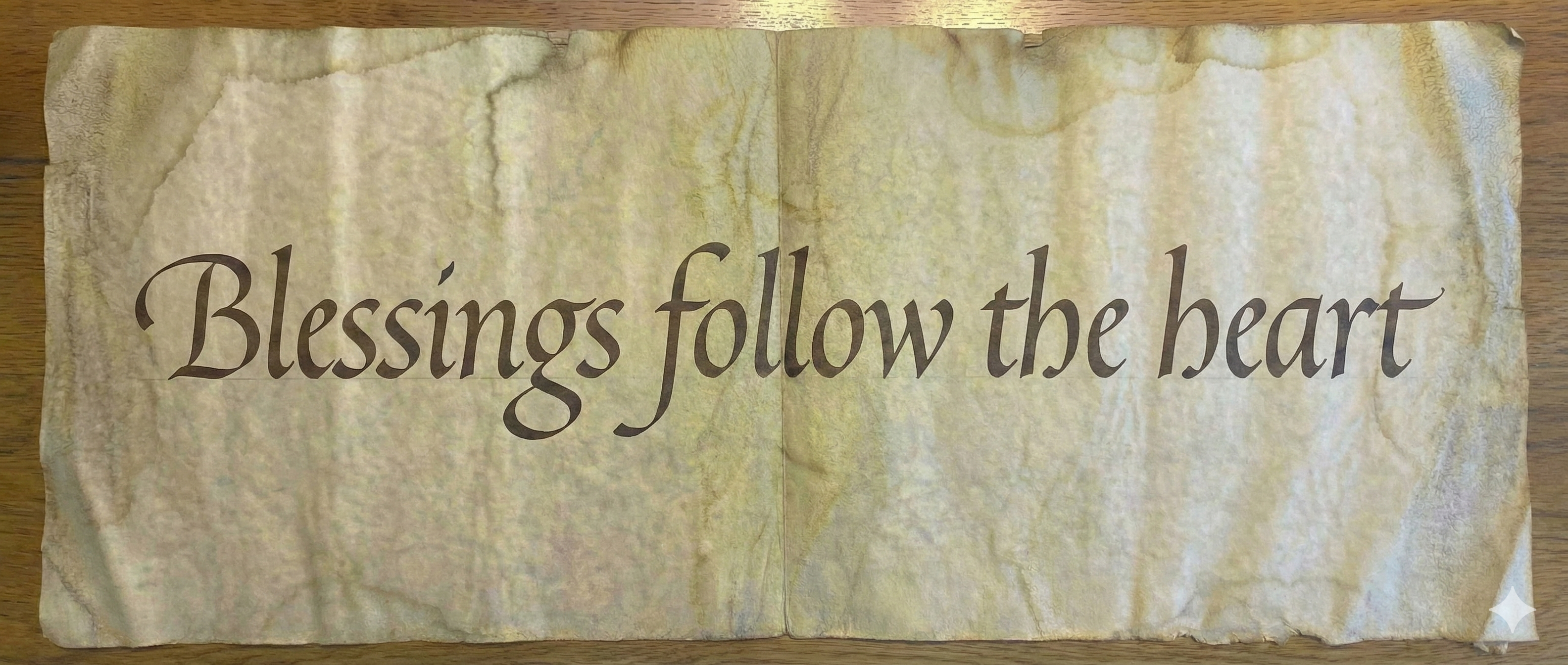
✍️ Humanistic Calligraphy: Creating New Rhythms for Memory
Humanistic calligraphy emphasizes balance, breath, and gentle transitions, making it suitable as an auxiliary exercise for processing traumatic memories.
- Sentence writing:I can meet my memories with light.
- Write each letter slowly, letting the arc unfold naturally, and deliberately slow down at the word "light," synchronizing your hand with your breath.
- Pay attention to your body's subtle reactions when you write "meet" or "memories," it will tell you which parts are still hard to get close to.
Lesson 1031: Traumatic Memories - Guided Drawing
Purpose:Transform fragmented memories from a source of oppression into observable images.
step:
1. Draw a large circle in the center of the paper, symbolizing a "safe container".
2. Recall the moment that gave you a reliving experience, and symbolically draw those "fragmented feelings" (a sound, smell, image, gesture) into a circle using different shapes.
3. Draw a soft halo around the circle to symbolize "I am watching, not being swallowed up".
4. No need to explain the meaning of the pattern; let the lines speak for themselves.
This is the first step in getting the brain back from chaotic "escape mode" to "organization mode".
Please log in before submitting your drawings and feelings.
Lesson 1031: Traumatic Memories - Journal-Guided Suggestions
① Write down the moment you most recently felt like you were "taken back to the past".
② What were your three strongest sensory memories at that time? (Sound/Image/Smell/Body reaction)
③ If that moment were a fragment, what shape might it be? Sharp? Blurry? Cold? Heavy?
④ Write down a sentence you would like to say to your past self: "You no longer need to bear this alone."“
⑤ Today's mini-practice: Take four deep breaths + slowly write the letter "light" to remind your body that "I am in this moment".
Please log in to use.
Memories are not erased, but they can be repositioned; when you are willing to watch, they no longer cry for help in the form of flashbacks.
 EN
EN  ZH
ZH  ES
ES  FR
FR  JA
JA