

Lesson 1034: Resolving Post-Traumatic Self-Blame and Shame
Duration:75 minutes
Topic Introduction (Overview):
In the aftermath of trauma, self-blame and shame are often more persistent than fear: many people constantly blame themselves, wondering "Why didn't I escape?", "Did I do something wrong?", "Am I too weak?", "Was it because I wasn't good enough that I suffered this?" Shame makes people feel "I'm not worthy of being loved, not worthy of being protected, not worthy of speaking up," so the trauma is repeatedly sealed deep within, forming a lonely, closed space. Self-blame, on the other hand, is like a knife constantly pointed at oneself, causing the already wounded heart to reopen again and again.
However, these emotions are never rational judgments, but rather the impact of trauma on the brain's "survival system"—when events are too overwhelming to comprehend, the brain prefers to blame itself rather than acknowledge the world's insecurity as something more controllable. This course will guide you through dismantling the self-blame mechanisms following trauma, understanding how shame is linked to the body's freezing, dissociation, and silence, and using herbal healing teas to bring back gentle comfort, German whole grain therapy to stabilize bodily energy, humanistic calligraphy to restore inner dignity, and finally, through the approach of "a mandala is not about drawing something, but about observing," slowly pulling yourself back from the shadow of shame.
▲ AI Interaction: Seeing Evidence That "It's Not Your Fault"
List the three things you most often blame yourself for: such as "I should have been stronger", "I shouldn't have been silent", and "Am I too slow-witted?"
Then answer: Are these facts, or "protective assumptions" made after the injury?
Click the button below to let AI help you distinguish between "traumatic reaction" and "real responsibility".
○ Deep Shame Soothing · Music Therapy
Choose a piece of music with stable low frequencies and warm strings, and lean your body slightly back in your chair.
Focus your attention on your chest and throat—shame often hides there.
If you experience chest tightness, a desire to shrink, or a feeling of wanting to hide, these are signs that the repair process has begun.
🍵 Herbal Healing Tea: A Gentle Drink to Alleviate Shame
Recommended recipe:Rose petals + orange leaf + licorice root.
Roses soothe self-doubt, orange leaves calm tense nerves, and licorice root helps the body regain a sense of protection.
Keep breathing slowly while drinking to re-implant the experience that "the body deserves to be cared for" into the nervous system.
German Whole Grain Therapy: Stabilizing Energy Fluctuations After Shame
Shame can lead to eating disorders, hypoglycemia, stomach cramps, and rapid energy loss, creating a "mind-body avoidance mode." German whole grain therapy emphasizes stability, warmth, and basic nutrition, such as rye porridge, farodea stewed with vegetables, and wheat germ with nuts.
The fiber and slow-release carbohydrates in whole grains can reduce post-stress cortisol fluctuations, prevent emotional breakdown, and allow the body to rediscover the fundamental belief that "I deserve to be nourished."
Healing Recipes
/home2/lzxwhemy/public_html/arttao_org/wp-content/uploads/cookbook/kao-hong-shu-pei-hei-dou.html(Please confirm that the file has been uploaded: kao-hong-shu-pei-hei-dou.html)
🎨 Dream Mandala Healing · Mi Xiangwen 1034 · Let Shame Leave the Shadows
Imagine you're sitting in a gray-blue space, shame like a heavy cloak covering you, making you want to shrink smaller, thinner, and less visible. You gently look up and see a soft light in the distance. The light doesn't approach; it just shines there quietly.
You slowly draw a circle on the ground, letting the light move along the edge of the circle little by little—not to illuminate you, but to let you see: shame is an experience, not an identity.
A mandala is not about drawing something, but about observing—observing how light gently touches shadows, allowing you to be seen and accepted completely without the need for "perfection".

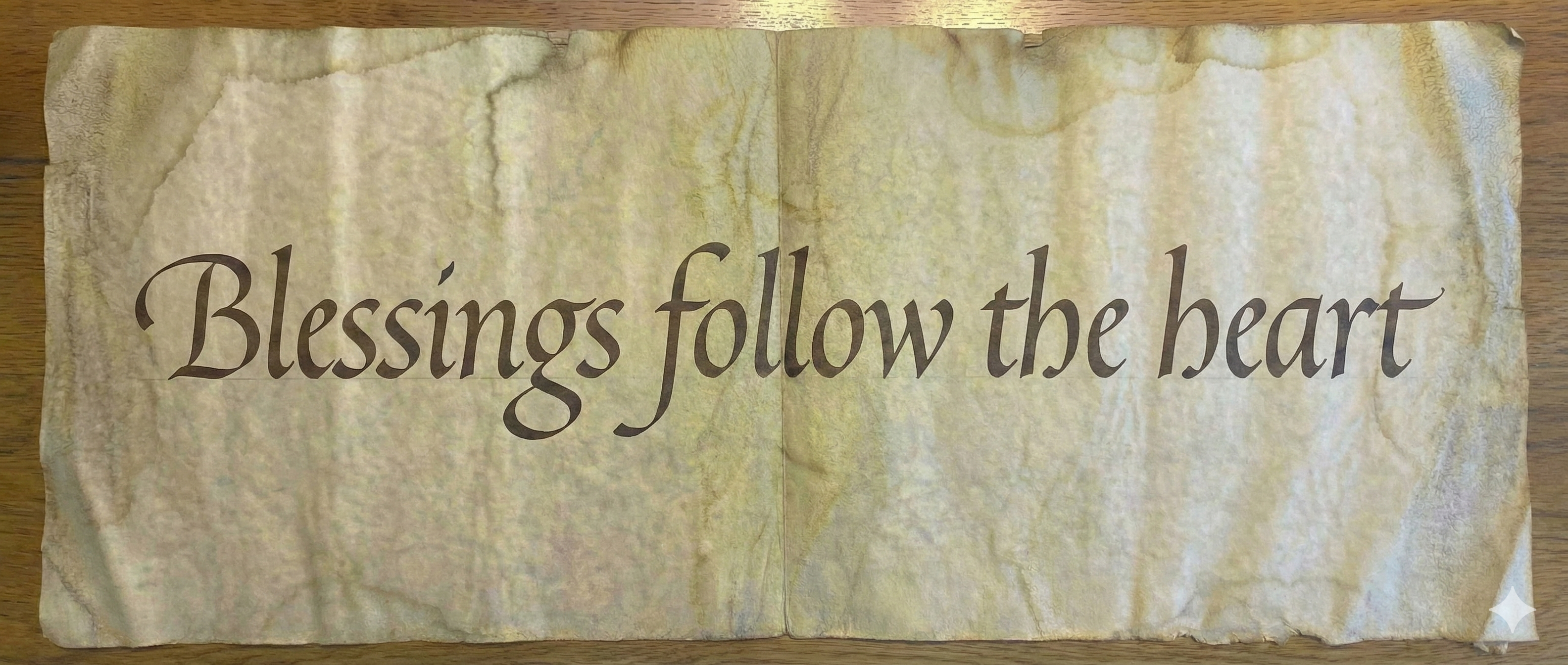
✍️ Humanistic Calligraphy: Writing Practice for Restoring Self-Worth
Humanist calligraphy emphasizes the balance of proportion and structure, making it an excellent exercise for restoring dignity.
- Sentence writing:I am not the cause of my pain.
- When writing "I am", the strokes should be made to sink steadily, symbolizing the grounding of one's existence.
- Pause briefly when writing "not" to allow the power of negative shame to enter your body.
Lesson 1034: The Shape of Shame - Drawing Guide
Purpose:Transform shame from an abstract emotion into a viewable and transformable image.
step:
1. Draw an area that you feel is "shameful and hidden," without being realistic.
2. Use lines to express feelings of shame—tightening, bending, darkening, cracking, or twisting.
3. Gradually add more stable lines to the outer circle, so that the body can see: "I can embrace this part, rather than be defined by it."“
4. Finally, write a sentence next to the image: I am learning to catch myself.
Please log in before submitting your drawings and feelings.
Lesson 1034: Self-blame and shame - Journal guidance suggestions
① Write down the three sentences you most often blame yourself for.
② Which sentence hurts you the most? Please describe your physical sensations: chest tightness? throat congestion? shoulder and back pain?
③ If your best friend experienced the same thing, what would you say to him? Please write a complete sentence.
④ Which gentle words would you be willing to say to yourself?
⑤ Today's exercise: Write "I am not the cause of my pain" three times slowly.
Please log in to use.
Shame is not your truth, but merely the shadow left by trauma. The more you look at it with light, the more it will slowly dissipate.
 EN
EN  ZH
ZH  ES
ES  FR
FR  JA
JA