

Lesson 1035: Childhood Trauma and Attachment Repair
Duration:75 minutes
Topic Introduction (Overview):
Childhood attachment relationships shape a person's most basic sense of security: how we trust, how we approach others, how we express our needs, how we seek help from others, and even how we deal with conflict are all deeply influenced by early caregiving experiences. When a child experiences neglect, emotional indifference, violence, or unpredictable caregiver reactions in childhood, their brain will develop survival strategies in an extremely unstable environment—such as excessive people-pleasing, extreme independence, emotional freezing, an inability to trust anyone, or a continuous cycle of "approach → fear → withdrawal → self-blame" in close relationships.
These are continuations of traumatic attachment experiences into adulthood, not personality flaws. This course will guide you to understand how attachment trauma affects the nervous system, bodily sensations, and emotional regulation patterns, and teach you the first step to effective repair: re-experiencing the mind-body experience of "I deserve to be approached, deserve to be responded to, deserve to be understood." Through gentle herbal healing teas to soothe the inner child, combined with German whole grain therapy to stabilize the body's energy base, and humanistic calligraphy to promote the reconstruction of self-esteem, the course concludes with the approach of "a mandala is not about drawing something, but about observing," witnessing how attachment wounds are gradually illuminated by light.
▲ AI Interaction: Identifying Current Patterns of Attachment Wounds
Please write down the three patterns that appear most often in your intimate relationships: for example, "I am easily withdrawn", "I am clingy", "I am afraid of bothering others", and "I always feel unworthy".
AI will help you identify which are childhood survival strategies, rather than your true nature.
When are you most afraid of being abandoned? When are you most afraid of getting too close? Write it down, then click below to start exploring.
○ Soothing the Inner Child: Music Therapy
Choose a piece of music with soft piano and slow strings, and place your hands lightly on your chest while it plays.
Please observe: Does the chest tighten automatically? Do the shoulders rise? These are bodily memories of attachment trauma.
Music isn't meant to "make you relax instantly," but rather to make your body feel: there's no danger right now, you can stay here.
🍵 Herbal Healing Tea: A Gentle Formula to Soothe Your Inner Child
Recommended recipe:Chamomile + Rose + Echinacea.
Chamomile soothes the neglected need to be picked up during childhood; rose restores self-worth; echinacea strengthens the body's sense of being protected.
While drinking, gently close your eyes and silently say: I deserve to be treated gently.
German Whole Grain Therapy: Rebuilding a Foundation of Stability and Safety
People with attachment trauma are prone to unstable blood sugar, disordered eating, stomach pain, and chronic low energy.
German whole grain therapy restores the body's internal signals through the principles of "warmth, slow release, and stability," such as rye whole grain porridge, brown wheat with roasted root vegetables, and a combination of oats and nuts.
When the body is steadily nourished, the brain has the capacity to learn new relationship patterns and is more likely to develop the feeling that "I deserve to be cared for".
Healing Recipes
/home2/lzxwhemy/public_html/arttao_org/wp-content/uploads/cookbook/kao-hong-shu-pei-hei-dou.html(Please confirm that the file has been uploaded: kao-hong-shu-pei-hei-dou.html)
🎨 Dream Mandala Healing · Mi Xiangwen 1035 · Safe Approach
Imagine you are sitting in a warm and quiet space, like an old wooden house, with light streaming in obliquely through the window. In front of you is a circle divided into four quadrants, each representing a childhood attachment experience: hope, fear, closeness, and retreat.
Focus your attention on the quadrant where the light is shining—you don't need to draw a pattern, just observe how the light gently rests there.
It doesn't ask you to come closer, nor does it force you to reopen old wounds; it simply "is there."
A mandala is not about drawing something, but about observing—observing how light accompanies you, allowing you to understand for the first time that getting close is not necessarily dangerous, and being seen does not necessarily mean getting hurt.

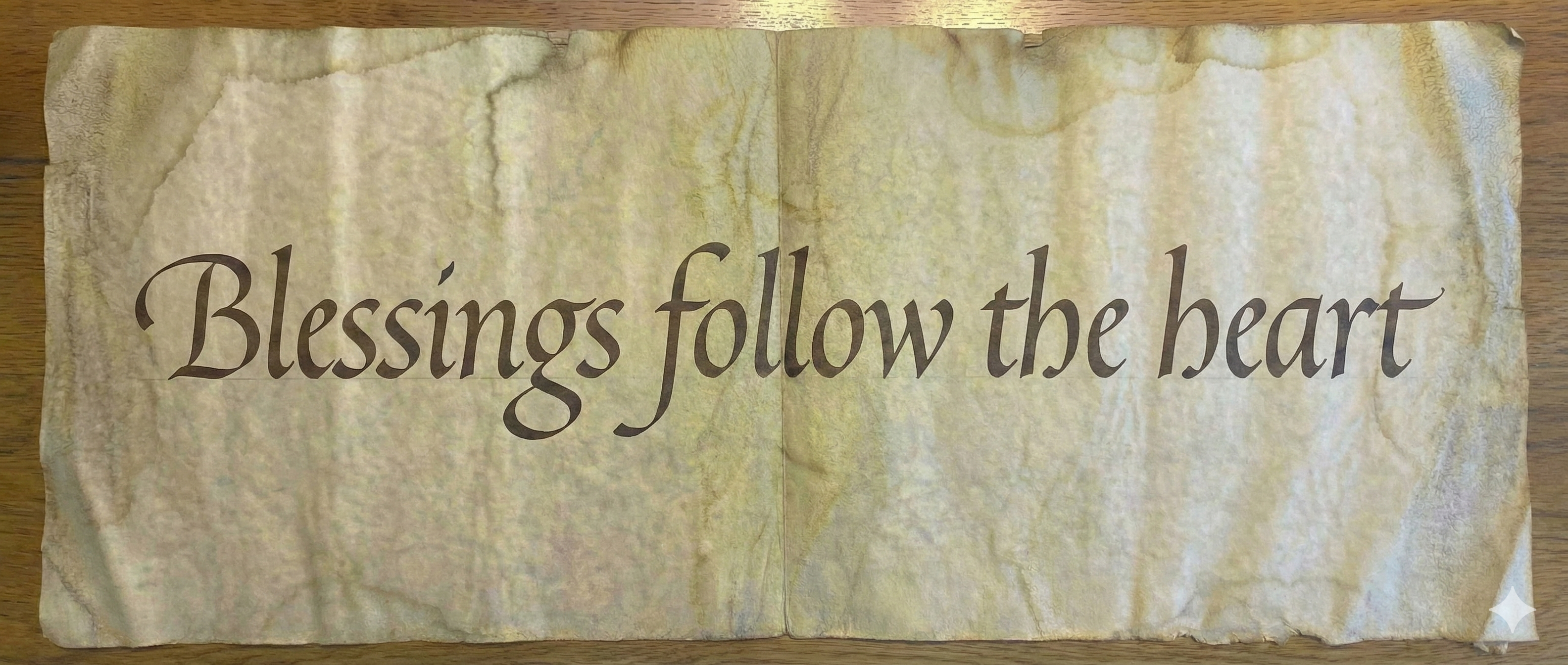
✍️ Humanistic Calligraphy: Writing the Core Sentence of Attachment Restoration
Humanist calligraphy emphasizes proportion, light, and balance, symbolizing a reliable relational structure.
- Sentence writing:I am worthy of a safe connection.
- When writing "worthy", lift the strokes slightly upwards to symbolize a resurgence of self-worth.
- Slow down when writing "safe," allowing the rhythm of safety to enter your body.
Lesson 1035: Attachment Repair - Guided Drawing
Purpose:Transform attachment trauma from an abstract emotion into an image that is "approachable".
step:
1. Draw a small circle in the center of the paper to symbolize "self". It does not need to be symmetrical.
2. Draw several circles at different distances on the outside to represent "others".
3. Observe: Which circles are too close together? Which are too far apart? Which ones do you want to get closer to but are afraid to approach?
4. Choose a circle and draw a faint line between it and your "self," symbolizing "allowing a little bit of closeness."
5. This is the first step in the repair: don't force it, just allow it.
Please log in before submitting your drawings and feelings.
Lesson 1035: Attachment Repair - Journaling Guidance Suggestions
① Which type of intimacy most resembles your childhood experience? Please write it down.
② Which type of relationship makes you most uneasy? What memories does it trigger?
③ Write down a sentence you wish your caregiver from back then would say to you.
④ Would you like to say this to yourself today? Write down your feelings.
⑤ Today's exercise: Write "I am worthy of safe connection" three times slowly.
Please log in to use.
Attachment trauma is not your fault; it's how you struggled to survive the storm. Healing is the process of allowing yourself to be seen with gentleness again.
 EN
EN  ZH
ZH  ES
ES  FR
FR  JA
JA