

Lesson 1038: The Role of Expressive Arts Therapy in Trauma
Duration:75 minutes
Topic Introduction (Overview):
Post-traumatic language is often fragmented or even absent. Many people find themselves unable to speak, describe, or know where to begin after a traumatic event because the brain temporarily shuts down language processing areas under high pressure, diverting more resources to survival modes. This course aims to help you understand that the effectiveness of expressive arts therapy for trauma is not about "drawing well" or "writing beautifully," but rather about bypassing the language blockage, allowing the body, emotions, and subconscious to find a new outlet.
Painting, writing, physical movement, improvisational lines, color, mandalas, symbols—these art forms can all become another "language," allowing fragments of trauma to be reorganized in a safe and controlled space. The expressive process is not about reproducing events, but about observing how internal experiences emerge, move, and loosen. The soothing and peaceful effects of herbal healing teas, along with the holistic energy support from German whole grain therapy after stabilizing blood sugar, prevent artistic creation from being swallowed by emotional storms; while the rhythm of humanistic calligraphy makes expression more solid, structured, and breathing. A mandala is not about drawing something, but about observing—observing how your life experiences are repositioned in the image.
▲ AI Interaction: How to begin expressing yourself when language is blocked?
Many people's first words after trauma are not a description, but rather, "I don't know what to say." This is normal.
Please try writing to the AI: ① Three colors that come to mind right now; ② A feeling that is indescribable but "exists" in your body; ③ What a line you would like to draw (curved? straight? trembling? shattered?).
AI will help you integrate these visual and bodily sensations into a path of expression that you can begin, without having to immediately confront the burden of language.
○ Musical adjustments before the art performance
Choose a soft, wordless piece of music and let it flow like a river through your chest, shoulders, and abdomen.
It's not about relaxation, but about moving you from a state of "freezing" to a state of "gentle flow"—just a little bit is enough. Music doesn't need to cure you; it just needs to accompany you.
When you start to feel a little loosened up, that's when you can pick up a paintbrush or pen and make your first stroke.
🍵 Herbal healing teas: providing warmth for your emotions
Recommended recipe:Rose petals + linden flowers + a small amount of lemon peel.
Rose relieves chest tightness, linden blossoms bring tranquility, and lemon peel provides a touch of "brightness to the breath." People recovering from trauma often feel heavy and gloomy; this tea allows the body to receive a subtle but real brightening effect.
Before drinking tea, hold the teacup in your palm and pay attention to the temperature, aroma, and weight—this is the most important first step in art therapy: returning to the senses, returning to the body.
German Whole Grain Therapy: Providing Stable Energy for Creativity
Creative expression requires stable and gentle energy. The German whole grain therapy emphasizes "slow energy": oats, rye, brown rice, whole wheat combined with a small amount of nuts and natural fats.
In expressive arts therapy, if the body enters an anxious mode due to hunger or unstable blood sugar, it will directly affect the expressive process. Therefore, eating a small whole-grain snack (such as an oatmeal and nut bowl) before painting, writing, or creating a mandala can help keep the body in a safe and grounded state.
Healing Recipes
/home2/lzxwhemy/public_html/arttao_org/wp-content/uploads/cookbook/kao-hong-shu-pei-hei-dou.html(Please confirm that the file has been uploaded: kao-hong-shu-pei-hei-dou.html)
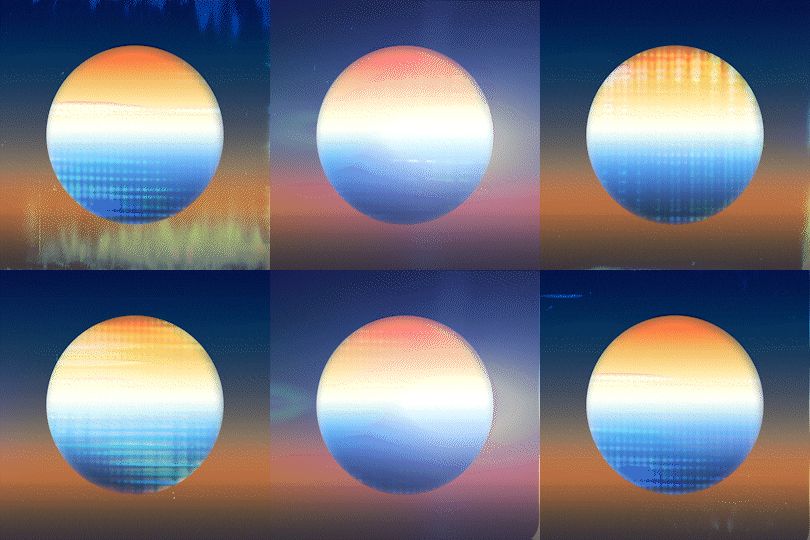
🎨 Dream Mandala Healing · Mi Xiangwen 1038 · The Room Formed by Color
In your dream, you enter an empty room. The walls are initially gray, but as you take a deep breath, the gray begins to soften, as if slowly dissolving after being seen. You reach out a finger to touch the air, and the air transforms into a faint line that extends forward from your fingertip.
So you continue to move—lines become blocks of color, blocks of color become gentle curves, and slowly form a huge mandala. It's not you who are drawing, but your breath, your footsteps, your heartbeat that are drawing.
You don't need to control it; simply watch it form, expand, and brighten. A mandala isn't about drawing something; it's about watching—watching how the expression regains life within you, and in watching, you are quietly healed.
✍️ Humanistic Calligraphy: Let the Lines Be Your Voice
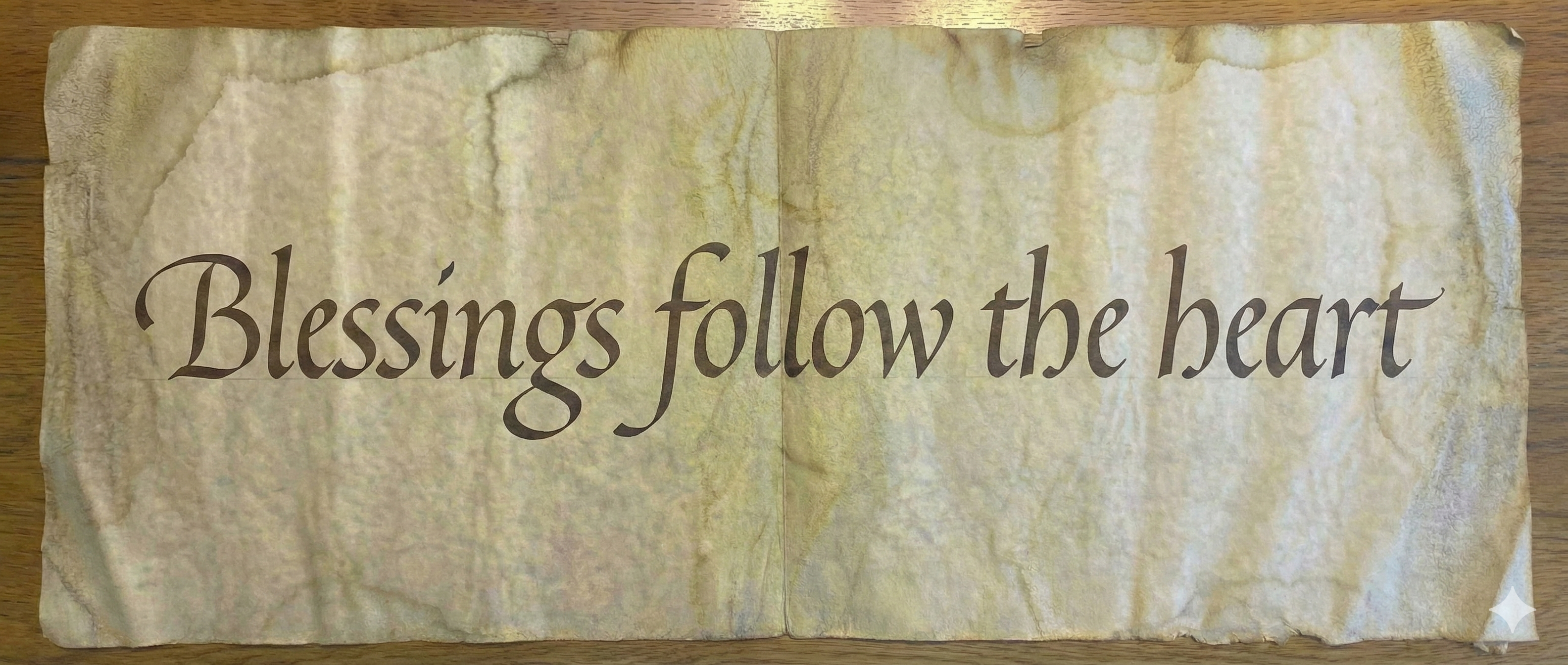
Humanist calligraphy is known for its clarity, structure, and balance. For those who have experienced trauma, its rhythm provides a "reliable framework."
- Sentence writing:I allow myself to express, gently and freely.
(I allow myself to express myself in a gentle and free way.) - When writing "allow myself", make the letters close together to symbolize "I take myself back".
- When writing "gently and freely", make the strokes more extended and rounded, as if giving your mind some space to expand.
Lesson 1038: Expressive Arts Therapy - Guided Drawing
Purpose:Make intangible emotions tangible, and make repressed experiences "visible".
step:
1. Draw a line on the left side of the paper that represents your mood today: the thickness and color are up to you.
2. Draw a line on the right side of the paper to represent the state you want to be in.
3. Let the two lines meet in the middle, intertwine, approach each other, or run parallel; there is no need to force them to be unified, let them find their own relationship.
4. Draw concentric circles in a mandala pattern outside the intersection point, symbolizing that you have created a safe space for your emotions.
5. After you finish, don't rush to interpret it. Just watch quietly and say, "This is my voice today."“
Please log in before submitting your drawings and feelings.
○ 1038. Expressive Arts Therapy: Journaling Guidance Suggestions
① What are the three colors you most want to use today? Why?
② If your emotions were a line, what would its shape be now?
③ Which part of the creation surprised you the most? Write it down.
④ After finishing the painting, did your body experience any slight changes? (Warmth? Looseness? Numbness? Lightness?)
⑤ Write down today's declaration: "I allow ________ to be seen."“
Please log in to use.
Expression doesn't need beauty, it doesn't need to be correct; it only needs to be truthful. Every line, every color, every viewing is a step-by-step process of reclaiming yourself from trauma.
 EN
EN  ZH
ZH  ES
ES  FR
FR  JA
JA