

Lesson 1040: Understanding Triggering Reactions and Coping Techniques
Duration:75 minutes
Topic Introduction (Overview):
After experiencing an acute stressful event, many people find themselves instantly transported back to the scene of the trauma by certain sounds, smells, situations, expressions, or even a simple word. The trigger response is not weakness or exaggeration, but rather the brain's threat system continuously protecting you at its highest level before updating its information. It often manifests as a sudden increase in heart rate, chest tightness, sweaty palms, a desire to escape the scene, fragmented thoughts, and even temporary disorientation. This lesson will guide you through understanding how the trigger response forms in the nervous system, why it is so rapid, and how we can gently and effectively coexist with it, rather than being overwhelmed by it.
Triggered responses are not "enemies to be driven away," but rather the brain's attempt to tell you, "Something similar to the past is here; be careful." When you learn to interpret these signals and stabilize yourself through grounding, breathing, and visual fixation, you will gradually rebuild your sense of control. Mandala drawing is not about creating images, but about observation—observing how triggered responses arise, spread, and are understood, rather than fighting them. You will learn to open a safe passage for yourself the moment a trigger occurs, transforming the fear from "I am being swallowed up" to "I am becoming aware and guiding myself." This is the starting point of recovery.
▲ AI Interaction: Identifying Trigger Points and Establishing Safety Anchors
The trigger occurs very quickly, sometimes as fast as a "snapshot." It's not a matter of whether you want it or not; your body directly initiates its self-protection mechanism.
Please describe the details of the most recent trigger: Was it a sound? A smell? A scene? Or someone's facial expression?
Next, write down three physical reactions that occurred at the time: chest tightness, stiffness, rapid heartbeat, urge to run away, narrowed vision, etc.
Finally, I wrote a sentence to myself: "Triggering is not going back, but an echo of the past."“
Click the button below to practice trigger recognition and security anchor establishment with AI.
○ Triggering Response: Music Therapy
Choose a piece of instrumental music with a stable structure and a slow, progressive rhythm, and let the rhythm become your "external ground".
In music, focus your attention on three fixed points: the soles of your feet, your breath, and an object in front of you.
Each time it is triggered, return to these three points to let your body know: I am here, not in the past.
Music is not about “suppressing fear”, but about providing a continuous rhythm so that your nervous system has something to rely on.
🍵 Herbal Healing Tea - Stabilizes the Nervous System After Triggering Events
Recommended drinks:A soothing hot drink made with lemon balm and elderflower.
Lemon balm helps reduce overactive amygdala responses, while elderflower can relax facial muscles and relieve chest tightness.
Usage: Steep in hot water for 4-6 minutes to release the aroma, then sip slowly to provide gentle support after the aroma has been released.
○ German Whole Grain Therapy: Warm Oat and Walnut Soothing Bowl
German whole grain therapy emphasizes "slow energy release, stable blood sugar, and support for the nervous system." Warm oatmeal with walnuts, flaxseeds, and a touch of honey provides stable complex carbohydrates and magnesium, helping to reduce tremors, palpitations, and sudden energy drops after a trigger, allowing you to regain a sense of stability.
Healing Recipes
/home2/lzxwhemy/public_html/arttao_org/wp-content/uploads/cookbook/kao-hong-shu-pei-hei-dou.html(Please confirm that the file has been uploaded: kao-hong-shu-pei-hei-dou.html)
🎨 Dream Mandala Healing · Mi Xiangwen 1040 · The Ring of Echoes
You dream that you are walking on an old street. When the wind blows, it brings a sound that is both strange and familiar, making your heart skip a beat. You stop and listen carefully, but the sound is just the wind rustling through the eaves. However, your body thinks that something is about to happen.
So you draw a mandala in your mind: the center is the "moment of triggering," and the outer circle is your process of finding your breath layer by layer. You are not drawing it, but watching—watching how the trigger comes and goes like the wind, watching yourself move step by step from the center to the wider, safer outer space. This is how you coexist with the echo, not by resisting, but by seeing.

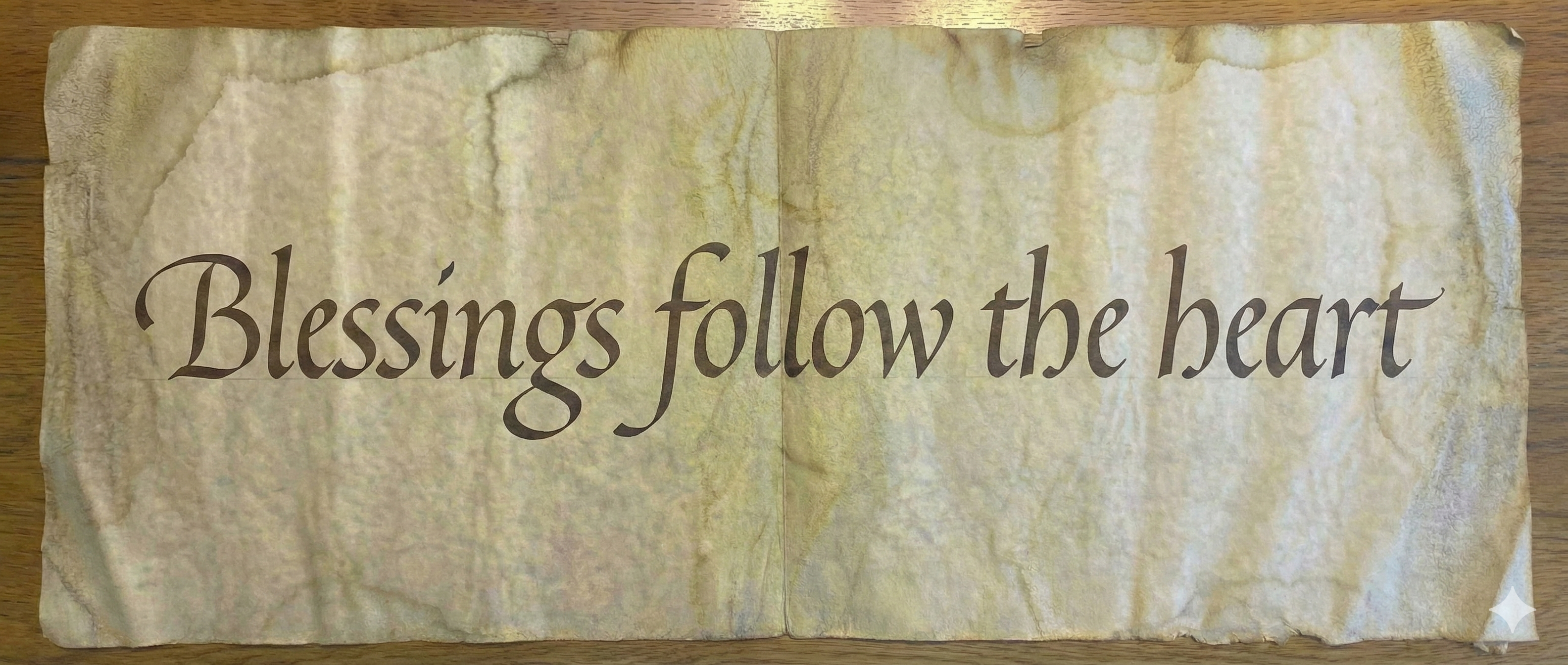
○ Humanist Calligraphy: Stable Sentence Writing
Humanistic calligraphy emphasizes the balance between breath, brushstroke weight, and letter composition, much like the solid practice that follows a trigger.
- Written words:steady · present · here
- Corresponding Chinese:Stable at this moment.
- hint:With each letter you write, pause your breathing for a moment, telling your body, "I am here, not in the past."“
Lesson 1040: Triggered Response - Guided Drawing
Objective: To visualize the trigger response so that you can see "it" rather than be controlled by "it".
Steps: Draw a center circle on a piece of paper, symbolizing the moment the trigger occurs. Expand outwards from the center circle with several concentric circles, each representing a different feeling: Write down the physical reaction (heartbeat, stiffness) in the first circle; write down the emotion (fear, panic) in the second circle; write down the supporting actions (stepping on the ground, breathing, looking towards a safe object) in the third circle. Finally, draw a more stable line on the outermost circle, symbolizing your expanding sense of control.
Please log in before submitting your drawings and feelings.
○ 1040. Triggering Reactions and Coping Techniques: Log-Guided Suggestions
① What was the most recent triggering event? Describe the specific context.
② What are the first three bodily reactions at this moment? Only name them, do not analyze them.
③ What does this trigger resemble? Wind? An echo? A light suddenly turning on? Write a metaphor.
④ What was your most successful "ground-based action" today? Why was it effective?
⑤ If this happens again, what do you hope you will remember? Write a sentence that supports yourself.
⑥ Conclusion: Triggering is not a failure, but rather the nervous system is still learning to be safe. You are bringing it home.
Please log in to use.
The trigger reaction is not the danger itself, but the shadow of the past. When you can see it, name it, and accompany it, you are rebuilding your own safe world.
 EN
EN  ZH
ZH  ES
ES  FR
FR  JA
JA