

Lesson 109: The Chain Reaction of Shame and Fear
Duration:70 minutes
Topic Introduction:
Shame is the "hidden engine" of many fears.
When you worry about "Am I embarrassing?" or "Will others look down on me?", shame will immediately raise your body's alarm bells, making a situation that you could otherwise handle suffocate.
This lesson will help you understand how shame amplifies fear, how fear in turn reinforces shame, and how to break this "chain reaction."
Why are shame and fear linked together?
- Shame is "I'm bad," fear is "Danger is coming":The combination of the two will make you feel both "I am not good enough" and "I will be attacked".
- Shame makes you want to hide, fear makes you more sensitive:Every glance, tone of voice, and silence feels like a judgment.
- Old reactions stemming from one's upbringing:Past humiliation, denial, and ridicule can be quickly awakened in current relationships.
Lesson 109: The Chain Reaction of Shame and Fear (Click to listen to the reading and view the content)
Shame and fear often don't exist independently but rather form a mutually amplifying chain reaction. Many people, in fearful situations, not only fear the situation itself but also quickly turn to self-denial, feeling they shouldn't be so weak, shouldn't be seen, shouldn't expose their flaws. Shame intervenes at this moment, transforming fear from a mere reaction to danger into an attack on one's own existence. Psychologically, fear primarily activates alertness to threats, while shame directly targets self-worth. When the two overlap, the body simultaneously bears the dual pressure of external danger and internal self-denial. This is why shame makes fear seem particularly unbearable. The chain reaction usually begins in a single moment—for example, a tense reaction, a mistake, or a noticeable vulnerability. Shame quickly arises, the brain amplifies the gaze and evaluation of others, and the body enters a higher defensive state, further escalating fear and creating a vicious cycle. The key to breaking this chain reaction is not eliminating fear but prioritizing the treatment of shame. The first step is to recognize the language of shame, such as "How could I do this? Others must think I'm terrible." These voices are not facts but replays of internal criticism. The second step is to separate shame from behavior. You can admit you're nervous right now, but that doesn't mean you have a problem. The third step is to view fear reactions from a more neutral perspective—that they are an automatic response of the nervous system, not a personality flaw. When shame is alleviated, the intensity of fear often decreases significantly. It needs to be understood that shame doesn't mean you're weak, but rather that you've learned to use self-blame to gain security in relationships or environments. Now you are learning a gentler approach. Understanding the chain reaction between shame and fear isn't about self-analysis, but about stopping internal aggression at crucial moments. Only when you stop punishing fear with shame can your body truly relax.
▲ AI Interaction: What kind of situations are most likely to trigger your sense of shame?
Tell the AI a moment that made you feel ashamed, shrink back, or want to run away.
It will help you analyze whether the shame comes from reality or from past experiences.
You can also learn how fear is ignited in that instant.
Shame can cause the body to "shrink up," the chest to tighten, and breathing to become shallow and shallow.
Let music help you re-emerge and return to a state of "I can breathe, I can exist".
○ Eastern Healing Tea: Tangerine Peel Pu-erh
Recommended drinks:Chenpi Pu'er
Recommended reasons:Warm, calming, and slightly sweet, this tea is a good calming drink when shame and fear cause physical tension.
practice:Brew with boiling water, and you can add water repeatedly. When you drink it, you will feel your body gradually expanding.
○ Stable Dietary Therapy - Sesame Sweet Potato Warm Cup (ID109)
When feelings of shame and fear intertwine, the body needs nourishment that provides both comfort and a sense of grounding. The natural sweetness of sweet potato can soothe inner self-attack, while the warmth of sesame helps stabilize the nervous system. This warm cup is perfect for drinking during emotional ups and downs or when self-doubt arises, helping the body rediscover acceptance and support. It symbolizes gentle support for oneself in moments of vulnerability.
Stable Fear
Gentle acceptance
Open Recipe
◉ Stable Dietary Therapy: Sesame and Sweet Potato Heartwarming Soup (ID 109)
Sesame Sweet Potato Heartwarming Bowl is a soft, naturally sweet, and comforting small-portion warming dish. The sweet potato, after steaming and baking, has a soft and delicate texture with a natural sweetness, while the aroma and slightly oily texture of the sesame add a sense of stability and comfort. It's suitable as a light meal, snack, or a small meal during recovery, providing warmth and satisfaction without being too heavy.
Naturally sweet Heartwarming light meals Sesame aroma
I. Recommended Dietary Therapy and Reasons
Recommended dishes:Sesame and Sweet Potato Heartwarming Soup (ID 109)
Recommended reasons: Sweet potatoes are rich in dietary fiber and natural sweetness, providing a gentle feeling of fullness and being stomach-friendly; sesame seeds contain natural oils and aroma, making the dish mild and not monotonous, allowing sweet potatoes to maintain their healthy properties while being more satisfying. The entire "Heartwarming Soup" is just the right amount, not heavy, and is perfect for when you are feeling confused, low on energy, or need a little "gentle support".
2. Recipe and Method
Recipe (1–2 servings):
- 1 sweet potato (150–180 g, cut into chunks)
- 1–1.5 tablespoons of black sesame powder
- A small pinch of roasted white sesame seeds (for garnish).
- 20–40 ml of milk or plant-based milk (optional, for a smoother texture)
- A small amount of honey or maple syrup (optional)
- A little butter or coconut oil (optional, to add aroma)
practice:
- Wash and peel the sweet potatoes, cut them into small pieces, and steam them in a steamer for about 15–18 minutes, until they are completely soft.
- Place the steamed sweet potatoes in a bowl and mash them with a fork or spoon.
- Add black sesame powder and an appropriate amount of milk or vegetable milk, and gently stir until smooth; if you prefer a stronger aroma, you can add a little butter or coconut oil.
- Add a small amount of honey or maple syrup to taste to make the natural sweetness of the sweet potato more mellow.
- Pour the mixed sweet potato and sesame paste into a heat-resistant small bowl and sprinkle with roasted white sesame seeds.
- Alternatively, bake in the oven at 180°C for 5–7 minutes until the surface is slightly dry and fragrant (optional step).
- Let it cool slightly until it's lukewarm before eating.
3. Small rituals for body and mind
While mashing the sweet potatoes, I deliberately slowed down the movements, as if gently pressing away the tension of the day.
When you put it into the small bowl, you can imagine it as a "private little space" prepared for yourself, not big, but enough to support your emotions.
Take a deep breath as you take your first bite, letting the sweet and sesame aromas serve as a signal to calm your mind.
4. Dietary Therapy Experience Record
- Record how you feel physically at the time of consumption (fatigue, anxiety, cold, etc.).
- Observe whether the natural sweetness of sweet potatoes improves mood stability or reduces tension.
- If consumed several times consecutively during the recovery period or a period of high stress, changes in physical strength, sleep quality, and stomach comfort can be recorded.
V. Instructional Videos (approximately 3–5 minutes)
◉ Video Title:Sesame and Sweet Potato Heartwarming Soup: A Sweet and Gentle Recovery Dish
6. Precautions
- Sweet potatoes are quite sweet, so if you need to control the sugar content, you don't need to add any extra honey or syrup.
- For those with a weak stomach, steaming is recommended over baking to make sweet potatoes easier to digest.
- Sesame powder has a high oil content, so it should not be used in excess to avoid overeating or stomach discomfort.
hint:This recipe is for physical and mental well-being purposes only and does not replace any medical advice. For special needs, please consult a healthcare professional or nutritionist.
○ · Chinese Calligraphy · Running Script · Lesson 109 Writing Practice
The topic of this lesson:The chain reaction of shame and fear—even a dry brush can be a landscape.
In-depth analysis:
Shame is the stickiest glue for fear. When we perform poorly because of anxiety, if we don't accept it, we experience shame, which in turn triggers even stronger anxiety. This is a "chain reaction."
In the creation of running script calligraphy, sometimes the ink runs dry, resulting in pale and rough strokes.“"Dry brush"”.
Beginners might feel this is a "failure" (shameful) and want to stop and correct it.
But in the eyes of a master, a dry brushstroke is powerful and a true expression of emotion.
Practicing running script is about practicing confidently extending a line and carrying it into the next character even when the ink is running dry and the brushstrokes are imperfect. It's not about being ashamed of the tedium, but rather about finding beauty in its authenticity.
Writing Instructions:
Challenges of this lesson“"Writing continuously without dipping the brush in ink"”.
Dip the brush in ink once and write 3-4 characters in a row until the brush tip dries and turns white.
When those rough, unpainted lines appear (symbolizing exposed vulnerability and imperfection), observe whether you have an urge to "stop" or "cover it up" (a sense of shame).
If so, take a deep breath, forcefully push the pen tip, and let the dry ink flow naturally. Tell yourself, "This is also a part of me; I don't hide it."“
Written words:
Good fortune and peace
Motivational words:
The obstacle in your heart is often not the mistake itself, but your "concern" about it. Let the ink dry, and let your true feelings be revealed.
Writing Tips:
When writing the character “无” (wú), the four vertical strokes in the middle (a variant of the fire radical) can be written in one continuous stroke. When writing the character “碍” (ài), the ink may have faded, so let it remain faded. That faint “碍” perfectly symbolizes the dissolution of obstacles—because it is no longer heavy (black).
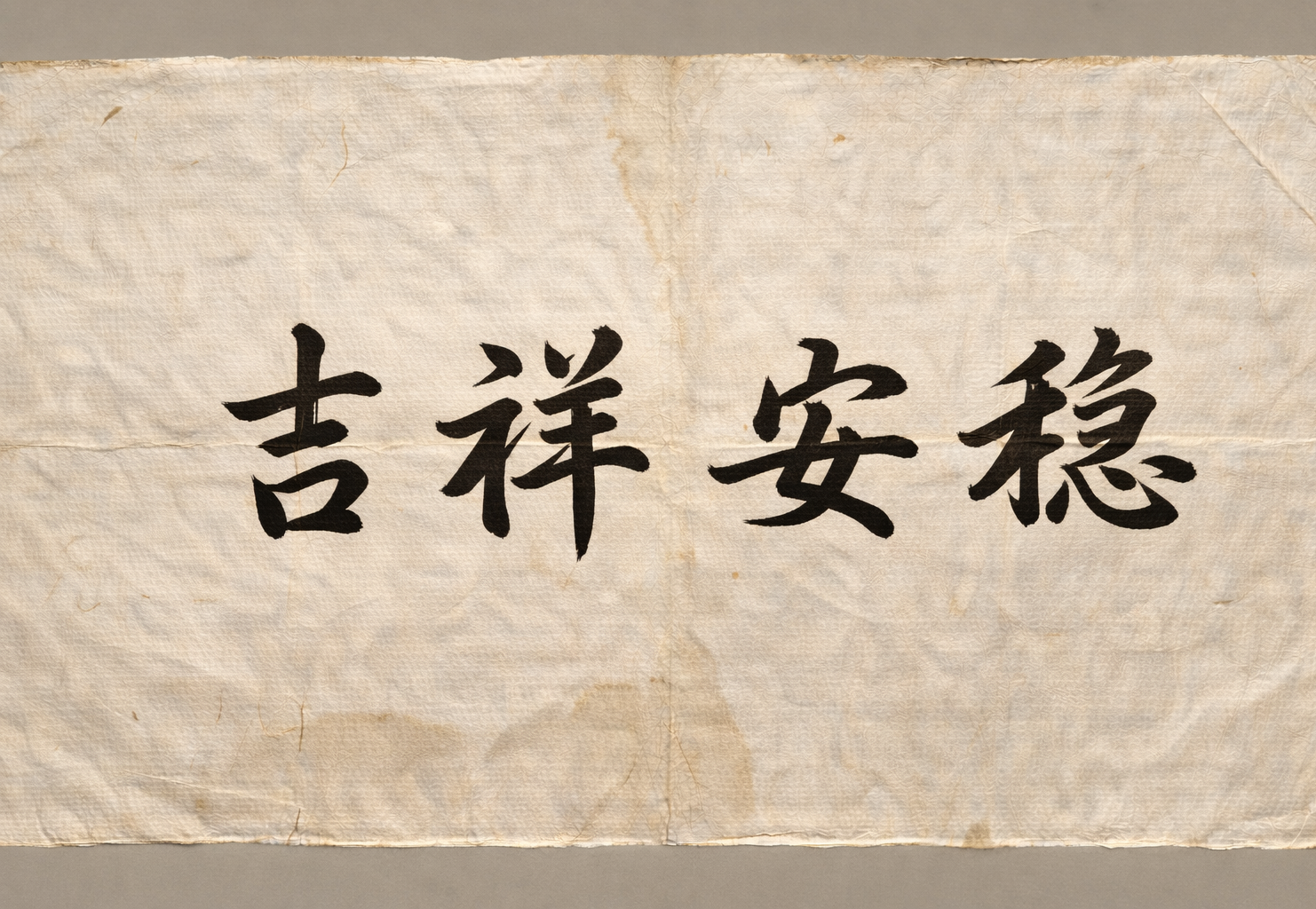
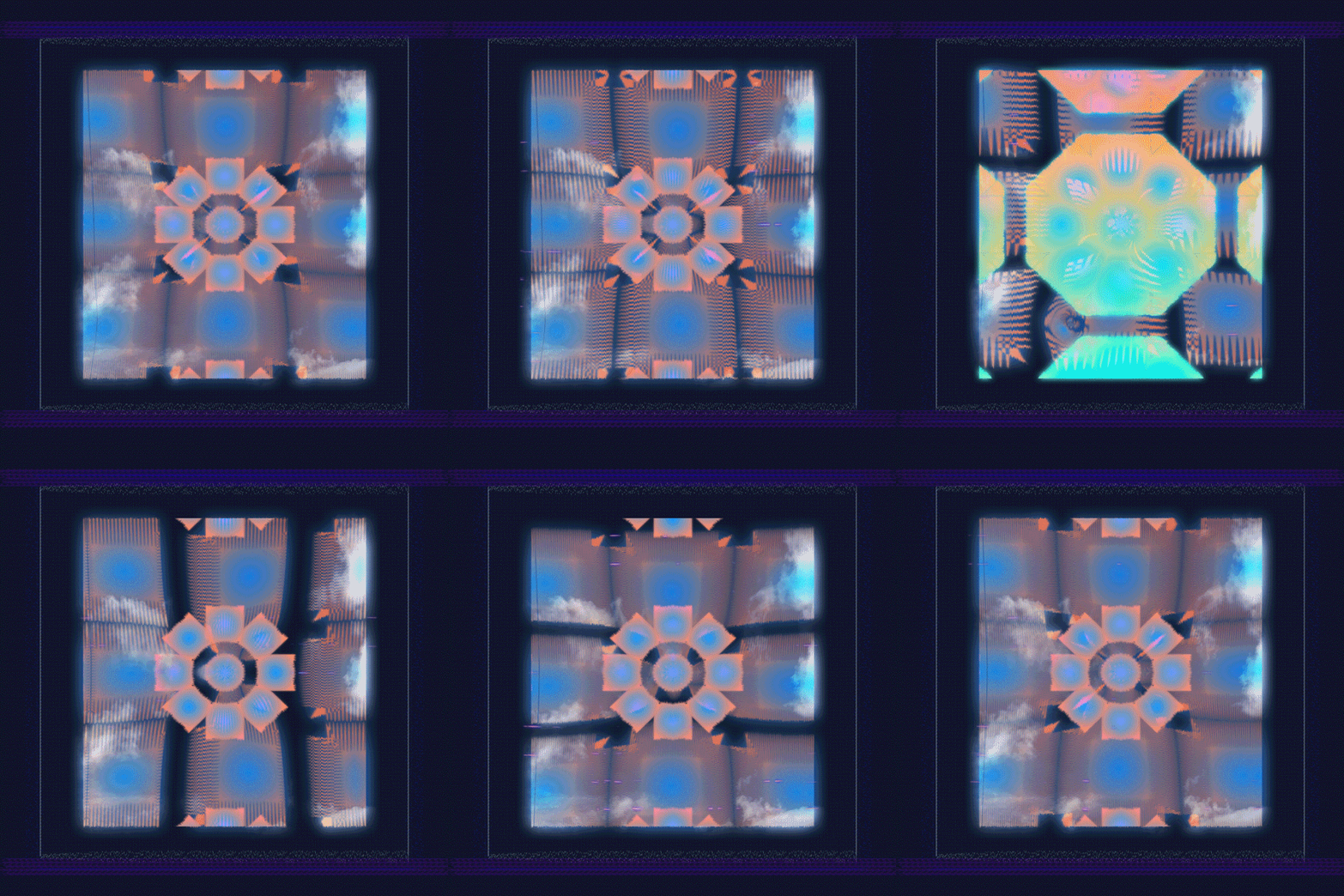
Image Healing: Mandala Stability Guidance 109
Shame is like a chain, linking us tightly together. Look at this chain of circular mandalas. Each circle represents an emotional node. Try to find the darkest, tightest ring (that's the core of shame). Now, imagine light shining through the background of the mandala, piercing this dark ring. It doesn't break; it becomes transparent. It's still part of the structure, but it no longer blocks the light. Accept your shame, and it will become transparent.
Traditional mandalas typically feature a harmonious and intricately varied circular structure, symbolizing the wholeness of the universe and the cycle of life. By viewing mandala images, individuals can perceive inner peace and strength, achieving psychological balance.
◉ Gaze at the mandala twice, while taking deep breaths.
Lesson 109: Shame-Fear Chain Drawing Exercise
① Action guidance:Draw a small, contracting shape to symbolize the "shrinking" triggered by shame.
② Action guidance:Draw an expanded shape on the other side, symbolizing "I allow myself to unfold".
③ Action guidance:Connecting the two with gradient lines symbolizes the possible path "from shame to stability".
Please log in before submitting your drawings and feelings.
○ 109. Shame-Fear Chain: Journaling Guidance Suggestions
① What triggered my shame today?
② After the shame, how did my fear arise?
③ If this is an echo of past experiences, where does it come from?
④ What is one self-support phrase that I'm willing to practice today?
Please log in to use.
Shame can shrink you, but you are not shame itself.
When you see the chain reaction, you begin to regain your strength.
 EN
EN  ZH
ZH  ES
ES  FR
FR  JA
JA