

Lesson 1097: Self-Care Exercises for Complex Psychological Trauma
Duration:75 minutes
Topic Introduction (Overview):
For people who have experienced complex psychological trauma, “treating themselves well” often sounds like an empty phrase: they are used to self-blame, being demanding, and ignoring their needs, and feel uncomfortable or even ashamed of being comforted, rested, or cared for.
Many visitors say things like, "I don't deserve it," "I haven't tried hard enough," or "I can't let my guard down," as if the world would collapse again if they relaxed even a little.
In fact, prolonged periods of high alertness and self-depletion are quietly weakening your recovery ability.
This lesson focuses on "self-compassion exercises for complex psychological trauma": how to gradually transition from "only being harsh on yourself" to "being able to treat yourself kindly occasionally";
How to create a daily care checklist that balances reality and gentleness; how to protect yourself with concrete actions rather than slogans when triggers and self-attacks occur.
We will transform “self-care” from an abstract concept into actionable micro-actions through body awareness, small rituals, Eastern healing teas and soups, writing and mandala viewing exercises.
A mandala is not about drawing something, but about observing—observing how you gradually learn to see yourself as someone who needs to be cared for.
▲ AI Interaction: Create a "Mini Care Checklist" for Yourself“
Often, it's not that you don't know how to care for others, but rather that you don't know how to extend that same tenderness to yourself. You can try conversing with AI like this:
① Write down the three most self-critical things you usually say to yourself (e.g., I am so useless, why did I do this again).
② Next, write down: If you considered yourself a close friend, how would you say the same thing to him? Please try rewriting those three sentences.
③ Tell the AI: In your current life reality (work, family, finances, etc.), what are three caring actions that you can actually do? For example: sleep an extra half hour, refuse an unnecessary extra task, and allow yourself not to explain everything today.
④ Invite AI to help you compile these three actions into an "actionable little care list" and write it to your future self in a gentle yet firm tone.
Click the button below to design your self-care exercise sheet with AI.
○ Self-care and music accompaniment practice
Choose a piece of music that makes you feel like "someone is quietly keeping you company" rather than a piece that is intensely uplifting or overly sad.
Set a rule for yourself to play this song at a fixed time each day (such as before bed or during a short afternoon break):
While this song is playing, I don't criticize myself; I just do one gentle little thing for myself—drink water, stretch, close my eyes, or daydream.
You can think of it as a switch to "self-care mode": when the music starts, you are not the one being blamed, but the one being cared for.
Over time, the brain will gradually learn: I can also be treated gently, and the world will not collapse because of it.
Eastern Healing Tea Drinking: The Warm Tea Ritual to Soothe Inner Criticism
Recommended drinks:Rose and jujube soothing tea.
Roses help soothe emotions and relieve chest tightness and depression, while red dates nourish blood and qi and support physical strength, making them very suitable for the mind and body that are often in a state of "high tension + self-attack".
You can design a simple ritual for yourself: when your inner critic is particularly loud, stop what you are doing and make yourself a cup of rose and jujube tea.
usage:Steep 3-5 dried rosebuds and 2-3 pitted red dates in hot water for 5 minutes, then sip slowly. While drinking, say something gentle to yourself, such as, "I've already worked so hard, let me take a break." Let this cup of tea be a small signal for you to reconcile with yourself.
○ Chinese Food Therapy · Soup · Lily and Lotus Seed Soup for Peace of Mind
Lily bulbs nourish yin and calm the mind, while lotus seeds tonify the spleen and strengthen the heart. Paired with a small amount of lean meat or vegetarian protein, they create a bowl of comforting soup that is both light and supportive.
For those who often feel "empty inside, sleep poorly, and always tense" due to long-term complex trauma, this bowl of soup is not only nutritious but also a physical reminder that "I deserve to be treated well."
Healing Recipes
/home2/lzxwhemy/public_html/arttao_org/wp-content/uploads/cookbook/yi-mi-chi-xiao-dou-ji-yu-tang.html(Please confirm that the following has been uploaded: yi-mi-chi-xiao-dou-ji-yu-tang.html)
Mandala Healing · Mi Xiangwen 1097 · "Including Oneself in the Circle"“
Imagine a mandala, with everyone you are trying to take care of at the center: family, partner, children, and work colleagues.
You're used to standing outside the circle, circling around them, always on high alert, afraid that you're not putting in enough effort or taking good enough care.
Now, try drawing a small symbol somewhere in the mandala to represent "yourself"—also in the circle, no longer excluded.
You don't have to stand in the very center right away; you just need to allow yourself to be in the picture.
Then, observe quietly: when the fact that "I am also within the scope of being cared for" is seen, what subtle changes occur in your breathing, shoulders, and eyes?
A mandala is not about drawing something, but about observing—observing how you, for the first time, bring yourself into the path of care.

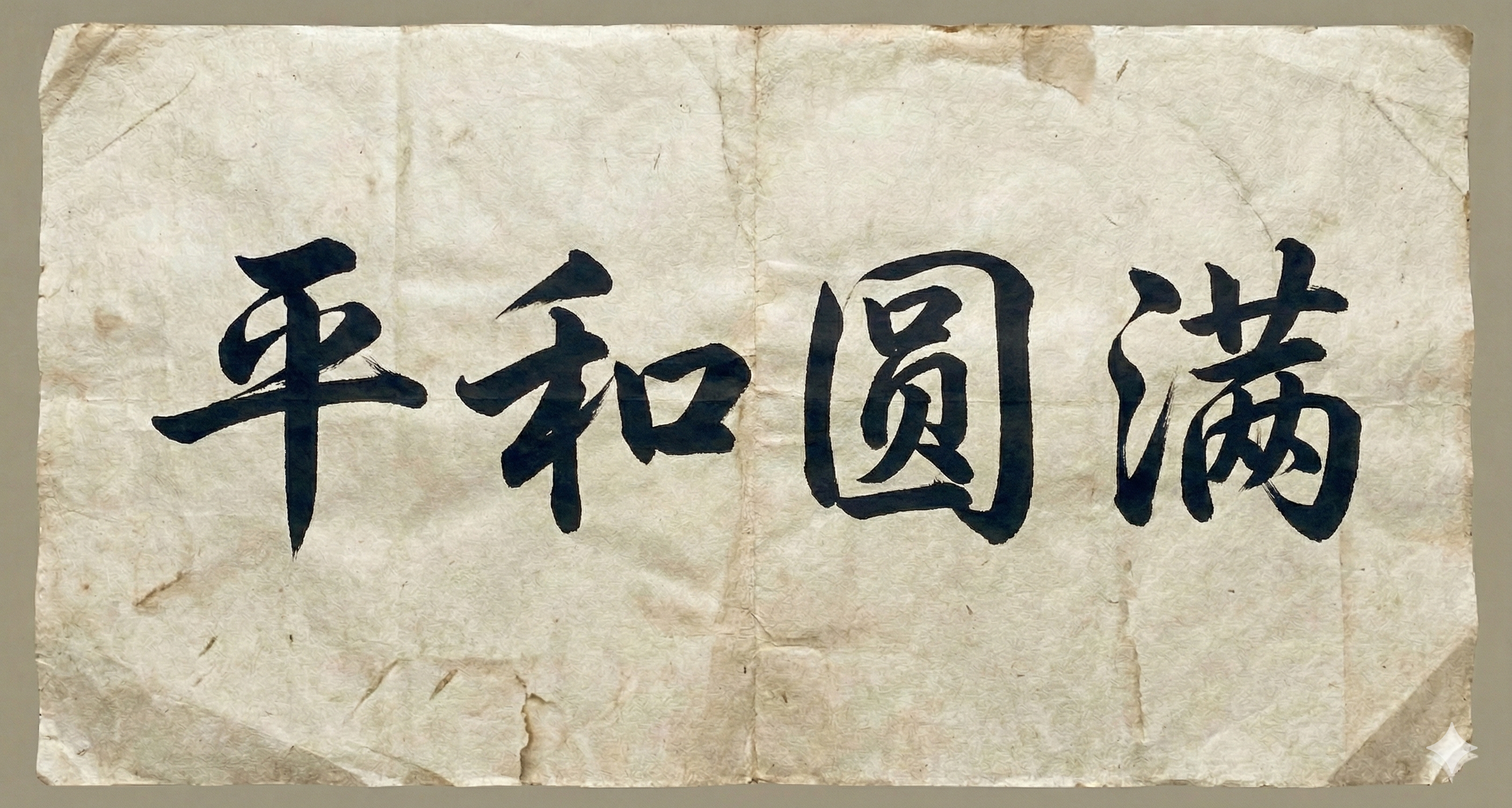
○ Running script - Writing sentences about self-care
Use the flowing lines and pauses of running script to practice making a gentle promise to yourself.
- Written words:Compassion for oneself and companionship for oneself.
- English equivalent:I stay with myself with kindness.
- hint:When writing the character “怜”, deliberately slow down and make the strokes slightly rounded; when writing the character “伴”, make the radicals on both sides look like two people standing side by side.
After each repetition, pause and glance at the text, allowing your eyes to "see" the commitment, rather than simply completing the task.
Lesson 1097: Self-Care Map - Drawing Guidance
Objective: To transform the abstract belief that "I deserve to be cared for" into a visible map of care.
Draw a circular mandala on paper and divide the circle into four to six sectors. Each sector represents a need: rest, food, companionship, boundaries, expression, and play (you can name them yourself).
In each sector, use small icons, short texts, or color blocks to fill in "one small thing you can actually do," such as: turning off your phone for ten minutes before bed, contacting someone who helps you relax each week, or giving yourself a no-explanation no.
Once you've finished, don't rush to change anything. Just place the paper where you pass by every day and stop to look at it for a few seconds every now and then.
A mandala is not about drawing something, but about observing—observing the care structure you are building for yourself, even if it is still very rudimentary.
Please log in before submitting your drawings and feelings.
○ 1097. Self-Care for Complex Psychological Trauma: Journal-Guided Suggestions
① Write down the most natural self-critical statement that comes to mind today, and next to it, write down a new way of responding that you would be willing to try.
② Reflecting on the past week, did you do even one small good deed for yourself (even if you felt it wasn't good enough at the time)? Please record the circumstances and feelings at that time in detail.
③ List three self-care actions that I can try under the current circumstances, and mark each one as "easy/okay/somewhat difficult".
④ Choose the easiest one and write down when and how you plan to do it.
⑤ Write a sentence you wish someone who truly understands you would say to you, and then add at the end, "I can say that to myself too."
⑥ Conclusion suggestion: Please rewrite it in your own words: "Self-compassion is not selfishness, but rather it gives me the strength to live and continue to choose the path of kindness."
Please log in to use.
Recovery from complex trauma requires not only the courage to face the wound, but also the willingness to gradually learn to treat oneself kindly.
When you start to include "yourself" among those who need care, your inner rhythm and life direction are already quietly changing.
 EN
EN  ZH
ZH  ES
ES  FR
FR  JA
JA