

Lesson 11: Feelings of Loss of Control and Compulsive Worry: "I have to keep thinking about it, or something bad will happen."“
Duration:90 minutes
Topic Introduction:“The feeling of being out of control is one of the most agonizing experiences of anxiety. You might repeatedly check the door lock, replay conversations, and anticipate disaster, all to "prevent mistakes." But the more you think about it, the harder it is to stop. This lesson will help you identify the structure of compulsive worry:Anxiety → Thinking → Temporary Relief → Anxiety AgainAnd through cognitive, physical, and creative exercises, learn to let go of the illusion of “having to control”.
○ The cyclical mechanism of compulsive worry
- 1. Anxiety Trigger:Worried about potential errors or dangers.
- 2. Overthinking:They repeatedly considered the possibilities, hoping to "prevent failure."
- 3. Short-term relief:It provides temporary reassurance, but the problem is not truly resolved.
- 4. Reignition in cycles:New doubts and anxieties have resurfaced.
Lesson 11: Brain False Alarms: Mistaking Anxiety Feelings for Real Danger 🎧 Click to watch/listen to the reading
In anxiety, one of the most common mistakes the brain makes is mistaking "feelings" for "facts." A rapid heartbeat, chest tightness, dizziness, and shortness of breath—these are simply normal reactions to the activated nervous system, yet the brain quickly interprets them as, "Something terrible has happened." It's like an oversensitive alarm system that sounds the alarm for the entire building when all that's happening is a rustling of curtains. From an evolutionary perspective, this isn't foolish. Its primary task isn't to make you comfortable, but to keep you alive. Given even the slightest hint of danger, it's better to "injure a thousand innocent people" than to "let one guilty person go free." The problem is that most anxiety in modern life doesn't stem from real threats, but from stress, uncertainty, and chronic tension. When this state persists, the brain frequently gives false alarms. The key mechanism for these false alarms is **equating bodily sensations directly with external danger**. For example, a rapid heartbeat is interpreted as "a heart problem," dizziness as "I'm going to faint," and shortness of breath as "I'm suffocating." Once this explanation is accepted, the fear escalates immediately, adrenaline surges, and the body's reaction is amplified, making the false alarm appear "confirmed." This is why convincing yourself "it's okay" is often ineffective during an anxiety attack. Because for the brain, the "evidence" it sees is already inside the body and happening in real time. It's not thinking; it's executing an overprotective program. The first step in recognizing false alarms is learning to distinguish three things: **feelings, interpretations, and danger**. Feelings are real, interpretations are automatic, but danger may not actually exist. You can mentally break it down like this: "I notice my heart rate is increasing (feelings), my brain is saying this is danger (interpretation), but there's currently no evidence that I'm actually in danger." This isn't self-deception; it's separating things that are mixed together. Next, practice maintaining an "observation-without-action" attitude towards false alarms. Like hearing a car alarm beeping, you know it's noisy, but you don't need to actually trigger it. You can let the body's reaction continue without rushing to escape, check, or fight. Often, as long as you stop adding to the fear, the brain will slowly realize: "Nothing really happened." Repeated experience is also crucial. Every time anxiety arises but you ultimately emerge unscathed, you're providing your brain with new learning material. It gradually corrects its overly aggressive judgment criteria, adjusting the threshold back to a more reasonable range. When you truly understand that "the brain is giving false alarms," the power of anxiety changes. The feeling will still arise, but it no longer automatically equates to danger. You begin to have a buffer, choosing not to be led astray when the alarm sounds. This ability doesn't eliminate anxiety, but rather allows you to regain the ability to judge reality.
○ Audio - Mind Pause Training
Play the audio track and follow the instructions to complete the "Three Steps to Escape the Whirlpool of Thought":
- Become aware that you've started thinking about it again.
- He whispered, "Stop, let's get back to the present."“
- Shift your focus to your feet or your breathing.
○ Eastern Tea Therapy: Longan and Dried Longan Soothing Tea
Recommended reasons:Longan pulp and dried longan are warm in nature and sweet in taste. They nourish blood, calm the mind, and relieve "brain overload" caused by mental stress.
practice:Steep 2 longans, 2 grams of lotus seeds, and 3 goji berries in hot water for 10 minutes, then sip slowly.
○ Stable Dietary Therapy: Grapefruit and Radish Stew (ID11)
When the body feels heavy or there is an inner blockage, a light and fragrant simmered dish can help the system return to a fluid state. The mild sweetness of white radish released during slow cooking helps relieve stomach tension, while the refreshing aroma of grapefruit provides a gentle boost to the nervous system. This dish is suitable for consumption when the mind is sluggish or the body feels "blocked." Through its gentle cooling and qi-regulating effects, it helps the mind and body gradually regain clarity and ease.
Open Recipe
◉ Japanese Food Therapy - Yuzu and Radish Stew (ID 11)
This is a classic, light side dish used in Japanese households to "regulate qi" (vital energy). The daikon radish is cooked until translucent, like jade, and then combined with the unique citrus aroma of yuzu peel. When feeling irritable, depressed, or experiencing a tightness in the chest, this dish helps to release pent-up emotions through its refreshing taste and aromatherapy-like fragrance. It's not greasy or heavy, just like the state of mind we aspire to return to: clear, simple, and luminous.
Relieve irritability Clear chest tightness Calm your mind
I. Recommended Dietary Therapy and Reasons
Recommended dishes:Boiled pomelo and radish (ID 11)
Recommended reasons:When feeling anxious or stressed, the body often experiences a feeling of "qi stagnation." White radish has excellent qi-regulating and stomach-soothing properties, clearing away stagnant qi from the stomach, intestines, and chest; while the volatile essential oils of grapefruit can directly act on the limbic system, instantly soothing tense nerves. This dish, by "cleansing stagnation," is an ideal comforting remedy for moments of irritability.
2. Recipe and Method
Recipe (1–2 servings):
- 200–250 g of white radish (choose the middle section for better sweetness)
- 400 ml of kombu broth or water
- Use a small amount of grapefruit peel (about the size of a thumb, remove the white pith).
- 1 teaspoon of mirin
- 1/2 teaspoon of light soy sauce (to keep the soup clear).
- a pinch of salt
- A small handful of raw rice (optional, used for blanching to remove bitterness).
practice:
- Peel the white radish and cut it into half-circle or round slices about 2 cm thick.
- (Optional step) Add water and a little raw rice to a pot, boil the radish for 5-8 minutes to remove the pungent and bitter taste, then remove and rinse. This will make the finished product sweeter and clearer.
- Place the prepared radish in a pot, add kelp broth (or water), bring to a boil over medium heat, then simmer over low heat.
- Simmer for about 15–20 minutes, until the radish can be easily pierced with chopsticks and becomes translucent.
- Add mirin, salt, and a little light soy sauce to taste, then simmer for another 3 minutes to let the flavors meld. Turn off the heat.
- Peel off a small amount of the yellow grapefruit peel with a knife, remove the white bitter parts, and cut it into thin strips.
- Ladle out the radish and a little broth, sprinkle with grapefruit shreds, and use the heat to bring out a refreshing aroma.
3. Small rituals for body and mind
While cutting the grapefruit peel, pause and take a deep breath of the bursting citrus aroma, imagining that this refreshing scent is washing away the clutter in your mind.
Watching the originally opaque radish in the pot slowly become crystal clear, I told myself, "My emotions can also be like this, changing from turbid to clear."“
When you take the first sip of the clear soup, you can feel the pent-up emotions in your chest slowly dissipating with the warmth.
4. Dietary Therapy Experience Record
- Record your emotional state while consuming the food (whether you feel chest tightness, irritability, or depression).
- Observe whether the aroma of the grapefruit gives you a momentary sense of "detachment" or "refreshment".
- Half an hour after consumption, pay attention to whether you feel relaxed and comfortable, especially in your chest and abdomen.
V. Instructional Videos (approximately 3–5 minutes)
◉ Video Title:Grapefruit and radish stewed in water: a refreshing taste that soothes restlessness.
6. Precautions
- White radish is cooling in nature. If you have a severe deficiency of spleen and stomach (prone to diarrhea, cold hands and feet), you can cook it for a while longer and add a slice of ginger to the soup to balance its cooling properties.
- The white part of the grapefruit peel has a bitter taste, so please try to remove it completely before slicing it into strips, leaving only the yellow peel.
- This dish emphasizes "lightness," so avoid adding too much oil or strong seasonings to prevent compromising its calming effect.
hint:This dietary therapy aims to help regulate emotions through aroma and a light diet, and is not a substitute for professional psychological counseling or medical medication.
○ Seal Carving Practice Suggestions · Lesson 11: Brain False Alarms—Mistaking Feelings of Anxiety for Real Danger
The seal carving exercises in this lesson aim to help you distinguish between "feelings" and "facts." Through controlled, slow, and repetitive carving movements, you can reduce false alarms in your brain and rebuild your ability to judge the safety of reality.
- Introduction to the characteristics of seal carving:
Seal carving emphasizes clear judgment and stable execution. Every stroke must be made only after confirming the position. This process helps train the brain's ability to "observe first and then act". - Written words:
May you live a long and healthy life.
- Psychological Intention:
Anxiety often leads people to mistake physical reactions for danger signals. Writing "feelings are not facts" is a repeated reminder to the brain that discomfort is not the same as a real threat. - Knife skills:
The brief pause before each strike to confirm the direction and force symbolizes observing rather than reacting immediately when anxiety arises. - Emotional transformation:
Transform the fear of bodily sensations into a judgment of the actual direction of the lines, thus weakening catastrophic associations.
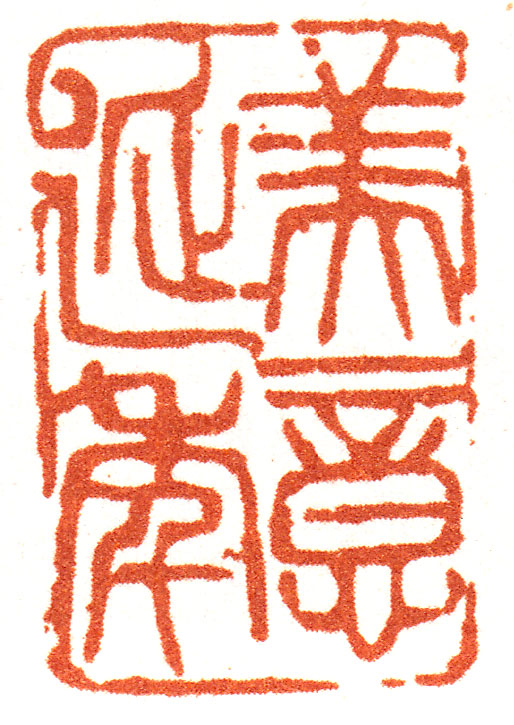
Image Healing: Traditional Mandala Imagery 11 · The Serenity of Cycles
Observe the recurring circular patterns. Each layer is a rhythm of return. You will realize: the circle is not going in circles, but a deeper and deeper return home time and time again.
Within the cycle, one lives peacefully.
◉ Gaze at the image twice, then slow your breathing to 6 seconds per cycle.

Lesson 11: Brain False Alarms: The Habit of Mistaking Feelings of Anxiety for Real Danger
Objective: To understand that anxiety is often the result of "false alarms" and to help oneself distinguish between "feeling dangerous" and "actual danger".
Steps: Draw a "false alarm signal tower" on a piece of paper. Red ripples emanating from the top of the tower represent anxiety signals. Mark the "fact area" in the corner of the drawing, using cool colors. Add a "confirmation area" in the center—write down real-world behaviors that help you verify information, such as breathing, observation, or delayed reactions. After finishing, write the sentence: "This is a feeling, not a conclusion."“
Please log in before submitting your drawings and feelings.
○ 11. Suggestions for a Loss of Control Log
① What is the thing I'm most worried about getting out of control lately?
② Why do I feel that I "must control" this? What fears are behind it?
③ What sensations do I experience in my body when I try to let go?
④ Can I distinguish between "responsibility" and "perfect control"?
⑤ Write down one small thing that you did today that allowed for "imperfection".
⑥ Small steps for tomorrow: When anxiety rises, tell yourself, "Even if I'm not perfect, I'm safe."
Please log in to use.
True control is not about holding on to everything, but about knowing when to let go.
 EN
EN  ZH
ZH  ES
ES  FR
FR  JA
JA