

Lesson 110: Coping with a Sudden Recurrence of Fear
Duration:70 minutes
Topic Introduction:
The recurrence of fear often comes without warning—one day you feel fine, but the next day you suddenly feel tense, your heart is racing, and you want to escape.
Relapse is not a failure, but a normal fluctuation in the nervous system as it relearns safety.
This lesson helps you understand the mechanisms of relapse, how to deal with sudden fears, and how to turn relapse into "evidence of progress."
Why does a relapse occur suddenly?
- The nervous system has not yet been fully remodeled.The old fear circuits are still there, and the brain occasionally reverts to familiar defense patterns.
- The pressures of life accumulate:Lack of sleep, interpersonal stress, and physical fatigue can all reduce feelings of security.
- The trigger point was not detected:Certain sounds, tones, scenes, and smells can subtly awaken old memories.
Lesson 110: Coping with a Sudden Recurrence of Fear (Click to listen to the reading, view the content)
The sudden recurrence of fear often leads to frustration and confusion, especially after you've felt you've made progress. This recurrence doesn't mean previous efforts were wasted; rather, it's a natural reaction of the nervous system being retrieved under specific conditions. From a psychological and physiological perspective, fear memories aren't completely erased but are covered by new, safe experiences. When stress, fatigue, environmental changes, or accumulated emotions occur, old pathways may be temporarily reactivated. This phenomenon isn't regression but rather the system reminding you that your current resources are declining. The first step in dealing with recurrence isn't immediate correction or suppression, but stabilizing the present moment. You can start by focusing your attention on bodily sensations, such as the weight of your feet on the ground, the rhythm of your breathing, or real objects around you. These help the nervous system quickly locate the present rather than being pulled back to the past. The second step is to adjust your interpretation. If you interpret the recurrence as "I can't do it again," the fear will be amplified. If you understand it as a signal that your body needs more support, the intensity will significantly decrease. The third step is to lower your expectations. High-intensity practice is not suitable during a recurrence; instead, return to basic regulatory actions to allow the system to regain a sense of security. The fourth step is to review the triggering conditions rather than self-criticism. You can gently observe whether you've recently overexerted yourself, neglected recovery, or encountered new stressors. This information will help you adjust your pace in the next step. It's important to understand that fear recovery doesn't disappear linearly but rather gradually diminishes like waves. True stability isn't about never recurring, but about recovering more quickly even if it does recur. When you can take care of yourself during a relapse instead of attacking your nervous system, you learn that relapse isn't scary. You're not returning to the starting point, but rather navigating the same place in a new way. Coping with sudden fear relapses is a mature ability; it signifies that you're no longer completely controlled by fear but have begun to negotiate and coexist with it.
▲ AI Interaction: Have you ever experienced a "sudden relapse"?
Tell the AI a moment when you were feeling better but suddenly became tense again.
It will help you analyze whether the relapse stems from physiological, psychological, or external stimuli.
You can also learn how to quickly stabilize yourself during a relapse.
A sudden relapse can force breathing to become shallow, triggering a "fright response" in the body.
Using music to pull the body back from tension to rhythm is one of the fastest ways to regain stability.
○ Oriental Healing Tea - Osmanthus Oolong
Recommended drinks:Osmanthus Oolong
Recommended reasons:The floral aroma soothes the nerves, while the oolong tea gently invigorates the body, making it suitable for recovery after sudden stress.
practice:Steep in hot water for 2–3 minutes, take a deep breath of the tea aroma, and then slowly drink it.
○ Stable Nutrition - Smooth Roasted Carrot Puree (ID110)
After experiencing a recurrence of fear and emotional turmoil, the body needs a soft and soothing nourishment. The natural sweetness of roasted carrots can alleviate inner tension, and the smooth texture brings a feeling of being enveloped and settled. This creamy puree is suitable for consumption during the sudden onset or recovery phase of fear, helping the body slowly return to a stable rhythm. It symbolizes the gentle support one gives oneself amidst fluctuations.
Stabilize nerves
Gentle recovery
Open Recipe
◉ Stable Nutrition - Roasted Carrot Milk Puree (ID 110)
Roasted Carrot Puree is a heartwarming little dish that combines the aroma of roasting with a soft texture. The carrots are first slowly roasted in the oven until slightly caramelized, then blended with a small amount of milk or plant-based milk until smooth, allowing the natural sweetness and subtle milky aroma to meld together. It's perfect as a light after-dinner snack, a small portion of main course during recovery, or a small bowl of warm puree to remind yourself to slow down and be cared for when you're feeling stressed or have a poor appetite.
Roasted root and stem Soft and milky Heartwarming light meals
I. Recommended Dietary Therapy and Reasons
Recommended dishes:Roasted Carrot Creamy Puree (ID 110)
Recommended reasons: During roasting, carrots lose some moisture, concentrating their sweetness. Paired with a small amount of dairy or plant-based milk, this creates a "soft and satisfying" texture without relying on excessive sugar or oil. For those who have been under high pressure, experiencing decision-making overload, or experiencing significant mood swings throughout the day, this delicate, warm, and moderately portioned dish helps the body relax and allows the eating process itself to become a soothing ritual.
2. Recipe and Method
Recipe (1–2 servings):
- 2 carrots (about 200–220 g)
- 40–60 ml of milk or plant-based milk
- 1 tsp olive oil
- a pinch of salt
- A small amount of black pepper (optional)
- A small amount of butter or unsalted butter (optional, to add a milky flavor).
practice:
- Preheat oven to 190–200°C.
- Wash and peel the carrots, cut them into thick strips or chunks, put them in a bowl, drizzle with olive oil and a little salt, and mix well.
- Arrange the carrots on a baking sheet lined with parchment paper and bake in the oven for about 20–25 minutes, turning them once halfway through, until the surface is slightly caramelized and the inside is soft.
- Place the roasted carrots in a food processor or deep bowl while they are still hot, add milk or plant-based milk, and add a small amount of butter or cream if you want a richer, creamier flavor.
- Blend into a smooth puree using a food processor, or slowly mash into a smooth puree using a fork. Adjust the amount of liquid according to personal taste.
- Add a little salt and black pepper to taste, then mix well.
- Pour into small bowls. If they have cooled down, you can gently reheat them until they are warm before enjoying.
3. Small rituals for body and mind
The process of coating carrots with oil and arranging them on a baking tray can be seen as a way of "organizing one's emotions for the day," with each piece carefully placed symbolizing the gradual smoothing out of chaos.
While waiting for it to bake, you don't need to do anything special. Just occasionally smell the sweet aroma wafting from the oven and treat this time as a small blank space reserved for yourself.
When blending into a paste, deliberately slow down the movements to make yourself aware that these processes of "becoming softer" also remind you that emotions don't always have to be hard.
4. Dietary Therapy Experience Record
- Record your mood and physical state before consuming the product, such as fatigue, irritability, emptiness, or tension.
- Observe the changes after taking a few bites: Do you feel your stomach is gently filled? Is it easier to breathe slowly?
- If consumed for several consecutive days during periods of emotional fluctuation, the effects on overall sense of security and relaxation before bedtime can be recorded.
V. Instructional Videos (approximately 3–5 minutes)
◉ Video Title:Roasted Carrot and Milk Puree: Sweetness and gentleness contained in a small bowl.
6. Precautions
- If you need to control your fat intake, you can omit the butter and use only a small amount of milk or plant-based milk.
- Those who are sensitive to dairy products can choose plant-based milks such as oat milk or almond milk as alternatives.
- If you have a sensitive stomach, it is recommended to bake the carrots until they are very soft and mash them into a finer puree to reduce the digestive burden.
hint:This recipe is for daily physical and mental well-being and is not a substitute for any medical diagnosis or treatment. If you have specific medical conditions or dietary restrictions, please prioritize following the advice of your doctor and nutritionist.
○ · Chinese Calligraphy · Running Script · Lesson 110 Writing Practice
The topic of this lesson:Coping with a sudden recurrence of fear: Mastering the art of "saving the pen"
In-depth analysis:
Relapses during treatment are like a sudden tremor in your hand while writing, or a drop of ink ruining the picture.
Perfectionists might choose to tear it up and rewrite it (self-denial), but a master of calligraphy understands...“"Saving the Pen"”.
If this stroke goes astray (relapses), the next stroke will follow the wrong direction to correct it, and may even create an unexpected and precarious structure.
Practicing running script calligraphy trains this ability of "dynamic balance": I am not afraid of making mistakes, and I have the ability to recover from them. Relapse is not the end, but merely a turning point that requires skillful handling.
Writing Instructions:
Exercises for this lesson“"Peril and Recovery"”.
Intentionally write the first character with it tilted to the left (simulating an unbalanced state), then force yourself to use the second character to tilt to the right to support it (simulating adjustment and coping).
Feel the tension between "about to fall but not yet fallen".
You'll find that it's this sense of crisis that brings the entire piece of calligraphy to life. Don't be afraid of that moment of falling; it's your chance to demonstrate your balance.
Written words:
When the heart is at peace, things go smoothly.
Motivational words:
Just when you think you've reached a dead end (a relapse), a new path opens up before you.
Writing Tips:
When writing the character “峰”, the mountain radical can be written steeply and precipitously (symbolizing sudden fear), but the right side “夆” should be written steadily and gracefully to support the precariousness on the left. When writing the character “转”, the rotational force should be expressed, like a Tai Chi push hand, neutralizing the oncoming impact.
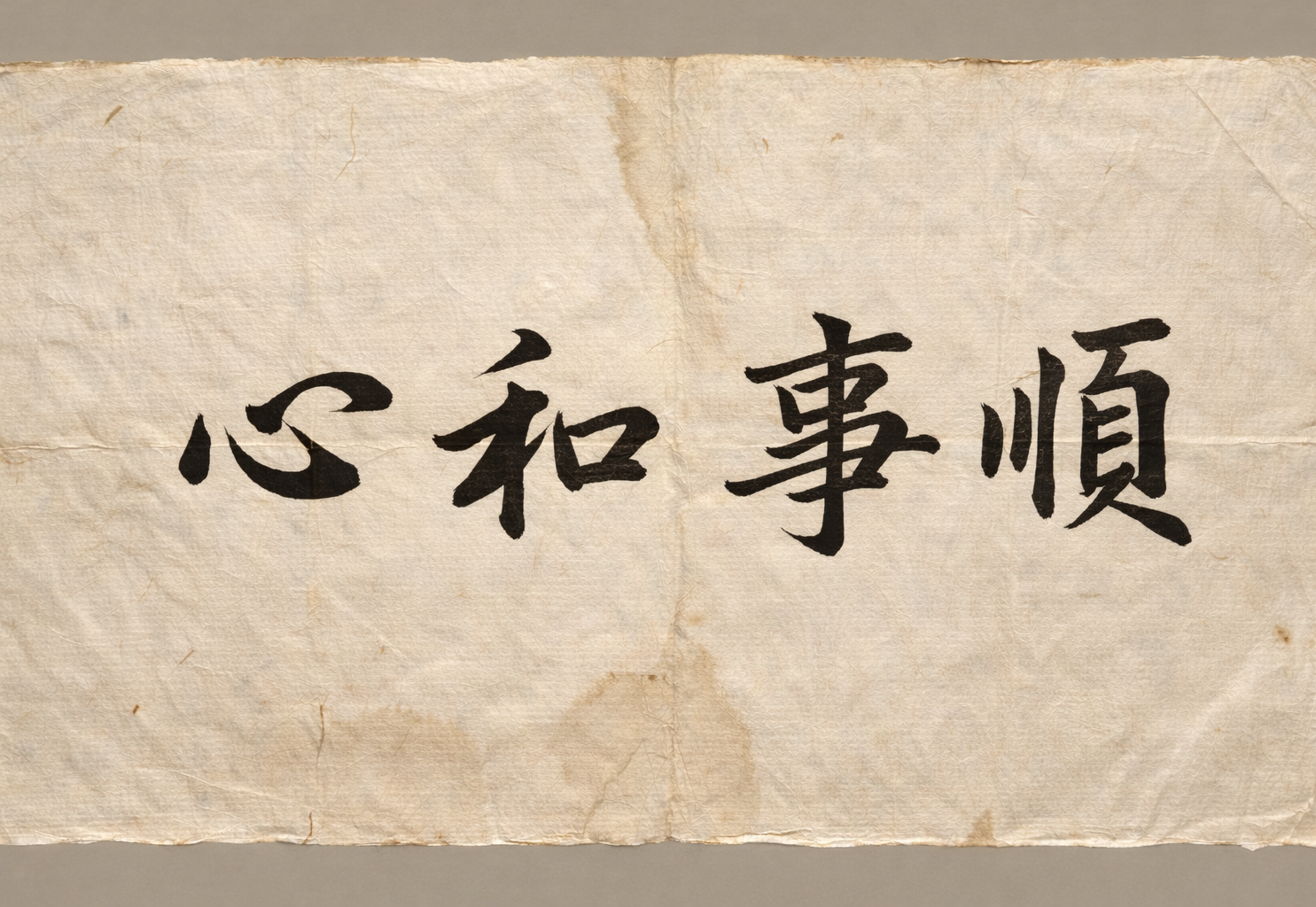
Image Healing: Mandala Stability Guidance 110
Please view this mandala as an upward spiral staircase, not a closed circle. When you feel fear recurring, you may think you've returned to the starting point (the closed loop of the circle), but if you look at it from the side (the spiral perspective), you're actually at a higher level than before. Although you've turned in the same direction (fear), you've gained more experience (experience and skill). Looking at the spiral lines of the mandala, tell yourself, "I'm spiraling upwards; I haven't gone back to where I started."“
Traditional mandalas typically feature a harmonious and intricately varied circular structure, symbolizing the wholeness of the universe and the cycle of life. By viewing mandala images, individuals can perceive inner peace and strength, achieving psychological balance.
◉ Gaze at the mandala twice, while taking deep breaths.
Lesson 110: Relapse Stabilization Exercises (Drawing)
① Action guidance:Use dark lines to draw sudden, jagged shapes, symbolizing a moment of sudden tension.
② Action guidance:Draw a soft arc on the other side of the image to symbolize the body relaxing again.
③ Action guidance:Connecting the two with a gradient color represents the transition "from relapse to stabilization".
Please log in before submitting your drawings and feelings.
○ 110. Sudden Relapse - Log-Guided Suggestions
① In what scenario did today's recurrence of fear occur?
② What was the most obvious physical reaction I had at that time?
③ If this is a trigger from a past experience, where might it come from?
④ What is my motivational statement for myself today?
Please log in to use.
Relapse is not a return to the starting point, but rather the nervous system rewriting your sense of security.
You are moving forward, just in a way that's more like a wave than you think.
 EN
EN  ZH
ZH  ES
ES  FR
FR  JA
JA