

Lesson 1107: The Psychological Impact of Sudden Violent Events
Duration:75 minutes
Topic Introduction (Overview):
Sudden acts of violence—street attacks, armed threats, domestic violence, public clashes, stampedes, shoving and beatings—leave not only physical scars but also alter a person's sense of security and worldview for a long time afterward. Many people experience intense fear, anger, shame, and self-blame after such events: even as victims, they can't help but wonder, "Did I do something wrong?"; even after leaving the scene, their bodies tense at the slightest sound, ready to flee or retaliate. This lesson will help you understand the psychological mechanisms behind these complex reactions.
We will trace the common psychological pathways following a sudden act of violence: from shock, dissociation, and anger, to a general distrust of others, and then to self-blame for "weakness" or "failure to protect oneself/others." You will learn how to distinguish between reasonable vigilance and excessive alarm, how to identify early signs of post-traumatic stress disorder, and how to gradually rebuild a sense of boundaries and action without forcing yourself to "forgive" or "let go." A mandala is not about drawing something, but about observation—this course invites you to practice observing the ripples of violence within you, rather than denying or swallowing them, thus creating space for true recovery.
▲ AI Interaction: From "What Happened?" to "I'm Still Here"“
Faced with sudden acts of violence, many people fall into two extreme narratives: either they keep replaying the details, unable to stop; or they simply pretend that nothing happened, letting it sneak up on them at night, in fear.
First, please allow me to describe the event in your own words, but only briefly, not in full:
- What kind of setting (indoors/street/public space/home, etc.) is it in?
- What is the most unforgettable "moment" for you (a look, a sound, an action, your own reaction)?
- After the incident, which feeling confuses you the most (anger, fear, numbness, shame, emptiness)?
Next, write a sentence that begins with "I am still here because..." to shift the focus slightly from the perpetrator or the scene back to "you who are still alive".
Click the button below to let AI work together to organize your inner storyline, instead of just focusing on the violence itself.
○ Auditory Triggering and Safe Sound/Music Adjustment Exercises
After a sudden violent incident, many people become exceptionally sensitive to sound: sudden footsteps, the sound of a door closing, or the sound of something falling can make them jump, as if danger is about to strike again. Instead of forcing yourself not to react, give yourself time to rebuild your relationship with sound.
Practice steps:
- Choose a piece of music or white noise that you find relatively safe, gentle, and with a stable rhythm (such as the sound of light rain, a fireplace, or a soft guitar).
- Play it in a quiet environment, and turn the volume up to a level that is not harsh but can be heard clearly;
- As you listen, mark it in your mind: "This is the sound I chose; it won't hurt me."“
- If you think of the sounds of violence along the way, don't blame yourself. Just whisper to yourself, "That's in the past. That sound is in the present."“
Mandala is not about drawing something, but about observing; in this exercise, you simply observe how sound causes vibrations in your body, while practicing using new sounds to "pave" a safe rhythm for yourself.
Aromatherapy Drink - Formula for Stabilizing Heart Rate and Relieving Fright
Recommended drinks:Passionflower + Lemon Balm Aromatic Soothing Drink.
After experiencing sudden violence, many people experience a sudden increase in heart rate, sweaty palms, and chest tightness. Even though there is no actual danger, the body seems to be "awakened" and rushes into a fight-or-flight mode. Passionflower is often used in naturopathy to regulate tension, anxiety, and heart rate fluctuations after fright, while lemon balm helps reduce over-excitation of the nervous system and gradually relaxes the tightness in the chest and stomach.
Suggested use: Take about 2 grams of passionflower shreds and about 2-3 grams of lemon balm, pour in hot water at around 80 degrees Celsius, cover and steep for 5-8 minutes. Before drinking, gently bring the cup close to your nose and take three slow breaths: when inhaling, pay attention to how the aroma enters your chest cavity; when exhaling, whisper to yourself, "This is a safe moment." Then begin to sip, letting each sip be a signal for your body to "retreat from the battlefield."
○ American Natural Diet: Oatmeal and Nut Soothing Breakfast Bowl
American naturopathic diets place particular emphasis on stabilizing blood sugar and providing gentle, sustained energy to support brain and nervous system recovery after trauma. Following violent events, many people either lose their appetite entirely or fill the void with large amounts of high-sugar, high-salt, and high-fat foods, further destabilizing their bodies. This lesson recommends a simple "Oatmeal and Nut Soothing Breakfast Bowl": a base of warm oatmeal porridge, topped with a small amount of walnuts, almonds, blueberries, or sliced bananas, and drizzled with natural maple syrup.
The soluble fiber in oats helps maintain stable blood sugar, the healthy fats in nuts support brain function, and blueberries and bananas provide antioxidants and electrolytes to help the body recover slowly from high-pressure situations. When you carefully prepare such a meal for yourself in the morning, you are also sending yourself a message: I deserve to be treated gently, and today's events are no longer defined by violence.
Healing Recipes
/home2/lzxwhemy/public_html/arttao_org/wp-content/uploads/cookbook/hei-hu-jiao-feng-mi-cha.html(Please confirm that the following has been uploaded: hei-hu-jiao-feng-mi-cha.html)
Dream Mandala Healing · Mi Xiangwen 1107 · Draw a circle around the sharp edge
In your dream, you stand once again on the edge of that violent scene: the air is stiff, the shadows of the crowd are long, and a raised arm or a moment of shoving is magnified infinitely. You instinctively want to turn and leave, but find yourself walking in circles around the scene. With each circle, the image shrinks and the sounds grow softer.
Gradually, you notice a faint circular outline on the ground beneath your feet, like the edge of a mandala drawn with fine lines. You don't rush in, nor do you stray too far, but stand on the circle, quietly observing everything: the violent actions, the expressions of fear, your own momentary freeze, escape, or reaction. The mandala isn't about drawing anything; it's about watching—watching how that scene rises and falls in your memory, watching you being pushed from the center to the edge, and then slowly finding your place again on the edge. You don't need to forgive anyone, nor deny your anger; you only need to acknowledge: I am watching; I am no longer merely a victim of that moment.

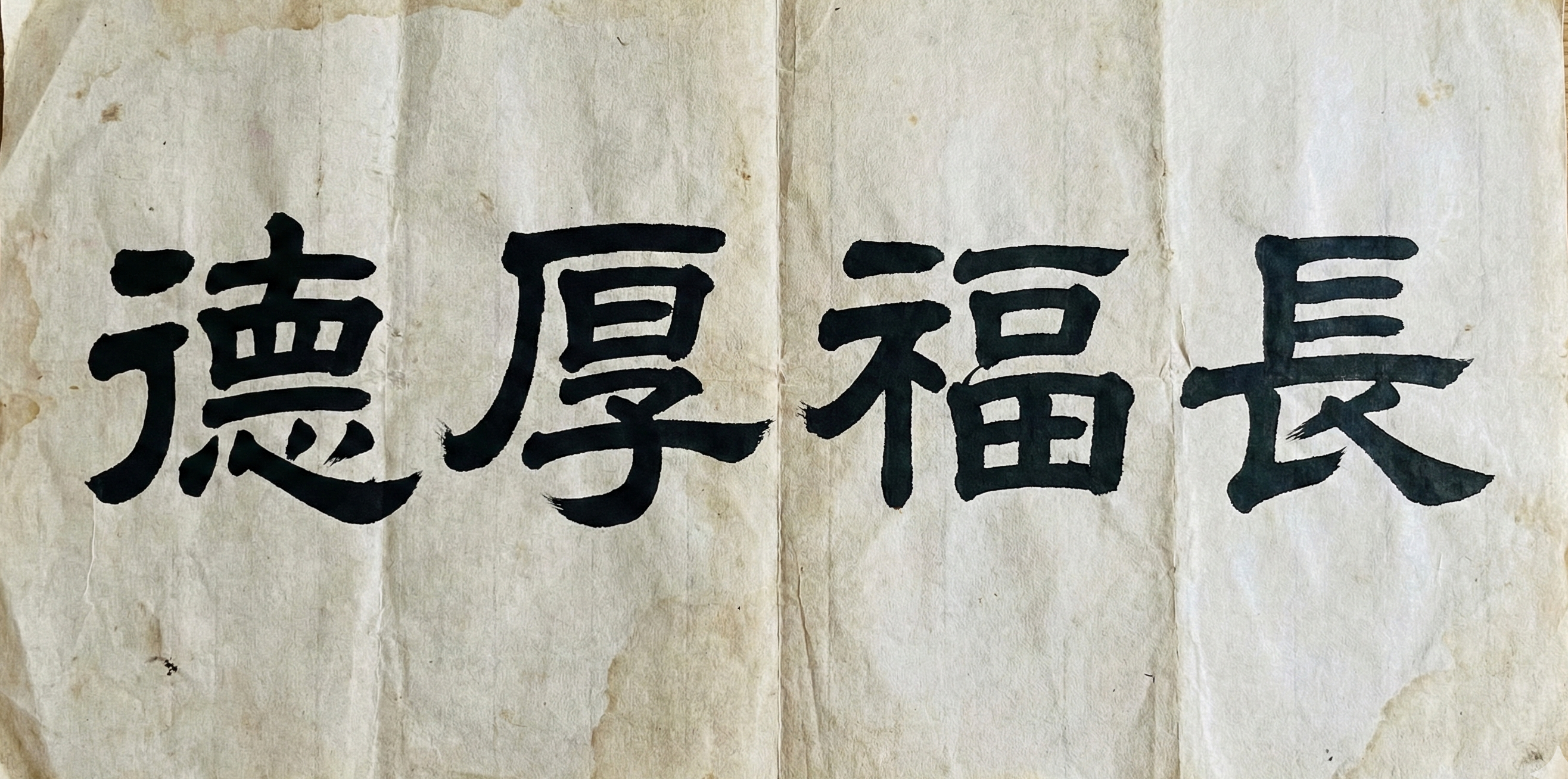
○ Medieval Gothic calligraphy: “I set a boundary to protect myself.”
Violent incidents often destroy a person's sense of boundaries: you may feel unable to say "no" or protect yourself; you may also become overly defensive afterward, seeing anyone who gets close as a threat. The square structure and sharp vertical lines of Gothic calligraphy are perfect for practicing "my boundaries are visible."
- English sentences:I set a boundary to protect myself.
- Chinese equivalent:I have the right to set boundaries to protect myself.
- Writing Tips:With each vertical stroke, exhale gently and say to yourself, "That's enough." The horizontal strokes act as a link, connecting the individual vertical "boundaries" into a complete and cohesive whole.
As you slowly and meticulously observe these black lines arranging themselves into rhythmic sentences, you are also observing your own process of redrawing a protective circle around your life.
Lesson 1107: Sudden Violent Incidents - Mandala Viewing Guide
Purpose:The fragmented feeling brought about by violence is slowly transformed from a "raw impact on the body" into an image rhythm that can be viewed and placed.
step:
Choose a mandala image with a relatively clear structure and distinct inner-outer ring hierarchy. First, focus your gaze on the very center and observe whether it's blank, a complex pattern, or a shape that makes you uncomfortable. Then, slowly move your gaze along the radiating lines to the outer rings, asking yourself after each ring: "If this ring represents an emotion, what does it resemble? Anger? Fear? Numbness? Or my current defenses?"“
There's no need to try to "beautify" any of the mandalas; simply observe honestly: which one is the most glaring, which one is the most exhausting, and which one is surprisingly peaceful. A mandala isn't about drawing something; it's about observation—observing how these patterns reflect your inner layers, and observing how you've already acquired the ability to "step back a little and see things more clearly." When you can say, "This is like the chaos of that day, that is like me today," you're gradually moving from the center of violence towards your own center.
Please log in before submitting your drawings and feelings.
○ 1107. Psychological Impact of Sudden Violent Incidents: Log Guidance Suggestions
① Write down a detail that you still care about: it could be an action, a word, or a look; the more specific, the better.
② When is this detail most likely to come to mind? At night, while traveling, passing by a certain location, or hearing a similar sound? Briefly record two specific scenarios.
③ To others, you might appear "too calm" or "too sensitive." Write down one of your reactions that you're most afraid of being misunderstood, and add an explanation: "Actually, behind this is because I..."“
④ Review the entire violent incident: Was there a moment when you were actually protecting yourself or others, but things were just chaotic at the time? Please write down that moment, trying to use factual sentences rather than critical sentences.
⑤ Imagine that one day in the future, when you tell this experience to someone you trust, what are the first two things you hope he/she will say to you? Write them down truthfully.
⑥ Finally, to summarize today's writing in one sentence: You can start with "Even if that happened, I still..." to see that there is something within you that still exists besides violence.
Please log in to use.
Violence may distort the present moment, but it doesn't have to define your life permanently. May you gradually rediscover your sense of boundaries, self-esteem, and initiative as you understand and observe your own psychological reactions, allowing "that moment" to gradually transform from the entirety of your being into a part of your story.
 EN
EN  ZH
ZH  ES
ES  FR
FR  JA
JA