

Lesson 1109: Principles and Stages of Crisis Intervention
Duration:75 minutes
Topic Introduction (Overview):
When a crisis occurs—whether it's a disaster, violence, a public health emergency, a sudden accident, or a psychological breakdown—the person involved often experiences confusion, urgency, helplessness, and extreme insecurity. Crisis intervention is not about "immediately solving the problem," but rather helping the person recover from emotional collapse and cognitive dissonance to a state where they can "continue to live." The core of intervention is not treatment, but rather "maintaining life, restoring order, minimizing harm, and rebuilding connections." This course will introduce a phased model widely used in professional crisis intervention, helping you understand how a person's psychology gradually returns to self-control under high stress.
Crisis intervention typically comprises six key phases: ① Establishing safety and trust; ② Stabilizing emotions and physical well-being; ③ Understanding the individual's most pressing issues; ④ Supporting emotional expression and reducing confusion; ⑤ Collaboratively exploring coping strategies; and ⑥ Planning follow-up resources and support. You will learn the significance, applicable methods, and common pitfalls of each phase, such as why "encouraging resilience," "demanding calm," and "trying to reason" often lead to greater distress. A mandala is not about drawing something, but about observation—in crisis intervention, we also practice observing a person slowly regaining order from extreme chaos, rather than rushing them to "return to normal."
▲ AI Interaction: Identifying which "crisis stage" you are currently in“
After a crisis, everyone recovers at a different pace, but most people oscillate between six stages rather than progressing linearly. Please begin writing about your current situation by asking the following questions:
- ① What you need most right now is security, stability, someone to talk to, understanding, an action plan, or just "companionship"?
- ② In the past few days, have your physical reactions been more pronounced, or your emotional reactions been more prominent?
- ③ Which of these phrases would make things "immediately worse"? For example, "You need to think more positively," "What you're doing is wrong," or "You should calm down."
If you wish, you can submit these answers to AI to help you find the stage you are closest to and discuss what you can do next.
○ Post-crisis vocal stabilization techniques: Rhythm reorganization exercises
After a crisis, the nervous system often becomes disordered: the heart rate fluctuates, breathing becomes unstable, there is heightened sensitivity to sound, or the system becomes completely numb. This exercise is not meant to calm you down, but rather to help you rediscover your inner rhythm.
method:
- Choose a piece of music with a regular rhythm and without any abrupt changes (such as low-frequency drum sounds, soft piano, or rain sounds).
- Sit up with your eyes closed and focus your attention on the most regular beats in the music.
- Tap your thighs with your fingers to create a rhythm, allowing your body to re-establish a "stable connection" with the outside world.
- When thoughts or fears suddenly arise, don't push them away; just keep tapping the rhythm—as if telling your body, "There is a frequency you can rely on."
Mandala drawing is not about drawing something, but about watching; you are simply watching how the body slowly regains its rhythm from chaos.
Aromatherapy Drinks: Post-Crisis Stability and Relief
Recommended drinks:A gentle, calming drink made with chamomile and lemon balm.
In the acute phase following a crisis, people are prone to panic, chest tightness, shortness of breath, insomnia, or light sleep. Chamomile is gentle and soothing, especially helpful in relaxing the stomach and diaphragm; lemon balm can soothe over-excitation of the nervous system and stabilize heart rate and anxious thoughts.
Instructions: Take about 2 grams of chamomile and 2 grams of lemon balm, and steep in hot water for 5 minutes. Before drinking, smell the aroma to reassure your body that "this is a safe, warm sensation." A mandala is not about drawing anything, but about observing—observing how the aroma makes room for itself in your chest.
○ American Natural Diet: Post-Crisis Energy Rebuilding Bowl
In the aftermath of a crisis, many people experience loss of appetite, overeating, cravings for sugary foods, or general weakness. The American naturopathic diet emphasizes gradually rebuilding energy with easily absorbed, warm, and nutrient-dense foods. This lesson recommends the "Crisis Energy Rebuilding Bowl": a base of warm oatmeal or brown rice, topped with steamed pumpkin, spinach, baked tofu, or chicken breast, and a small amount of pumpkin seeds or almond slices.
Pumpkin provides stable energy; oats and brown rice offer slow-release carbohydrates; tofu and chicken breast provide high-quality protein; spinach replenishes iron and vitamins; and nuts provide the brain with healthy fats. A simple, warm, and soft meal can often help you get through the days following a crisis more than simply "cheer up."
Healing Recipes
/home2/lzxwhemy/public_html/arttao_org/wp-content/uploads/cookbook/ye-zi-shui-bo-he-cha.html(Please confirm that the following has been uploaded: ye-zi-shui-bo-he-cha.html)
Dream Mandala Healing · Mi Xiangwen 1109 · Six Rays of Light Amidst Chaos
You dream that you are standing in a dimly lit room, filled with scattered sounds: crying, arguing, footsteps, and the loud slamming of a door shut. You try to move forward, but each sound is like a rope, pulling you in different directions, leaving you unsure of where to go next.
Suddenly, six thin beams of light illuminate the center of the room, extending outwards from the same central point, like guides amidst the chaos. You follow one of the beams and find a quiet space; another brings a deep breath; yet another allows your body to slowly relax. You realize that these six beams represent the six stages of crisis intervention. They don't force you forward, but rather create six temporary points of reference for you amidst the chaos. A mandala isn't about drawing something, but about observing—observing how chaos, guided by light, becomes a path you can recognize, approach, and leave, rather than an eternal maze.

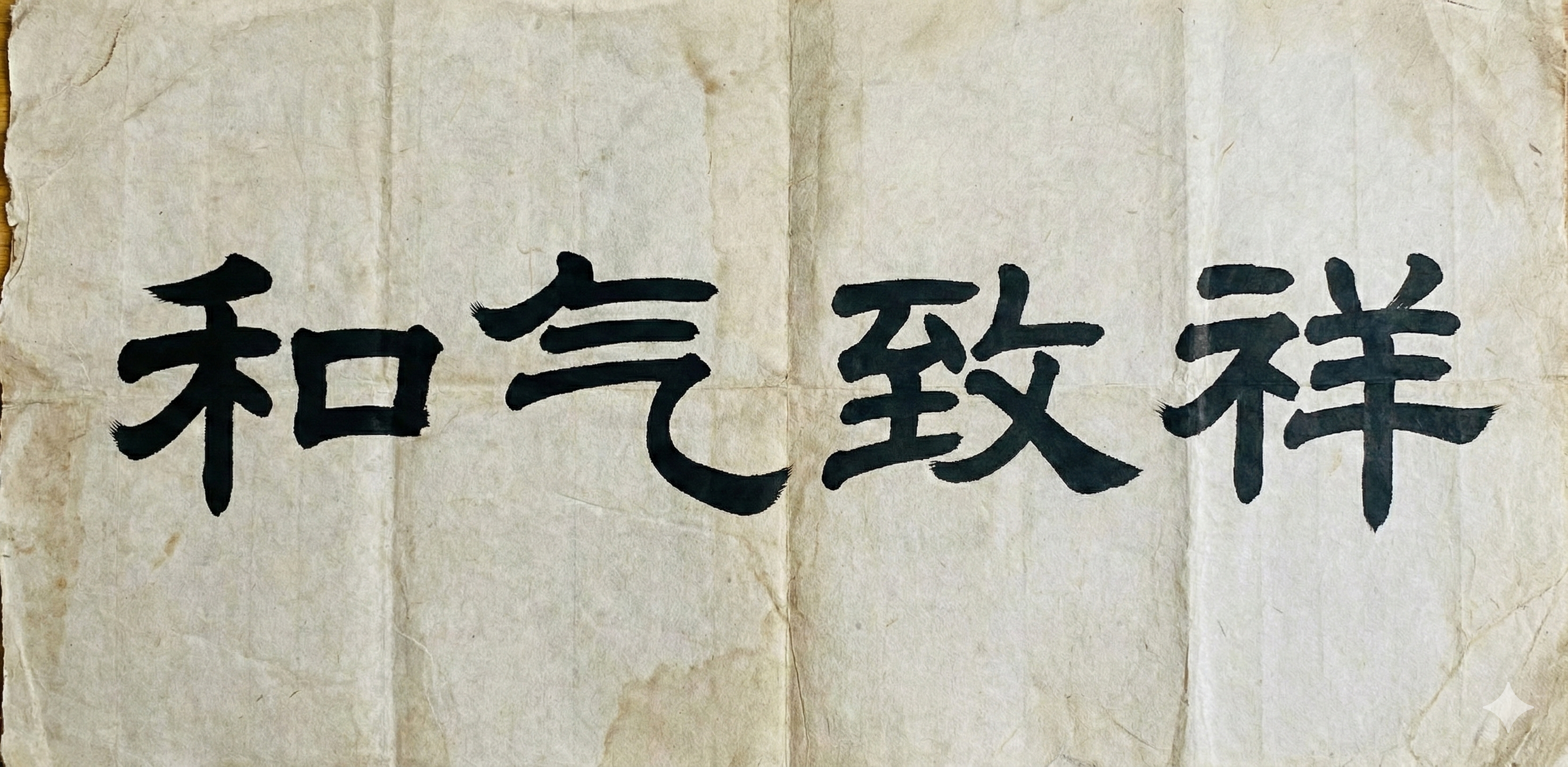
○ Medieval Gothic calligraphy: “Step by step, I can move again.”
Recovery after a crisis is not about leaps and bounds, but about gradually regaining the ability to move forward amidst extreme exhaustion. Gothic calligraphy, with its steady and solid style, is perfectly suited for writing this kind of "small but real progress."
- English sentences:Step by step, I can move again.
- Chinese equivalent:Step by step, I can continue to move forward.
- Writing Tips:With each "step" you write, inhale gently; with each "again" you write, exhale slowly, synchronizing the rhythm of your strokes with the rhythm of your body. Observe how the hard, black lines gradually soften with repeated writing; this is also your inner rhythm being reshaped.
Lesson 1109: Principles of Crisis Intervention - Guided Mandala Viewing
Purpose:Transform the crisis phase from an abstract theory into a visual rhythm that allows you to know which phase you are in, rather than getting lost in the chaos.
step:
Find a mandala image divided into six outward-expanding layers. The center represents the "moment of crisis," and the six outer circles symbolize the six stages of crisis intervention. First, stay at the center and observe your body's reaction: tension, numbness, increased heart rate, or slight resistance. Then, move your gaze outward along the first circle, the second circle, and so on, observing which circle you feel is more relaxed or your breathing is smoother.
When you can mentally mark things like, "I'm on the second circle now," and "I might be on the third circle tomorrow," the crisis transforms from a blurry black fog into a layered image. A mandala isn't about drawing something; it's about observation—observing how you gradually move from the center to the outer circles, and observing that you are not entirely powerless in the face of crisis, but rather that you have a path to walk along.
Please log in before submitting your drawings and feelings.
○ 1109. Principles and Stages of Crisis Intervention: Log-Guided Suggestions
① Write down the specific situation in which you most recently felt a sense of crisis: Where did it happen? What was the first physical reaction you noticed at that time?
② Of the six crisis stages, which one do you feel you most often get stuck in? Please explain why.
③ Write down one thing you are most afraid of being told to you, and one thing you really want to hear.
④ Looking back on the past week, what moment made you feel "I am actually slowly recovering"? Please describe it in detail.
⑤ Write down a "small action" you plan to do in the next three days, such as eating a well-prepared meal, making a phone call, or tidying up a small corner.
⑥ Finally, I'll end today's writing with a sentence that begins with "Even though it's still difficult now, I..."
Please log in to use.
Crises throw people into chaos, but intervention gradually restores order. May you rediscover the strength to move forward as you navigate the stages of understanding, observation, and moving through them.
 EN
EN  ZH
ZH  ES
ES  FR
FR  JA
JA