

Lesson 1118: Media Exposure and Prevention of Secondary Trauma
Duration:75 minutes
Topic Introduction (Overview):
In the aftermath of a sudden event, media exposure often becomes a second, invisible shock. The deluge of images, audio, news feeds, and social media sharing and discussion can trigger strong emotional reactions even in those who didn't directly experience the event, creating "secondary trauma." This trauma is not an illusion, but a real stress response of the brain when repeatedly viewing dangerous images, hearing horrifying sounds, or reading gruesome narratives: increased heart rate, sleep disturbances, heightened anxiety, persistent tension, avoidance of related content, and even flashback-like experiences. For those who have already experienced trauma, these images are more likely to re-trigger stable wounds, plunging them back into a state of shock or numbness.
Preventing secondary trauma isn't about "avoiding the news," but about learning how to maintain a healthy distance from the media: setting time limits for exposure, reducing the intensity of stimulation, choosing credible sources, avoiding late-night scrolling, building emotional buffers, seeking support, and allowing the body to process information in a safe state. Preventing secondary trauma is also a process of building psychological immunity. This course will guide you through the mechanisms of media exposure, helping you identify signs of overstimulation, and practicing establishing gentle psychological boundaries. A mandala isn't about drawing something, but about observation—observing how information affects the body, observing how you choose safety and clarity amidst chaos.
▲ AI Interaction: What information are you being "repeatedly bombarded"?
Please answer the following three questions to let AI help you identify the stress caused by media exposure:
- ① What was the most unsettling news story you heard in the past 48 hours?
- ② What physical reactions do you have when you see or hear it?
- ③ If you could set an "information boundary" for yourself, what would it look like?
Protecting your emotions is the first step in supporting yourself.
○ Media desensitization and the Music Stabilization Act
Play a piece of music with a very stable rhythm and no drastic changes to help the brain switch from "stimuli-based input" to "routine input".
- Close your eyes and focus on the most stable line in the music (such as a bass or sustained note).
- Whenever I think of news footage, I bring my attention back to that stable line.
- Repeat for at least 2 minutes to help your brain get out of "hypervigilance mode".
Mandala is not about drawing something, but about watching—watching your attention return from chaos to stability.
Aromatherapy Drinks: Recovery Drinks for Reducing Mental Stress
Recommended drinks:A relaxing warm drink made with lavender and mandarin peel.
Excessive media exposure can cause a "constant tension" in the nervous system. Lavender can calm the nerves and reduce visual clutter; while mandarin orange peel is used in naturopathy to soothe the chest and relieve overactive thoughts. The combination of the two is suitable for drinking after scrolling through social media or when feeling emotionally overwhelmed.
Instructions: Steep 1 gram of lavender and 2 grams of mandarin orange peel in hot water for 3–5 minutes. Before drinking, inhale the aroma deeply, letting it act as a gentle filter to clear away the noise buildup in your brain. A mandala is not about drawing something, but about observing—observing how the aroma helps you return from stimulation to calm.
○ American Natural Diet: Post-Stimulation Recovery Energy Bowl
When the brain is fatigued by media stimulation, the body often experiences symptoms such as weakness, chest tightness, and stomach cramps. Natural dietary approaches emphasize a combination of "warmth, slowness, and gentleness." This lesson recommends the "De-stimulation Recovery Bowl": a base of warm oats, with softened cooked apples, roasted walnuts, a small amount of honey, and cinnamon powder.
Apples symbolize a gentle transition; walnuts provide stable plant fats; honey brings subtle pleasure; cinnamon enhances warmth. It's like a bowl of food that "reorganizes your brain's desktop," allowing you to slowly detach from stimulation and rediscover your physical presence.
Healing Recipes
/home2/lzxwhemy/public_html/arttao_org/wp-content/uploads/cookbook/xiang-liao-tu-dou-dun-ji.html(Please confirm that the following has been uploaded: xiang-liao-tu-dou-dun-ji.html)
Dream Mandala Healing · Mi Xiangwen 1118 · Light Beyond Images
In your dream, you are in a room filled with screens, each displaying different scenes of disaster. The light is blinding, the sound is deafening, and you have nowhere to escape. However, when you close your eyes, you discover a soft light in the center of the room. It doesn't come from any of the screens, but rather seems to rise from within the earth.
The light spread outwards, like the outer ring of a mandala, blocking out all the glare from the screens and leaving only a warm glow. The images were still there, but they no longer controlled you; instead, they were separated from you by a soft membrane, allowing you to view them from afar.
A mandala is not about drawing something, but about watching—watching how you withdraw from the flood of information, watching how light creates a safe viewing distance for you.
○ Medieval Gothic calligraphy: “I choose what I let in.”
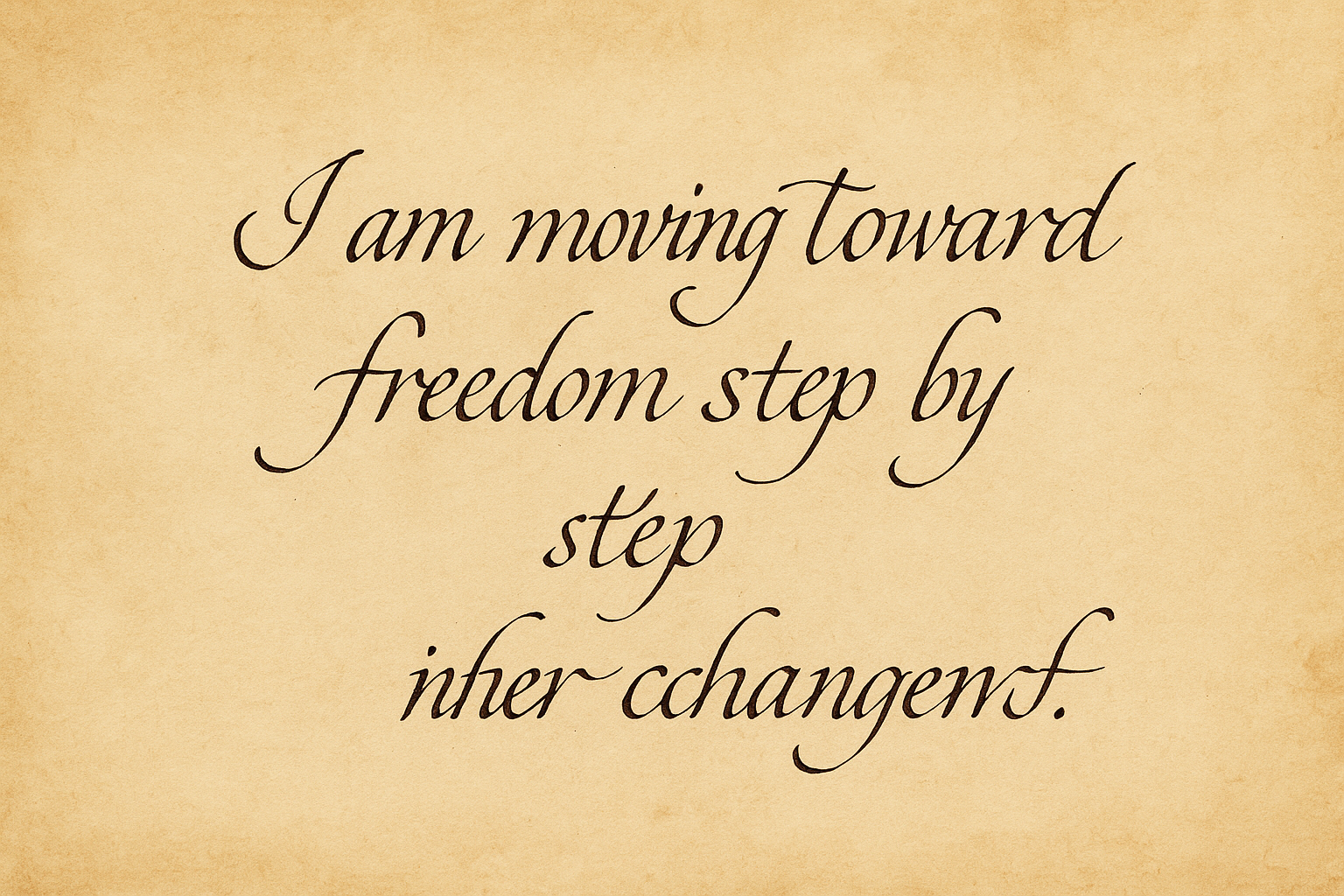
Gothic calligraphy is suitable for practicing the theme of "establishing a sense of boundaries," with thick and clear strokes.
- English sentences:I choose what I let in.
- Chinese equivalent:I choose what to let into my heart.
- Writing Tips:Vertical lines are like barriers, horizontal lines are like thresholds; with each stroke I write, I am telling myself: I can decide how much information I am exposed to.
Lesson 1118: Media Exposure - Mandala Viewing Guide
Purpose:By establishing "information distance" through visual structure, the intrusion of images on the nervous system can be reduced.
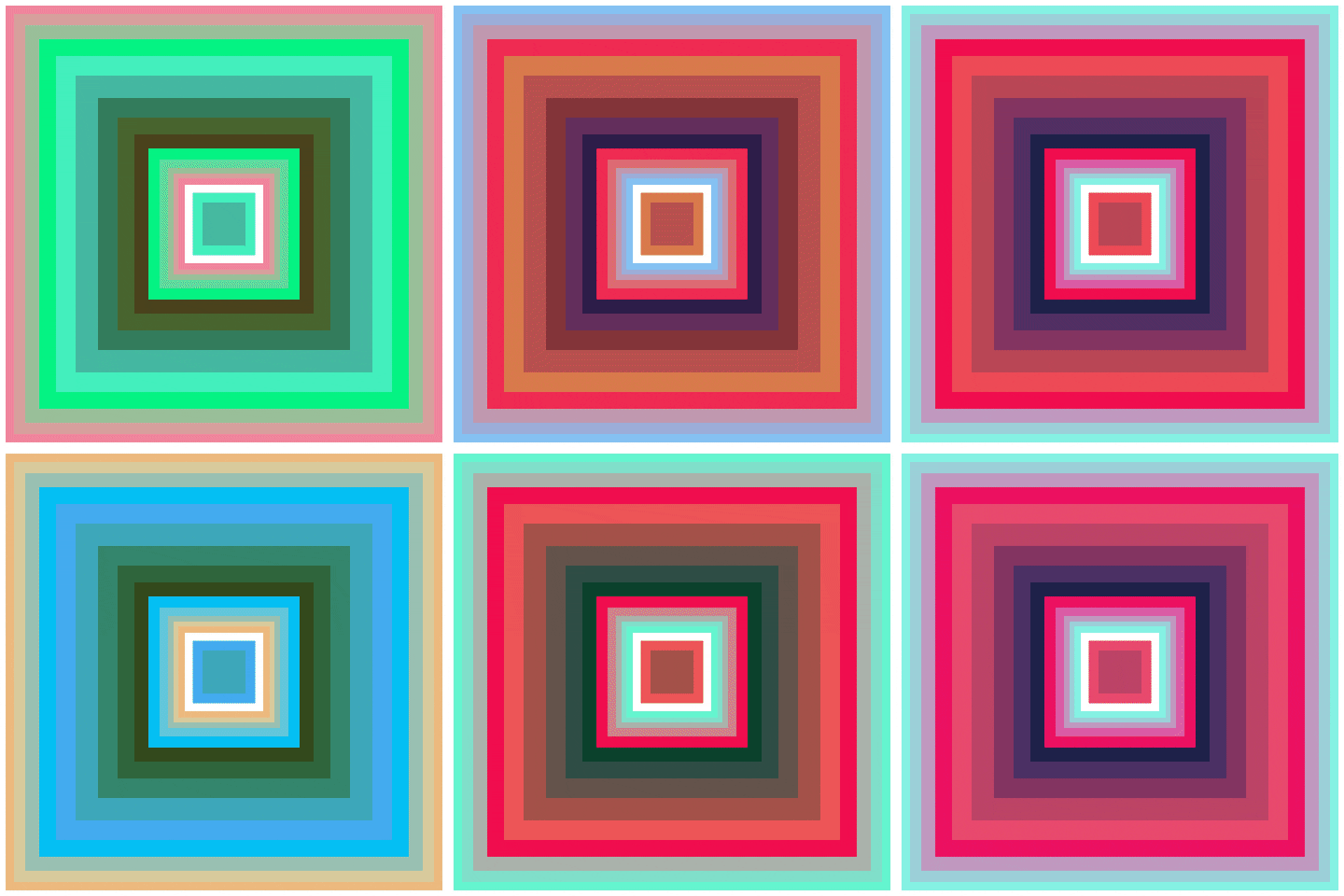
Choose a mandala with a wide outer circle and soft colors. The center symbolizes the "event itself," and the outer circle symbolizes the "psychological distance you set." Stare at the center for 5 seconds, then slowly move your gaze to the outer circle, letting your eyes linger there longer. This trains your brain to shift its attention from the "painful event" to the "stable boundary."
Mandala drawing is not about drawing something, but about observing—observing how your mind builds a buffer layer, keeping information at a safe distance so that you can stabilize yourself.
Please log in before submitting your drawings and feelings.
○ 1118. Media Exposure & Log Guidance Suggestions
① Write down any recent news or images that make you uneasy.
② Write down which physical reactions it triggered.
③ Write down one "information boundary" that you can establish.
④ Write a sentence: “I am protecting my own nervous system.”
⑤ Write down one small action that helps you return to stability from stimulation (washing your face, drinking water, breathing, etc.).
Please log in to use.
The wounds of the information age often lack a sharp edge, yet they can still hurt. May you learn to "turn off a light for yourself" amidst the chaos, allowing your heart to return to light and peace.
 EN
EN  ZH
ZH  ES
ES  FR
FR  JA
JA