

Lesson 1131: The Role of Group Counseling in Post-Disaster Intervention
Duration:75 minutes
Topic Introduction (Overview):
In the aftermath of disasters, accidents, public health emergencies, or mass incidents, people often experience the dual pressures of "personal trauma" and "collective loss": on one hand, their own fear, guilt, shock, and sense of loss; on the other hand, empathy and heartache for those who have suffered similarly. At this time, group counseling is not merely "a group of people attending a class together," but rather providing a safe, shared space where survivors can speak, weep, remain silent, and breathe freely in each other's testimony, feeling "I'm not the only one experiencing this," thus slowly easing feelings of isolation and shame.
This lesson will introduce the three main roles of group counseling in post-disaster intervention: First,Provide a sense of belonging and community experienceFirst, it allows disaster victims to see themselves in the stories of others; second,Promote emotional normalizationThe third is to transform the question "Am I abnormal?" into "So this is a common trauma response";Activate mutual assistance and resilienceHope is rebuilt through mutual support. The communal space is like a mandala being viewed together: each person's lines are different, but together they form a complete image. The mandala is not about drawing something, but about viewing—viewing each other's existence, viewing how trauma is received in connection.
▲ AI Interaction: If you were sitting in a post-disaster group counseling session
Please try to answer the following questions, imagining yourself in a safe group space:
- ① When it's your turn, what's the first thing you want to say? (It could be, "I don't want to say anything.")
- ② What are you most worried about happening in a group? (Being interrupted? Being misunderstood? Being compared to others?)
- ③ What do you most hope to take away from this group? (To be understood? To be supported? To receive information?)
After writing it down, click the button below to let AI help you sort out: What kind of group boundaries and rules make you feel safer?
○ Self-settling before a group activity - Music-assisted practice
Before entering a group space, many people feel nervous, ashamed, or afraid of "breaking down in front of others." In post-disaster interventions, facilitators often guide members to practice with a short piece of music first, allowing each person to transition from the chaotic external world to a shareable internal state.
Practice suggestions:
- Choose music with a stable melody, gentle rhythm, and no sudden high notes.
- Close your eyes and listen for 1–2 minutes, focusing only on two sensations: your breathing and your heartbeat.
- Tell yourself: "I can share only what I'm willing to share."“
○ Chinese Green Tea: Preparing for Group Listening and Sharing
Before and after group counseling, a cup of moderately strong Chinese green tea can help the brain maintain alertness and gentle focus. Green teas such as Longjing, Biluochun, and Anji white tea are light and fragrant, and unlike strong coffee, they won't aggravate palpitations. Instead, they can help the mind maintain necessary boundaries when listening to others' stories, preventing it from becoming completely absorbed.
Before the group, you can brew yourself a cup of green tea, watch the tea leaves unfurl, and remind yourself: I am here, both a witness and a witness; I have the right to decide how much to say and where to stop.
○ Chinese Food Therapy: Heart-Nourishing and Rejuvenating Soup - Codonopsis, Lotus Seed, and Longan Soup
Participating in post-disaster group counseling often requires a significant expenditure of emotional energy: listening to others' pain, recalling one's own wounds, and enduring silence and tears. Codonopsis pilosula (Dang Shen) to replenish qi, lotus seeds to strengthen the spleen and calm the mind, and longan to nourish blood and soothe the nerves are a classic combination to help those who "actively support others and themselves within the group" recover their vitality.
Suggested preparation: First, decoct the Codonopsis pilosula to extract the juice, then add lotus seeds and longan and simmer over low heat for 20 minutes. Add rock sugar to taste. Suitable for consumption after a group activity, allowing the body to slowly return to its normal rhythm in a warm and sweet way.
Dream Mandala Healing · Mi Xiangwen 1131 · Many Stories Within the Same Circle
You dreamt of a vast circular hall, its floor etched with layers of patterns like a mandala. Many people sat in different places around the circumference; some bowed their heads, avoiding eye contact, some clenched their hands tightly, and some stared blankly into the distance. No one was urged to speak; they simply sat in silence.
You slowly realize that everyone's footsteps are different, yet all connected within the same circle. Some begin to recount fragments, some can only utter a word or two, some simply listen—but the air in the hall gradually softens. You realize that group counseling is like a mandala; it doesn't force everyone to draw the same pattern, but rather allows different lines to see each other. A mandala isn't about drawing something, but about observing—observing that within the same circle, we are no longer so alone.
[mandala_gallery1131]
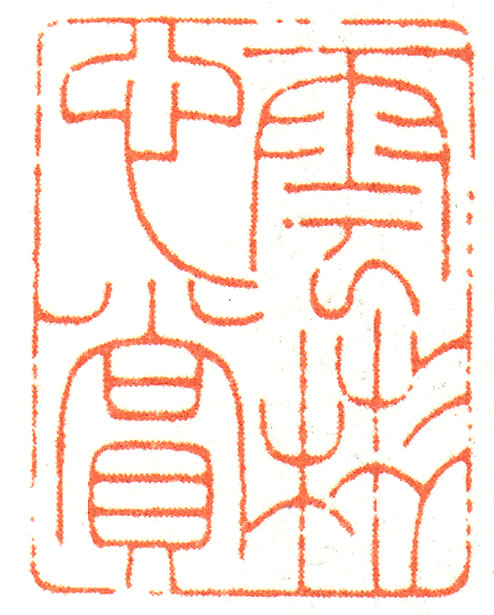
○ Regular script writing practice for "同在这里" (tóng zhǐ là)
The regular script is upright and has a clear structure, symbolizing a sense of reliable presence, and is also a visual metaphor for "mutual presence" in group counseling.
- Written words:Same here
- English equivalent:We are here together.
- Practice points:As you write each word, imagine someone in the group sitting next to you. You don't need to save them; you just need to be there for them.
Lesson 1131: Group Counseling - Guided Mandala Viewing
Purpose:Through the imagery of a "circle," one can experience the feeling of being caught within a group.
Find a mandala with a clear circular structure, expanding outwards in concentric circles. Imagine: the center represents the core event of this disaster, and each circle represents a different group of people—the direct victims, their families, the rescuers, the community, and society. Your location is also within one of these circles.
While watching, gently remind yourself: I am not alone in bearing all of this; I am within a larger circle. The group is what transforms this circle from an abstract concept into a tangible space.
Please log in before submitting your drawings and feelings.
○ 1131. The Role of Group Counseling: Suggestions for Journaling Guidance
① Imagine a disaster relief community space that you can trust. What would it look like? (Location, number of people, atmosphere.)
② In such a group, what are you most afraid of? Please write it down truthfully.
③ What kind of support do you most desire? (To be understood, to receive information, to know that I am not unique.)
④ Write a reminder: I have the right to choose whether to join the group, and I also have the right to only share what I am willing to say.
Please log in to use.
Group counseling cannot erase the disaster, but it can help people see a reason to keep living in each other's eyes. May you find in a safe circle that you feel, "I am no longer alone in facing all of this."“
 EN
EN  ZH
ZH  ES
ES  FR
FR  JA
JA