

Lesson 1135: Ethical and Cultural Sensitivity in Crisis Intervention
Duration:75 minutes
Topic Introduction (Overview):
In the context of sudden psychological trauma, speed, efficiency, and "immediate intervention" are often prioritized. However, truly safe and sustainable help must be built upon solid ethical principles and cultural sensitivity. Crisis intervention is not merely about "knowing what you need," but also about "respecting who you are, where you come from, and how you understand pain." The principle of non-harm, respect for autonomy, confidentiality and informed consent, appropriate boundaries, moderate self-disclosure, and awareness of power imbalances are all key dimensions that are easily overlooked in high-pressure situations but determine the quality of intervention.
This course will discuss common risks in crisis intervention along two axes: ethics and culture. These risks include coercive conversations under the guise of goodwill, judging grief and mourning from a single cultural perspective, ignoring the role of religion and belief systems in trauma interpretation, and disregarding the voices of vulnerable groups. We will practice how to maintain a "respectful, non-judgmental, and open" attitude within limited time and resources, ensuring that intervention becomes support rather than secondary harm. A mandala is not about drawing something, but about observation—observing the circumstances, beliefs, and boundaries of others, and observing the potential impact of one's own efforts in helping others.
▲ AI Interaction: When helping others, what do you take for granted?
Please write down a few of your most common "taken-for-granted" assumptions when supporting others, and let the AI help you examine the risks involved:
- ① Do you usually tell the other person "what you should do" directly? Give one or two examples.
- ② Have you ever felt that "expressing sadness in this way is too exaggerated/too cold"? Where do these judgments come from?
- ③ Do you feel nervous when facing people from different religious, ethnic, and linguistic backgrounds? What topics do you subconsciously avoid?
- ④ Are you worried that "if I refuse someone's request, I'm not a good person"? Does this make it difficult for you to set boundaries?
After you finish writing, click the button below to let AI help you extract: which habits may require more ethical reflection, and where cultural sensitivity needs to be increased.
○ Crisis Workers: Neutrality and Openness in Music
In crisis intervention, one must simultaneously bear one's own emotions and those of others. Without sufficient "neutral space," it's easy to intervene in an anxious or hasty manner. Music can serve as a small ritual before entering intervention mode, helping you return to a frequency that is neither indifferent nor overly involved.
Practice suggestions:
- Choose a piece of instrumental music that has a clear structure and is neither too sad nor too exciting.
- Before intervening or accompanying someone, close your eyes and listen for 3–5 minutes, feeling what the music leaves on your chest, shoulders, and neck.
- Silently repeat this sentence: "At this moment, I am willing to listen openly, but not to impose my own standards on the other person."“
○ Chinese Green Tea: A Sobering Temperature and Non-Excessive Intrusion
The defining characteristics of Chinese green tea are its clarity, lightness, and lingering sweetness without being overly heavy. This serves as a reminder to crisis interventionists to remain sufficiently clear-headed, avoiding being swept away by emotional outbursts and refraining from using an overly enthusiastic approach to steal the narrative from those involved. You can brew yourself a cup of light green tea while supervising, organizing notes, or reflecting on yourself.
In watching the tea leaves rise and fall, practice an attitude: I am present, I am focused, but I am not in a hurry to draw conclusions for you. A mandala is not about drawing something, but about observation—observing the other person's rhythm, rather than pulling them into your own.
○ Chinese Food Therapy: Synergistic Repair Soup - Lotus Seed, Lily Bulb, and White Fungus Soup
People who are involved in crisis intervention and trauma support for a long time often experience emotional exhaustion, sleep disorders, and empathic fatigue without realizing it. Lotus seeds nourish the heart and calm the mind, lilies moisten the lungs and soothe the heart, and white fungus nourishes yin and moistens dryness. When these three are cooked together into a soup, it symbolizes gentle care for the "heart" and also reminds workers that taking care of themselves is not selfish, but part of ethics.
Recommendation: After continuous shifts or completing high-intensity interventions, prepare a small bowl of warm lotus seed, lily bulb, and white fungus soup for yourself as a "closing ritual." While drinking it, consciously be aware that at this moment, I am also being seen and cared for, rather than always being the one giving.
Dream Mandala Healing · Mi Xiangwen 1135 · Center and Boundary Line
You dream of a giant mandala, with a group of people crying for help in chaos at the center, and rescuers constantly pushing inward from the outer circle. At first, everyone tries to rush to the center, throwing all their strength into it, but the image becomes increasingly chaotic; some are pushed out of the boundaries, and some fall.
Later, you see clear concentric rings appearing on the mandala: the innermost ring represents the client and their family, the middle ring represents the professionals directly involved, and the outer ring represents community and social resources. Each ring is separated by clear yet flexible boundaries, allowing communication while avoiding confusion. You suddenly understand: ethical and cultural sensitivities, like the lines of these rings—are not barriers, but rather safeguards that allow each layer to exist in its own way. The mandala is not about drawing something, but about observation—observing the location, the boundaries, and whose voices need to be heard first.
[mandala_gallery1135]
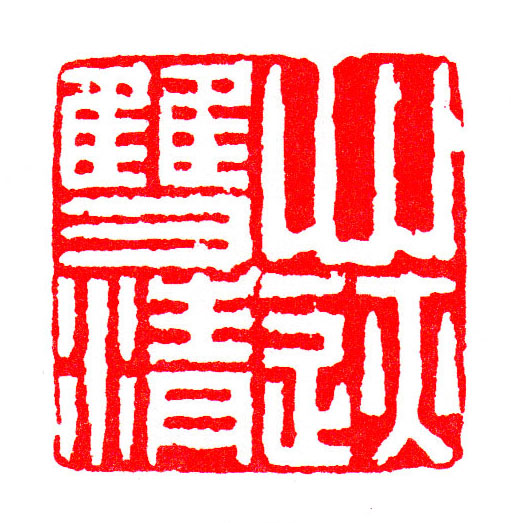
○ Regular script writing practice of "Respect and Non-harm"
Maintaining ethical and cultural sensitivity in crisis situations requires a stable, clear, and highly readable internal structure—regular script is a symbol of this structure.
- Written words:Respect and Non-Harm
- English equivalent:Respect & Do no harm.
- Practice points:When writing "respect", focus on the left side of the character "寸" (cun) to remind yourself to maintain rhythm and distance; when writing "do not harm", imagine that each stroke is reserving space for the other person, rather than pressing your own thoughts on top of it.
Lesson 1135: Ethics and Cultural Sensitivity - Guided Mandala Viewing
Purpose:By observing the structure of a mandala, practice making room in your mind for "different positions".
Please choose a mandala with a multi-concentric circle structure and rich color layers. When viewing it, first focus your attention on the small area at the very center, imagining it represents a person experiencing a crisis; then slowly move your gaze to the outer circle, seeing family members, professionals, community members, and social resources in turn.
While observing, ask yourself: Where do I usually place myself? Do I unconsciously overstep boundaries? Do I ignore the voice of a particular circle? A mandala is not about drawing something, but about observing—observing how the characters in each circle work together, rather than focusing on which circle is the "biggest" or "most important".
Please log in before submitting your drawings and feelings.
○ 1135. Crisis Intervention Ethics and Cultural Sensitivity: Log Guidance Suggestions
① Think back to a time when you participated in or witnessed a "helping act": Is there anything about it that makes you feel a little uneasy now?
② Write down your role and position in that situation, as well as your thoughts and feelings at the time.
③ Try to re-examine that experience from the perspectives of ethics (non-harm, respect for autonomy, confidentiality) and cultural sensitivity (differences in values, religion/customs, language and power).
④ Finally, write down a sentence you hope to remember during future crises, such as: "I will first ask how you understand this matter before offering my perspective."“
Please log in to use.
Crisis intervention is not merely about "buying time" amidst chaos, but also about upholding the bottom line of not causing harm within a limited timeframe, and respecting different cultural understandings of pain and recovery. May you find peace within yourself before gently approaching the world of others.
 EN
EN  ZH
ZH  ES
ES  FR
FR  JA
JA