

Lesson 1136: The Role of Family Systems in Trauma Recovery
Duration:75 minutes
Topic Introduction (Overview):
In the aftermath of a traumatic event, the victim is often seen as the "sole center of the trauma," but in reality, the entire family system is impacted: sudden role changes, increased economic and caregiving pressures, disrupted communication patterns, amplified old conflicts, and even an inability to bring up the event, leaving the family oscillating between silence and tension. The family can become both a source of secondary trauma and the most important protective buffer. This lesson will guide you to understand trauma from a "systemic" perspective: an individual's symptoms often reflect how the entire family copes with danger, loss of control, and vulnerability.
We will explore common trauma coping patterns in families—overcare, emotional avoidance, a cycle of blame and self-blame, role reversal (children acting like adults), and implicit rules that "only strength is allowed"—and learn how to gradually build more resilient interaction methods within real-world limitations: allowing different members to recover at different paces, finding a language for the fears behind conflict, and finding a new balance between boundaries and support. The mandala is not about drawing something, but about observation—observing how a family shrinks and breaks down under impact, and how it tries to reconnect, slowly piecing the fragments back together into a habitable "common space."
▲ AI Interaction: How does your family cope with emergencies?
Try describing your family's state under stress from a "system" rather than an "individual" perspective, and let AI help you analyze it:
- ① After an emergency occurs, who in the family will "step up and take charge"? Who will become more silent?
- ② Does your family discuss this matter, or do you try to avoid mentioning it? When you don't mention it, what's the atmosphere like?
- ③ Has anyone taken on the role of "comforting everyone" but rarely been asked "How are you?"
- ④ If we compare a family to a whole body: who is like the “tight shoulders” and who is like the “overworked heart”?
After writing down your observations, click the button below to explore with AI: Can this system grow a little more new support methods?
○ Family System: Stability Exercises Through Shared Listening
When everyone is struggling with their own anxieties, it's hard to have the energy to understand each other. Music can be a gentle starting point—not to "solve problems," but to allow a family to briefly breathe together in the same melody.
Practice suggestions:
- Choose a piece of music that is calm, not too intense, but has a clear melody, and play it softly in the common areas of your home.
- No one is forced to "sit down and listen to the whole thing," but rather, for a fixed period of time, the music becomes the background music you share.
- If appropriate, you can invite one of your family members to stay for 3 minutes, simply to listen without discussing any issues, and just to "spend a while" together in the sound.
○ Chinese Green Tea: Seeing Yourself, and Seeing Your Family
Chinese green tea is refreshing and transparent, with a slight bitterness and a sweet aftertaste, as if reminding us that in the process of recovering from family trauma, we need a clarity that is "neither completely melting into the emotions of others nor completely shutting ourselves off." You can brew yourself a cup of light green tea as a small ritual to accompany your family in conversation, discuss plans, or simply to quietly be by their side.
Observe the process of tea leaves unfurling, sinking, and floating in water, and practice telling yourself: I can care about you, but I also reserve my place in the world. A mandala is not about drawing something, but about observation—observing the posture of each tea leaf, like observing the reactions of different family members. Don't rush to judge; just observe first.
○ Chinese Food Therapy · Family Sharing Soup · Yam, Goji Berry, and Chicken Soup
Families recovering from trauma sometimes need more than just "talking"; they also need small things they can do together—like sharing a bowl of hot soup. Yam strengthens the spleen and replenishes qi, chicken provides mild protein, and goji berries nourish the liver and kidneys. A bowl of delicate chicken soup is not only easy to eat but also symbolizes rebuilding relationships in a soft, warm texture.
You can prepare yam, goji berry, and chicken soup in advance, perhaps before a weekend or an anniversary. There's no need to explicitly say, "We need to get together to heal from this trauma," but simply add a simple phrase to the table: "Thank you for holding us together through this difficult time." Let this soup be a quiet expression of support, putting "you are not alone" into its flavor.
Dream Mandala Healing · Mi Xiangwen 1136 · Shared Roof
You dream of a mandala, with a house at its center, its roof slightly damaged, rain seeping in through the cracks. On each ring stands a family member: some stand guard at the door, some are busy catching the dripping water with buckets, some huddle in a corner too afraid to move, and some look up at the cracks with anger in their eyes.
As you observe slowly, you realize the roof hasn't completely collapsed; it just needs to be seen and repaired. You see a thin circle of lines connecting everyone within the same outline—even though their postures and emotions differ, they still share the same roof. You silently say to this mandala: Family systems are never perfect, but we can learn together to stop pretending it's not raining. The mandala isn't about drawing something; it's about observation—observing everyone's position in this rain and the way they try to hold up their umbrellas.
[mandala_gallery1136]
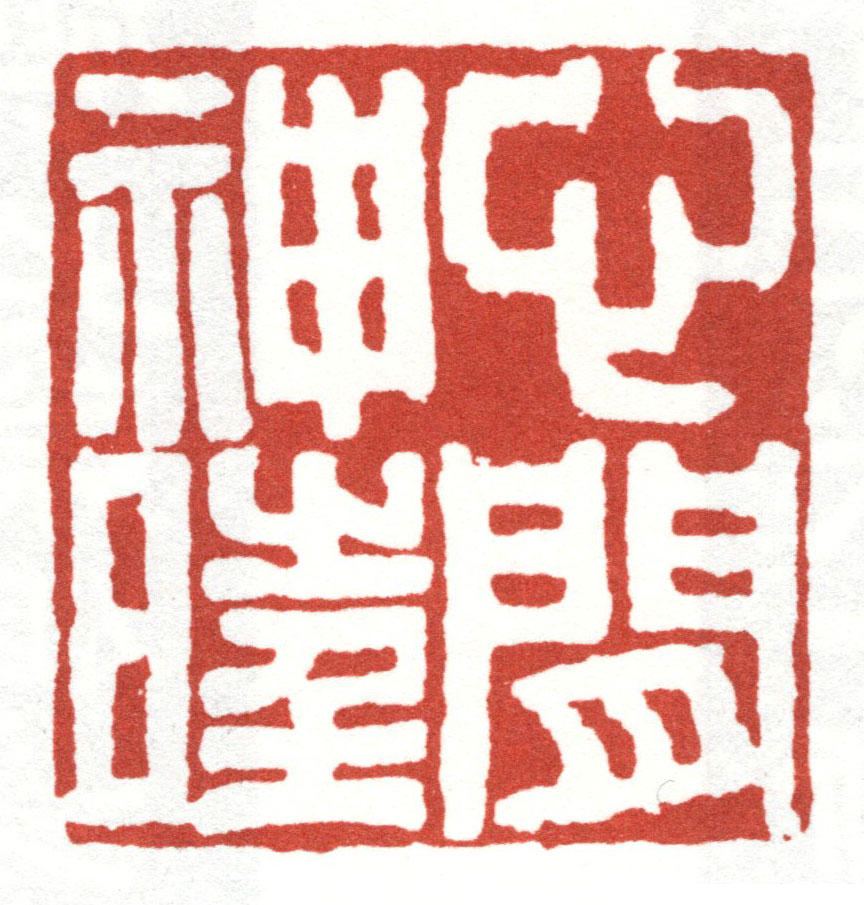
○ Regular script writing practice of "Together and Undisappeared"
The regular script is upright, steady, and has a clear structure, like a reliable skeleton for the family system.
- Written words:Together, Never Disappearing
- English equivalent:Together, we stay.
- Practice points:When writing “同在”, pay attention to the beginning and end of each stroke, keep the shape of the character upright, and do not pursue ornateness; when writing “不消失”, deliberately slow down the speed of the horizontal stroke, and feel that the line is like a promise of “I am still here”.
Lesson 1136: Family Systems - Mandala Viewing Guide
Purpose:By observing mandala structures, practice expanding your perspective from "myself" to "us".
Please choose a mandala with clearly defined concentric circles and distinct color zones. First, imagine the center as a "shared traumatic event within the family," then look outwards in concentric circles: Which circle resembles the parents? Which resembles siblings? Which resembles relatives or friends? Which resembles the community and broader social support?
While observing, whisper to yourself: Which circle am I used to standing in? Am I always observing from the outside, or always rushing to the inside to shoulder everything? Can I adjust the position of only half a circle next time we get together? A mandala is not about drawing something, but about observation—observing where you are willing to stand, and allowing family members to stand in different positions.
Please log in before submitting your drawings and feelings.
○ 1136. The Role of Family Systems in Trauma Recovery: Journal-Based Guidance Suggestions
① Recall an experience where your family faced difficulties or unexpected events together: What was the atmosphere like at home at that time?
② Write down your role at the time: Were you a comforter, a mediator, a person who remained invisible, or the "person who took responsibility for the problem"?
③ Which family member makes you feel that "he/she also works very hard, but is rarely seen"? Write a few words for them.
④ Try writing down one small change you can make to the family system (e.g., ask one more question, argue one less, give someone some space).
⑤ Conclusion: Families don't have to be perfect. As long as we gradually learn to see and walk together with each other through the cracks.
Please log in to use.
Trauma recovery is never a solitary endeavor, but a slow process of a family learning "how to live together." May you see your own wounds, and also those who, though clumsily, tried their best to be there for you, and allow new forms of support to grow between you.
 EN
EN  ZH
ZH  ES
ES  FR
FR  JA
JA