

Lesson 1139: Long-term monitoring and recurrence prevention of trauma from sudden events
Duration:75 minutes
Topic Introduction (Overview):
For those who experience a sudden traumatic event, the traumatic response does not automatically dissipate over time. Many people may experience "delayed relapse" months or even years after the event, characterized by re-triggering, sleep disturbances, flashbacks, physical tension, emotional overreaction, and social withdrawal. Therefore, long-term monitoring is not about "doubting whether you are getting better," but rather about understanding that trauma recovery is a fluctuating process that requires continuous care.
This course will guide you through the four warning signs of trauma relapse: ① Physiological activation, such as rapid heartbeat and stomach tightness; ② Excessive emotional fluctuations, such as sudden anger or helplessness; ③ Cognitive biases, such as self-denial or catastrophic expectations; ④ Behavioral withdrawal and avoidance. We will also discuss how to build a sustainable monitoring and relapse prevention system, including lifestyle rhythms, emotion journaling, support networks, and physical stabilization exercises.
Mandala drawing is not about drawing something, but about observation—observing subtle fluctuations, observing stress curves, observing the cyclical rhythm of the recovery process, allowing you to build new stability through repetition, rather than falling again.
▲ AI Interaction: Your Long-Term Monitoring Quadrant
Please write down the most noticeable changes in you over the past seven days. The AI will categorize them into four quadrants: "physiological/emotional/cognitive/behavioral".
- ① Are there any new signs of tension, fatigue, or startle reflex?
- ② Do you feel a sudden emptiness, anger, or intense anxiety?
- ③ Do you have automatic thoughts like "I can't do it" or "Something will happen again"?
- ④ Have you reduced going out, reduced communication, or started avoiding certain scenarios?
Long-term monitoring is not about being anxious, but about allowing you to see in time that "the next relapse is approaching".
○ Long-term monitoring • Music stabilization method
Play the same song with a stable rhythm at a fixed time each day and observe whether your body's reaction is consistent.
If one day you suddenly experience chest tightness, restlessness, or a feeling of emptiness when you hear the same melody, it is often a weak signal of a relapse.
Music becomes a gentle tool for you to "monitor your body's fluctuations over the long term".
○ Chinese Green Tea: Observing the color of the tea can calm the mind.
The clarity, light color, and purity of Chinese green tea are the most suitable indicators for long-term monitoring. The practice of "observing the color of tea" allows you to spend a few minutes each day watching the changes in the color of the tea: the first brew is slightly cloudy, the second brew begins to settle, and the third brew is clear and has a sweet aftertaste.
You only need to observe, no explanation is needed—the color of the tea reflects your rhythm and also tells you: which infusion are you in today?
Mandala is not about drawing something, but about observing—observing the color of brown, observing breathing, observing the cycle of body and mind.
○ Chinese Food Therapy · Soup Recipes · Lotus Seed and Lily Bulb Soup for Calming the Mind and Stabilizing Qi
In the Chinese dietary therapy system, soups represent "slow and gentle conditioning," making them ideal for daily rhythm training in trauma recovery. Lotus seed and lily bulb soup has the effects of calming the mind, soothing the nerves, and easing emotions, making it suitable for people in the long-term monitoring phase, allowing the body to transition from "high-activation mode" to "stable mode."
The process of simmering soup is like long-term monitoring: it is not rushed, not pressured, not forced, but continuous and stable.
Dream Mandala Healing · Mi Xiangwen 1139 · Fluctuation Curve
In your dream, you see a mandala made of interwoven curves: some lines are rapid, some are slow, and some tremble slightly. You don't try to straighten the lines, but simply observe how they form a whole.
You suddenly understand: relapse is not regression, but part of this mandala; and long-term monitoring is about understanding the rhythm of these arcs. When you can observe quietly, your mind will gradually stabilize.
A mandala is not about drawing something, but about observing—observing fluctuations, observing ups and downs, observing how changes form a new order.
[mandala_gallery1139]
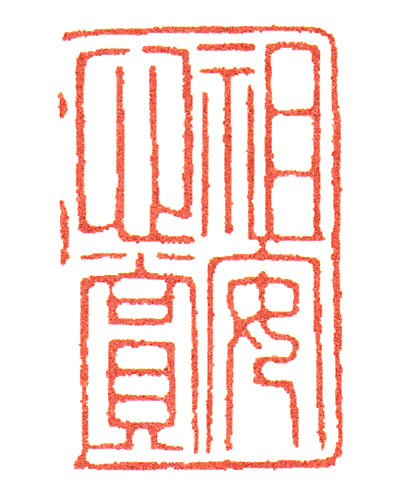
○ Regular script writing practice for the character "稳·守" (wěn shǒu).
Regular script has a stable structure and a clear center of gravity, making it the most suitable writing practice for "daily anchoring" during long-term monitoring.
- Written words:Stability and defense
- English equivalent:Stable · Hold
- hint:When writing "stability", focus on the center of gravity; when writing "guard", pay attention to guarding the center, guarding the boundaries, and guarding the heart.
Lesson 1139: Long-Term Monitoring - Guided Mandala Viewing
Find a mandala composed of circular lines with a uniform rhythm. First, observe the outermost layer—symbolizing your social rhythm; second, observe the middle layer—symbolizing your emotional fluctuations; third, observe the innermost layer—symbolizing your physical stability.
There's no need to pursue tranquility; simply observe: which circles are brighter today? Which circles are more contracted? Observation itself is monitoring and the first step in preventing relapse.
A mandala is not about drawing something, but about observing it.
Please log in before submitting your drawings and feelings.
○ 1139. Long-term monitoring and relapse prevention: Log-guided recommendations
① Did your body experience a slight recurrence of "old symptoms" today? Write down the location and time.
② In the past week, have you experienced any unexpected amplification of your emotions? In what situations did it occur?
③ What automatic negative thoughts resurface? Write them down.
④ Write down one “micro-intervention” you can take: deep breathing, rest, express yourself, ask for help.
⑤ Conclusion: Long-term monitoring is not exhaustion, but protection; preventing relapse is not fear, but gentle foresight.
Please log in to use.
Trauma recovery is a fluctuating journey. The more you can see the subtle changes, the better you can stabilize yourself before a relapse. May you always remain clear-headed and warm-hearted.
 EN
EN  ZH
ZH  ES
ES  FR
FR  JA
JA