

Lesson 1152: Safety Monitoring and Crisis Recognition During Depression
Duration:75 minutes
Topic Introduction (Overview):
During the depressive phase of bipolar I disorder, danger often doesn't manifest through intense emotions, but rather permeates life in a slow, gradual detachment, and diminishing energy manner. You may not be driven by the intense behaviors of the manic phase, but rather face a different kind of risk: giving up on seeking help, not responding to messages, reduced food intake, sleep disturbances, a sharp drop in self-esteem, amplified self-blame, and a loss of future prospects… These are the most easily overlooked "silent crises" during depressive episodes. This course will guide you on how to monitor your own safety during depressive phases, identifying risks across four dimensions: physiological, emotional, behavioral, and social, and establishing a structure that can issue warnings before a crisis occurs.
The course will help you identify three key signals: ① Rapid decline of the energy system—Including difficulty getting out of bed, slow movement, reduced speech, and poor concentration; ② Rapid shadowing of the emotional system—Excessive guilt, feeling like a burden, and believing the future is closed off; ③ Withdrawal and concealment in behavioral systems—Cancel transactions, don't reply to friends, reduce showering or eating; and ④ Crisis signals—This includes having thoughts of disappearing, preparing belongings, or suddenly apologizing or saying goodbye.
Mandala is not about drawing something, but about observing! — Observing those details that slowly sink into the depths of your heart but may be dangerous, observing how your own rhythm, colors, breath and behavior become dim, so that you can hold yourself in place before a real crisis arrives.
▲ AI Interaction: Self-Safety Monitoring Questionnaire During Depression
Please answer the following questions with the AI to create your own "Depression Risk Monitoring Form":
- ① In the past three days, has my wake-up time been noticeably later? After waking up, do I feel "unable to start"?
- ② Has the diet decreased to the minimum required level? Have you lost interest in food?
- ③ Do you have thoughts like "I am worthless", "I am a burden", or "The future is meaningless"? How often do these thoughts occur?
- ④ Have you started to reduce the frequency of showering, tidying up, socializing, and contacting others? How long has this trend lasted?
- ⑤ Have you recently had thoughts like "wanting to disappear", "wanting to rest for a long time" or "not wanting to face anyone"?
- ⑥ Do you have the urge to organize important things, give them away, say goodbye, or write a summary?
- ⑦ Who would you like to have the right to contact you if they see three or more of the changes mentioned above?
Based on your answers, the AI will create a "Personal Crisis Prevention Checklist for Depression" for early warning and support system linkage.
○ During periods of emotional low: Musical practice to return to the body's rhythm
What's most easily lost during a period of depression isn't happiness, but rhythm. Music here isn't meant to "make you happy," but to help you regain a little bit of your body's sense of rhythm. Choose a piece...Warm tone, slow rhythm, and unstimulating melodyTreat the music as a "gentle pull," drawing you out of a completely still inner state.
Practice method:
● First 2 minutes: Just listen, do not move, and observe whether there are any slight rises and falls in the chest and abdomen;
● The middle 3 minutes: Place your fingers on your lap and gently tap out the simplest rhythm to the music, without aiming for accuracy;
● Last 3 minutes: Ask yourself: "Is there anything I can accomplish with 10% today?"“
You don't need to complete the whole thing; you just need to get the pace of your life from "complete stagnation" to "slight startup."
A mandala is not about drawing something, but about observing—observing that little bit of life force still flowing in the midst of a low tide.
○ Chinese Green Tea: A Gentle and Soothing Daily Self-Protection Ritual
During a period of depression, the mind and body feel shrouded in fog: heavy, sluggish, and disoriented. A simple cup of Chinese green tea isn't meant to invigorate, but rather to symbolize "allowing a little space for clarity of thought." Observe the tea leaves slowly unfurling in the water, making this process your daily "wake-up ritual."
While waiting for the tea to become warm and drinkable, say to yourself:
“"I don't need to resolve all my pain right now, I just need to spend three minutes with myself."”
Then, as you take your first sip of tea, ask yourself a small question—
“"Can I complete a small task that takes 5 minutes today?"”
We don't seek efficiency, we only seek to have our sense of direction rekindled.
○ Chinese Food Therapy · Soup Dishes · Tremella and Lotus Seed Soup for Calming the Mind
Depression is often accompanied by sleep disturbances, restlessness, and increased fatigue. White fungus is moistening without being greasy, lotus seeds are nourishing without being drying, and when combined with a small amount of goji berries, it's a classic combination for harmonizing the mind and replenishing deficiencies. Its temperature, consistency, and aroma provide a "soft support" when you're most lacking in energy.
It is recommended to eat this soup when you are feeling down or having difficulty eating. You don't need to eat a lot; just let your body feel that "I am being slowly nourished."“
This is an action to stabilize your mind and body, and also a symbolic act—showing that you are still willing to take gentle care of yourself.
Dream Mandala Healing · Mi Xiangwen 1152 · Lighthouse in the Fog
You dream that you are floating on a deep gray sea, surrounded by fog, and the boat is barely moving. You can't see your direction, nor can you see the light of day; you can only hear your own slow, heavy heartbeat. You don't know where to row, or if anyone is looking for you.
Suddenly, a faint yet persistent light appeared and disappeared in the fog—not a dazzling flash, but a lighthouse that flickered like breathing. You didn't immediately accelerate, but simply stared at the light, feeling its rhythm: bright—dark—bright—dark…
You find that your heartbeat begins to synchronize with it; your boat, though still slow, is no longer sinking.
At this moment, you understand: life during a period of depression is not without direction, but rather you need to find your own guiding light rhythm—small and steady, it doesn't need to push you, it just needs to remind you: the light is still there.
Mandala is not about drawing something, but about watching! — Watching that beam of light, almost swallowed by the fog, yet still pulsating as if breathing.
[mandala_gallery1152]
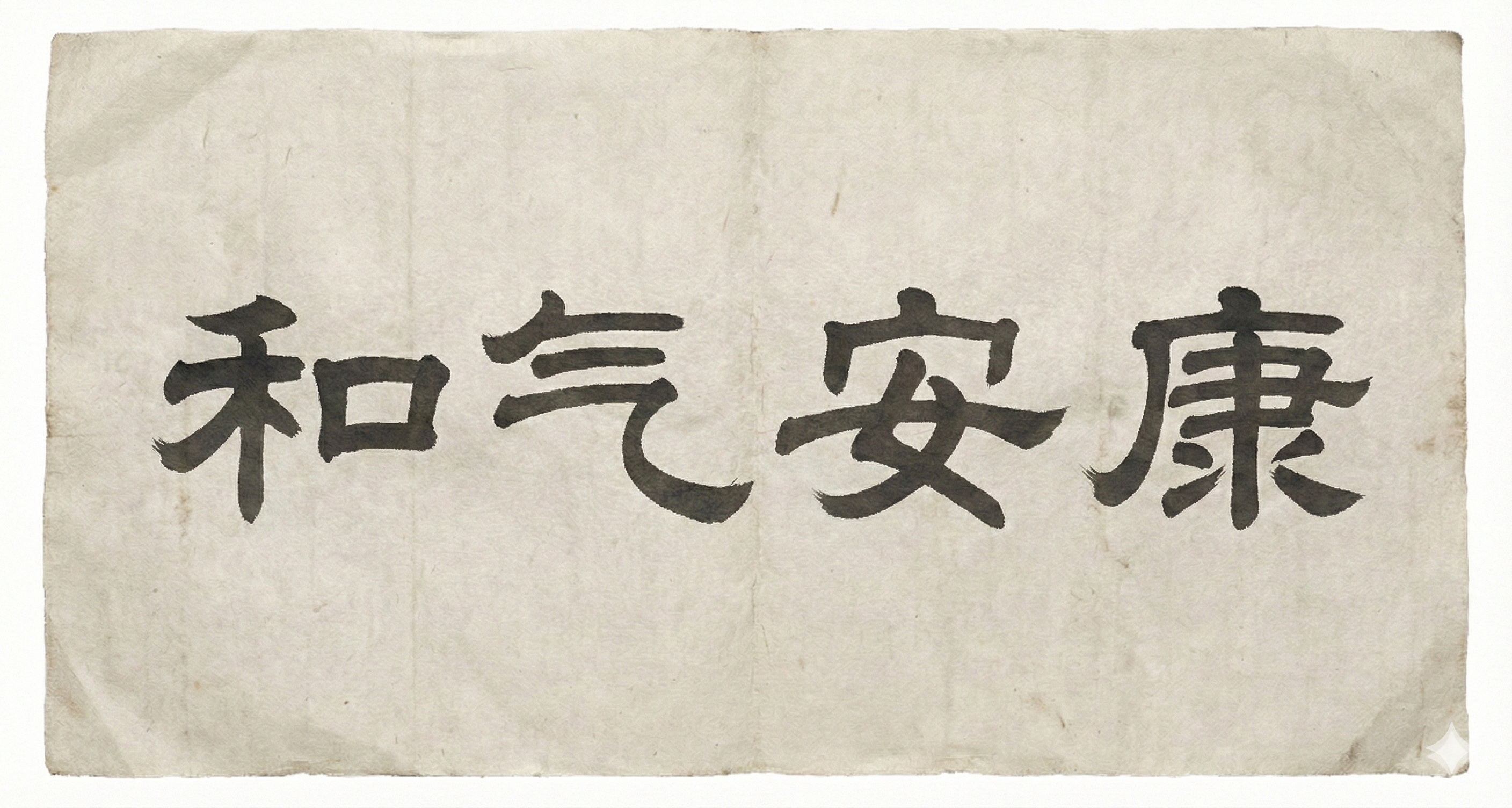
○ Regular script writing practice for the characters “稳” and “息”
The stable structure and clear strokes of regular script are an excellent way to practice a sense of "order" and "breathing" during periods of depression.
- Written words:Stable interest rates
- English equivalent:Steady Breath
-
hint:When writing the character "稳" (wěn, meaning steady/steady), treat each stroke as if you are "standing"; when writing the character "息" (xī, meaning rest/breath), treat each horizontal stroke as if you are "pausing your breath".
Observe whether your strength fluctuates, and whether your rhythm is too fast or too slow. During a period of depression, writing is not about writing well, but about restoring a little bit of stable structure on paper.
Lesson 1152: Stabilization Exercises During Depression - Mandala Viewing
Please select a mandala artwork with soft colors and a regular outer structure.
Step 1: Focus only on the outer ring, not the center. Let your gaze follow the repetitive shapes and rhythms, as if searching for "regular breathing";
Step 2: Slowly shift your gaze to the center circle and observe how the color changes from saturated to soft;
Step 3: Finally, look at the very center and imagine that area as your current emotional state—you don't need to change it, you just need to see it.
Shh, don't rush to interpret what you see; let the act of watching itself be a form of companionship.
A mandala is not about drawing something, but about observing—observing the ability to "still be with myself."
Please log in before submitting your drawings and feelings.
○ 1152. Safety Monitoring During Depression: Log-Guided Suggestions
① In what areas have I felt the most significant drop in energy over the past three days? Please list 3 items.
② What specific changes have occurred in my recent eating, sleeping, social, and personal care habits?
③ Write down the negative thoughts that have been recurring over the past few days (such as "I am meaningless"), and treat them as "symptoms" rather than "truths".
④ Which sign makes me most worried that I might be entering a danger zone? Why?
⑤ I can set three safety reminders for myself (e.g., notify supporters if I stay home for two consecutive days).
⑥ Write down which person I hope will contact me when they see certain changes?
⑦ Conclusion: Write three sentences for yourself right now, as gentle and stable as you would for a friend.
Please log in to use.
Safety monitoring during depression is not about supervision, but about companionship; it's not about demanding you speed up, but about ensuring you are still seen and supported even when you slow down. May you find your own guiding light even in your darkest moments.
 EN
EN  ZH
ZH  ES
ES  FR
FR  JA
JA