

Lesson 1187: The Core Differences Between Biphasic I and Biphasic II
Duration:75 minutes
Topic Introduction (Overview):
Many people, upon hearing "bipolar disorder," only know it as "extreme mood swings," but struggle to distinguish between bipolar I and bipolar II. In fact, these two types differ significantly in manic intensity, hospitalization needs, degree of functional impairment, and suicide risk structure: Bipolar I is characterized by complete manic episodes, often requiring hospitalization and resulting in severe functional impairment; while the "hypomania" of bipolar II may seem less severe, it is frequently accompanied by longer and more intense depressive episodes. Focusing solely on the surface of "mood fluctuations" while ignoring these structural differences can easily lead to misdiagnosis, missed diagnosis, or self-labeling with overly vague or even self-blaming labels.
This course will help you understand the core differences between Bipolar I and Bipolar II from a "structured perspective" rather than "emotional impressions": not which is more severe or milder, but the different configurations of disease rhythm, manic intensity, depressive proportion, and functional impact. You will learn to judge using specific questions (Is there severe mania? Is hospitalization necessary? Are there obvious psychotic symptoms?), rather than guessing based on "sometimes seems very agitated." The mandala is not about drawing something, but about observation—observing where different types are positioned on the same "emotional spectrum," seeing where you truly are, and making more realistic and safer care choices.
▲ AI Interaction: Which structure am I closer to?
Please try to recall your experience in a few sentences:
① Have you ever experienced a peak in "losing control": almost no sleep, impulsive spending, dangerous behavior, needing to be forcibly restrained by family members, or even hospitalization?
② How long does a period of depression usually last? To what extent does it affect studies, work, interpersonal relationships, and daily life?
③ What do you get more often: a brief but intense peak, or a long and inescapable trough?
Write down these experiences, then click below to work with AI to analyze the "structural differences," rather than judging them as "good or bad."
○ Biphasic I/II Difference Perception and Musical Rhythm Exercises
Choose a piece of music that starts with a slow tempo, gradually increases in intensity, and then becomes steady again.
While listening, imagine the first half as "hypomania and rising mood", the peak in the middle as "bipolar I mania", and the decline and stabilization at the end as "recovery and stability".
Silently ask yourself: Which part am I familiar with? Is it the brief but intense peak, or the long period of low-frequency fluctuations?
There's no need to give an answer immediately; you can simply "see" your familiarity with different rhythms through music.
○ Herbal Healing Tea - Maple Leaf Herbal Balancing Drink
Recommended pairings:Chamomile + rose + a touch of maple syrup.
Chamomile helps stabilize the nervous system, preventing mood swings from being too abrupt; rose gently soothes chest tightness and congestion; and a touch of maple syrup brings a mild sense of energy and pleasure, reminding you that emotions don't have to be "extremely high or extremely low," but rather a gentle middle ground.
It is recommended to drink this while engaging in "self-segmentation thinking" (Am I more like Type I or Type II?), taking small sips to slow down the thinking process and shift attention from "labeling" to "understanding one's own structure".
○ Canadian Maple Diet: Maple Bowl for Stabilizing Blood Sugar
In the difference between biphasic I and II, blood sugar and energy fluctuations are often overlooked. If you frequently experience significant mood spikes or energy drops shortly after eating, your diet may be amplifying these fluctuations. Following the Canadian Maple Diet approach, maple syrup can be considered an "embellishment rather than the main ingredient": based on whole grains, nuts, high-quality protein, and plenty of vegetables, a small amount of pure maple syrup is drizzled on top of the bowl, providing the brain with gentle, sustained energy, rather than a sharp spike followed by a rapid drop.
Recommended pairing example: Grilled chicken breast or chickpeas + grilled squash + mixed lettuce + a small amount of nuts, finished with a light maple syrup dressing. A stable blood sugar rhythm is a fundamental care requirement shared by all, beyond the distinctions between different disease types.
Healing Recipes
/home2/lzxwhemy/public_html/arttao_org/wp-content/uploads/cookbook/maple-1187(Alternatively, you could try relaxed="1" or use an existing filename.)
○ Dream Psychological Mandala · Power Thoughts 1187 · Two Waveforms of Circles
Imagine a mental mandala: the center is a calm lake, and the outer circle has two different types of ripples. One type of ripple is high in amplitude, fast in speed, and its crest almost overflows the circle; the other type of ripple is finer and denser, with a smaller amplitude, but it continuously spreads outward in concentric circles. Both waveforms are real and belong to the same circle.
You don't need to immediately determine which type you are. Just sit outside the circle and observe quietly: Which waveform is more familiar to you? Which one is more like the rhythm of your life? A mandala is not about drawing something, but about observing—observing different waves on the same surface of water, observing how you find your place among these waves, rather than being completely defined by any one waveform.
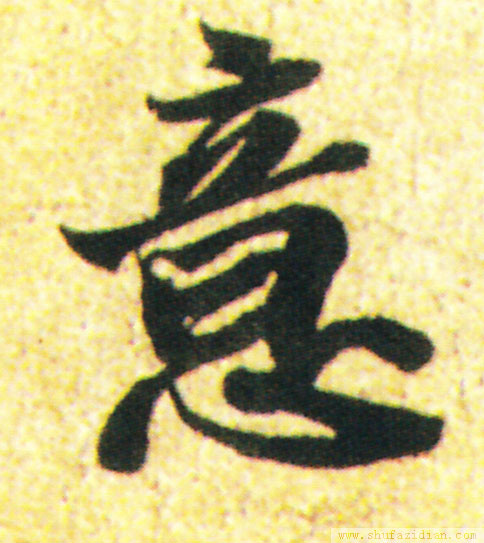
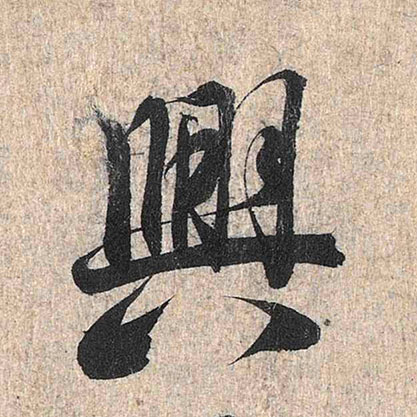


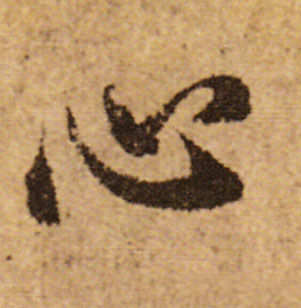
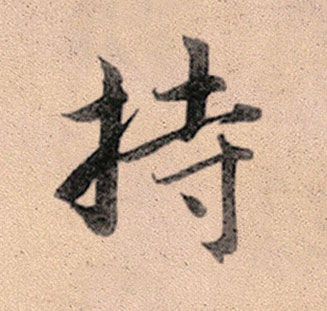


○ Chinese Calligraphy – Running Script: A Writing Practice of Discernment Without Judgment
Running script maintains a kind of "restrained freedom" between the stability of regular script and the fluidity of cursive script, making it very suitable for writing sentences about rhythm, distinction, and non-judgment.
- Written words:Both are waves, yet each has its own form.
- English equivalent:Same waves, different patterns.
- Practice Tips:When writing the character "波波" (both meaning fluctuations), you can let your brushstrokes rise and fall slightly; when writing "其形" (its form), deliberately slow down and lengthen the ending strokes, allowing yourself to feel the calmness and gentleness when distinguishing differences. The continuity of running script reminds you that Type I and Type II are different forms on the same river of emotions, not a distinction of high or low value.
Lesson 1187: Biphasic I/II Differences - Drawing Guidance
Objective: To transform the "distinction" from an abstract concept into a visible structure.
Steps: Draw two horizontal axes side by side on a piece of paper, labeling the left one "Bipolar I" and the right one "Bipolar II". On each axis, use waveforms of different heights to represent the differences between "mania/hypomania" and "depression": the manic peaks of Bipolar I can be drawn higher and steeper, while the hypomanic peaks of Bipolar II can be drawn lower but narrower; at the same time, draw the depth and duration of the depressive troughs below the axis.
After you finish, don't rush to make changes. Just observe the two waveforms: which one is more like a story you've seen, heard, or experienced? This observation itself is a form of understanding and differentiation.
Please log in before submitting your drawings and feelings.
○ 1187. Core Differences Between Biphasic I and Biphasic II: Log-Driven Recommendations
① Write in your own words: In your understanding, what are the three key differences between bipolar I and bipolar II?
② Reflect on your own experiences: Which type of trap you are more often—a short and intense peak, or a long and heavy trough?
③ Write down your expectations of being "accurately understood": How do you hope your family or professionals will view these differences?
④ Record a small action: Starting today, how can you more clearly describe your rhythm characteristics during doctor visits or conversations?
⑤ Conclusion: The type is just a map; the real focus is on how I am cared for and how I take care of myself.
Please log in to use.
Understanding the difference between Bipolar I and Bipolar II is not about being labeled with more complex terms, but about finding support methods that better align with your true rhythms. You are not a diagnosis; you are someone learning to live in harmony with your own fluctuations.
 EN
EN  ZH
ZH  ES
ES  FR
FR  JA
JA