

Lesson 1189: Recurring Pattern: The Cycle of Hypomania-Depression
Duration:75 minutes
Topic Introduction (Overview):
For many people experiencing bipolar II disorder, what truly troubles them is not a single episode of hypomania or depression, but rather the recurring cycle: a period of improved energy, a surge in plans, and increased social interaction, followed by a prolonged period of decline, fatigue, loss of interest, and self-blame. Without understanding the pattern of this cycle, it's easy to label oneself as having "poor willpower" or being "unpredictable," ignoring the fact that this is actually part of the disease's circadian rhythm, something that can be seen, recorded, and gently managed.
This course will guide you through a systematic overview of the recurring patterns of hypomania-depression: including the approximate duration of each cycle, common triggers (such as sleep deprivation, stress spikes, time zone changes, and seasonal variations), and the phased characteristics of emotions, behaviors, and physical sensations. We will learn to connect years of experiences using an "emotional timeline" and a "cycle map," thereby reducing the feeling of being passively affected. The mandala is not about drawing something, but about observation—observing how emotions come and go in cycles, observing how you gradually gain more choices in each cycle, rather than simply being swept up in them.
▲ AI Interaction: Draw a "Cyclic Timeline" for Your Emotions“
Please use a sentence or two to recall: When was the first time you clearly realized that "I seem to be repeatedly experiencing the same emotional pattern"?
Next, try to write down three cycles you can remember from the past year or two: How long did it take each time from "hypomania becoming more pronounced" to "depression subsiding and largely recovering"? What common triggering events or life changes occurred during these cycles?
Finally, I'd like to write a sentence for myself now: "When I find myself walking on this familiar curve again, what do I want to remind myself of?"“
After organizing this information, click the button below to work with AI to analyze your personal cyclical patterns, transforming yourself from being "repeatedly dragged along" to "having more control over your cycles."
Hypnotic-Depressive Cycle: Musical Rhythm Observation Exercise
Choose an instrumental piece with a clear structure: the beginning is steady, the middle section gradually rises in intensity, and the end section falls back to tranquility.
During the first listening, name the three segments "Stable Period", "Hyperactive Rising Period", and "Depressive Decline Period" respectively, and draw the corresponding wave lines on paper.
On the second listening, close your eyes and ask yourself at each "rhythm change point": In real life, does my emotional cycle also take a turn at similar points? For example: before and after a project ends, before and after an exam, after a party, or after a long holiday.
Music doesn't need to provide answers; it simply helps you practice in a safe space: between the peaks and troughs, to see that subtle "transition zone." That zone is often where you have the best chance to do something different.
Herbal healing teas – a gentle companion on cycle observation days
Recommended recipe:Lemon balm + rose + a small amount of green tea.
Lemon balm helps relieve anxiety-like tension, allowing the mind to calm down slightly; rose helps soothe chest tightness and reduce the oppressive feeling of "the cycle is starting again"; a touch of green tea provides a bit of clarity and focus, allowing you to gently complete note-taking and reflection, rather than getting trapped in emotions. It's neither a strong stimulant nor a complete lethargy, but rather supports you in maintaining a clear mind in "observation mode."
On the day you plan to do an "emotional cycle review" or fill out an emotional timeline, I suggest brewing a pot of this herbal healing tea and placing it on your desk. Let each sip serve as a reminder: I am not judging myself right now, but carefully observing my own rhythm.
Canadian Maple Diet: The Stable Cycle of the "Maple Day Bowl"“
In the cycle of hypomania and depression, eating habits often fluctuate wildly with emotions: when hypomanic, it's easy to forget to eat, while when depressed, one might soothe oneself with high-sugar and high-fat foods. Drawing inspiration from the Canadian Maple Diet, "small amounts of pure maple syrup" can be transformed into a conscious garnish rather than an emotional overeating compensator: use whole grains like oats or quinoa as a base, add plain yogurt, blueberries or apple slices, a small amount of nuts, and finally, lightly drizzle maple syrup on top.
This "Maple Day Bowl" is perfect for times when you're prone to mood swings—like the afternoon or evening. It uses a stable mix of complex carbohydrates and protein as its core, with just a small swirl of maple syrup for a gentle, pleasant sensation, reminding you that taking care of your mood doesn't have to rely on extreme taste stimulation. A stable, structured diet is itself a small intervention to break the vicious cycle.
Healing Recipes
/home2/lzxwhemy/public_html/arttao_org/wp-content/uploads/cookbook/maple-1189(Alternatively, you could try relaxed="1" or use an existing filename.)
Psychological Mandala Healing · Mi Xiangwen 1189 · The Thin Thread in the Cycle
Imagine a mandala: from the center outwards, concentric rings of alternating light and dark colors appear. The light rings represent restless energy and impulsiveness, while the dark rings represent depressed depression and withdrawal. At first, you feel like you're being tossed back and forth between these rings, as if you have no choice but to be thrown into different circles as the colors change.
Until one day, you decide to stop rushing to the outermost layer and simply observe quietly: you discover a very thin, almost imperceptible transition zone between each circle—the color softens from light to dark, from dark to gray. At that point of the thin line, it's neither so intense nor so hopeless, just slightly different. A mandala isn't about drawing anything, but about observing—observing that thin transition line, learning to linger there a little longer, so you don't always go to the extremes.




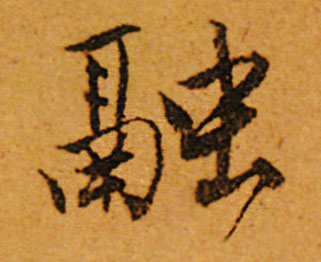

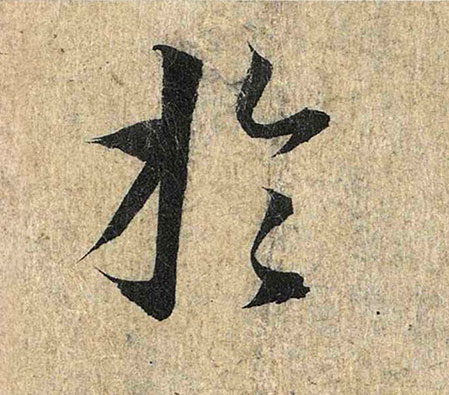
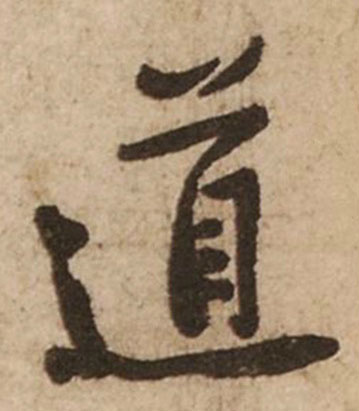
Chinese Calligraphy – Running Script: Writing "Finding a Buffer Zone in the Cycle"“
The rhythm of running script is perfect for practicing the intermediate state of "not being black and white, not high and low." It provides a "buffer zone" for practicing between continuity and contraction.
- Written words:Take it slow and steady, no need for extremes.
- English equivalent:In between the swings, I walk softly.
- Writing Tips:When writing "缓步" (huǎn bù), let the strokes have a slight dragging feel, don't go too fast; when writing "间" (jiān), deliberately lengthen the middle horizontal stroke, as if giving yourself more time to pause; in the sentence "不用极度" (bù yòu jí dù), let the strokes be natural and even, don't deliberately add weight to any character, and experience on paper: neither rushing to the highest point nor falling to the lowest point, stopping in the middle is also a kind of strength.
Lesson 1189: The Hypochondriac-Depressive Cycle - Guided Drawing
Objective: To transform the abstract experience of "recurring episodes" into a visual trajectory through drawing, helping you to see the patterns more clearly.
Steps: Draw a long horizontal timeline on a piece of paper, from left to right representing the past year or two. Draw a undulating line along the timeline: periods of restlessness or significantly increased energy are represented by an upward-sloping line; periods of depression or significant low energy are represented by a downward-sloping line; and relatively stable periods are represented by a line close to the midline. You can lightly mark a few important events (such as moving, changing jobs, relationship changes, major exams, etc.) with different colors and see if they are related to the peaks or troughs.
After you finish, don't rush to explain why. Just quietly observe the line: Which section fluctuates particularly frequently? Which section is relatively stable? If you were to add an extra "buffer zone" for yourself in the next cycle, which section would you choose to draw it on? Please lightly circle that position with a pencil for later practice and planning.
Please log in before submitting your drawings and feelings.
Lesson 1189: The Hypomania-Depressive Cycle - Journaling Guidance Suggestions
① Write down your intuitive impression of "recurring episodes" in one or two sentences: What is it like? Waves? Seasons? Or a carousel?
② Review the most recent complete cycle: from hypomania to remission of depression, what stages did you go through? Try to list them in chronological order.
③ Write down three signs that you are most likely to overlook during the "transition period" (e.g., sleep starts to get shorter, speech gets faster, or you start to plan or fantasize a lot).
④ Think of a "buffer action" that you are willing to try, such as: if you have three consecutive nights of sleep deprivation, proactively reduce your social or work schedules.
⑤ Write a reminder to your future self: When I realize that the cycle is about to start again, what is the first little thing I hope I will do?
⑥ The conclusion could be: "I may not be able to stop the cycle for now, but I am learning to walk more steadily in each cycle than before."“
Please log in to use.
The recurring hypomania-depression cycle is not a failure, but a manifestation of the disease's rhythm. The clearer you understand the trajectory of this cycle, the more opportunities you have to chart a new path within it—even pausing for a small step is a step towards long-term stability.
 EN
EN  ZH
ZH  ES
ES  FR
FR  JA
JA