

Lesson 119: Self-doubt after recovery – Am I really okay?
Duration:70 minutes
Topic Introduction:
After a successful period of healing, exposure exercises, or emotional stabilization, many people suddenly experience a reverse unease:
“Am I recovering too quickly?”
“Am I deceiving myself?”
“Have I really become a better person?”
This post-recovery doubt is not a regression, but rather the brain adapting to a "new self".
This lesson will help you understand this psychological mechanism and teach you how to remain stable when doubt arises.
Why do we start to doubt ourselves after making progress?
- The brain gets used to old patterns:Prolonged anxiety makes the brain accustomed to alertness, and new states feel "unreal".
- Lack of successful experience:Having experienced many failures in the past, when things go smoothly, one tends to doubt whether it's just "good luck."
- Fear of losing progress:The better things get, the more afraid I am of falling back to square one.
Lesson 119: Self-doubt after recovery—Am I really okay? (Click to listen to the reading and view the content)
As fear subsides and life gradually returns to normal, many people unexpectedly enter a new phase of confusion: post-recovery self-doubt. "Am I really okay? Is this all just temporary?" This question doesn't mean you've regressed; rather, it means your psychological system is adapting to a new state. People who have been in a state of anxiety or fear for a long time often become accustomed to high alertness. When the alarm bells die down, the brain feels uncertain because familiar references have disappeared. From a psychological perspective, this is an adjustment at the identity level. You are not only adapting to more stable emotions but also to a self no longer defined by fear. Self-doubt often manifests as repeatedly checking your state, overinterpreting mild tension, or even worrying that you are deceiving yourself. This is not weakness but a remnant of past survival strategies. The key to coping with this stage is not proving that you are completely healed, but allowing stability itself to be learned. The first step is to understand that recovery is not an end point but a new operating mode; occasional emotional fluctuations do not negate the overall change. The second step is to reduce the pursuit of perfection. True health does not mean perpetual calm but the ability to regulate oneself during fluctuations. The third step is to shift your attention from monitoring your state to experiencing life. When you re-engage with relationships, interests, and actions, the space for self-doubt will naturally shrink. It's important to understand that doubt itself won't hold you back, but constantly arguing with it will only reactivate the cycle of anxiety. You can tell yourself, "I don't need constant reassurance that I'm okay, that I'm living my life." Post-recovery self-doubt is a sign of transition, not a warning of danger. As you gradually get used to navigating your inner stability without fear, it will become more natural and reliable. You don't need to grade yourself; you just need to keep moving forward.
▲ AI Interaction: What are you most worried about when you get better?
Many people are not afraid of failure, but rather of the instability of success.
Your doubts are not a regression, but rather your brain confirming whether the new state is safe.
When doubts arise, there's no need to rush to prove them; just keep moving forward.
Choose gentle yet dynamic music to allow your body to experience a "steady forward" rhythm.
As the music continues, you'll find that your doubts will also dissipate.
○ Eastern Healing Tea - Oolong Tea
Recommended reasons:It combines clarity and gentleness, making it suitable for stabilizing one's mind during periods of self-doubt.
practice:Brew at 90℃. The first two infusions are faster, allowing the aroma to evoke a sense of certainty that "I am recovering."
○ Stable Dietary Therapy: Tomato and Basil Refreshing Soup (ID119)
During the recovery and adaptation phase, the body needs a refreshing and non-burdensome nourishment. The soothing properties of tomatoes can alleviate the inner restlessness caused by overthinking, while the aroma of basil helps stabilize emotional rhythms. This soothing soup is suitable for repeated consumption during periods of self-doubt or in daily maintenance, allowing the body to reassure itself with a sense of security. It symbolizes gentle companionship, requiring no forceful proof.
Relieve repeated examinations
Mild adaptation
Open Recipe
◉ Warming and Nourishing Food: Chamomile Pumpkin Puree (ID 119)
Chamomile pumpkin puree is a gentle and nourishing dish that falls somewhere between a dessert and a soft, mushy main course. The natural sweetness and delicate texture of the pumpkin are fully released during steaming, and the addition of a mild chamomile infusion to replace some of the water or milk adds a subtle floral aroma and a soothing quality to the overall flavor. It's not as heavy as a high-sugar dessert, nor as bland as a completely light porridge; it's perfect as a transitional snack for those who want something soft and comforting in the evening, while also hoping for a good night's sleep and relaxation.
Gentle and soothing Warm stomach and soothe Light sweet floral fragrance
I. Recommended Dietary Therapy and Reasons
Recommended dishes:Chamomile Pumpkin Puree (ID 50)
Recommended reasons: Pumpkin provides gentle carbohydrates and a smooth texture, helping to soothe the stomach without adding too much burden; chamomile's floral aroma and mild properties make it a perfect little ritual to slow down and calm the mind after a stressful, anxious, or overly busy day. Combining the two into a soft pumpkin puree is especially suitable as an after-dinner snack, a light meal about 2 hours before bedtime, or as a partial meal replacement when feeling stressed or having a poor appetite.
2. Recipe and Method
Recipe (1–2 servings):
- 200–250 g pumpkin (peeled, seeded, and cut into small pieces)
- 1–2 teaspoons of dried chamomile flowers (or 1–2 chamomile tea bags)
- 120–150 ml of warm water (for steeping chamomile)
- 20–30 ml of milk or unsweetened plant-based milk (optional, just to increase smoothness)
- A small amount of honey or maple syrup (optional, depending on taste and blood sugar levels).
- A pinch of salt (optional, for a slight flavor enhancement)
- A pinch of cinnamon or nutmeg powder (optional, to add warmth).
practice:
- Steep chamomile in warm water for 8–10 minutes to make a slightly concentrated chamomile infusion; if using tea bags, squeeze the tea bag after steeping to fully release the aroma before removing the tea bag.
- Peel and deseed the pumpkin, cut it into small pieces, and steam it for 15–20 minutes, or until a chopstick can be easily pierced through it.
- Place the steamed pumpkin chunks in a bowl and mash them into a smooth puree while they are still hot using a spoon or a masher; for an even smoother texture, you can also use a blender.
- Depending on the pumpkin's water content and personal preference, add small amounts of chamomile infusion in batches, stirring constantly, until you reach your desired consistency.
- For a smoother texture, add a small amount of milk or plant-based milk and stir well again.
- Taste it and add a pinch of salt to enhance the flavor, or add a small amount of honey or maple syrup to add a mellow sweetness (it is not recommended to make it too sweet, so as not to affect sleep and blood sugar stability).
- Finally, you can sprinkle a very small amount of cinnamon powder or nutmeg powder to add a layer of warm aroma, or you can omit this step to keep the flavor pure.
- It is recommended to eat it warm, allowing the floral aroma and pumpkin sweetness to slowly unfold in your mouth, bringing a sense of comfort.
3. Small rituals for body and mind
When steeping chamomile, you can observe the tea liquor change from clear to light gold, allowing your breathing to become softer.
The process of pressing pumpkin into a puree is an action of "transforming a tight block into a soft and resilient shape," and you can imagine yourself being gently placed in it.
As you take your first bite, whisper to yourself, "Tonight I don't need to prove anything, I just need to get some rest." Let this bowl of pumpkin puree be a small marker to mark the end of the day.
4. Dietary Therapy Experience Record
- Record the time of consumption (after dinner, 2-3 hours before bedtime, etc.) and your current mental and emotional state.
- Observe changes in body relaxation, stomach comfort, and drowsiness within 1–2 hours after consumption.
- If you use this dish as a bedtime snack for several consecutive nights, you can record changes in sleep quality, time to fall asleep, and number of times you wake up during the night.
V. Instructional Videos (approximately 3–5 minutes)
◉ Video Title:Chamomile Pumpkin Puree: A bowl of soft, floral-scented evening comfort snack
6. Precautions
- People with a history of allergies to plants in the Asteraceae family (such as chamomile, chrysanthemum, and tansy) should avoid using chamomile or use it with caution under professional advice.
- Honey and syrup should be included in the total daily sugar intake. People with blood sugar management can omit them or use very small amounts instead.
- If you have a weak digestive system, you can thin the pumpkin puree to reduce the burden on your stomach.
- If you suffer from chronic insomnia, anxiety, or other chronic illnesses, please seek professional medical advice. This recipe is for reference only and should not be taken as a general dietary guide.
hint:This recipe is not a substitute for any medication or treatment. If you are unsure whether chamomile or any other herbal ingredient is suitable for you, please consult a doctor or nutritionist first.
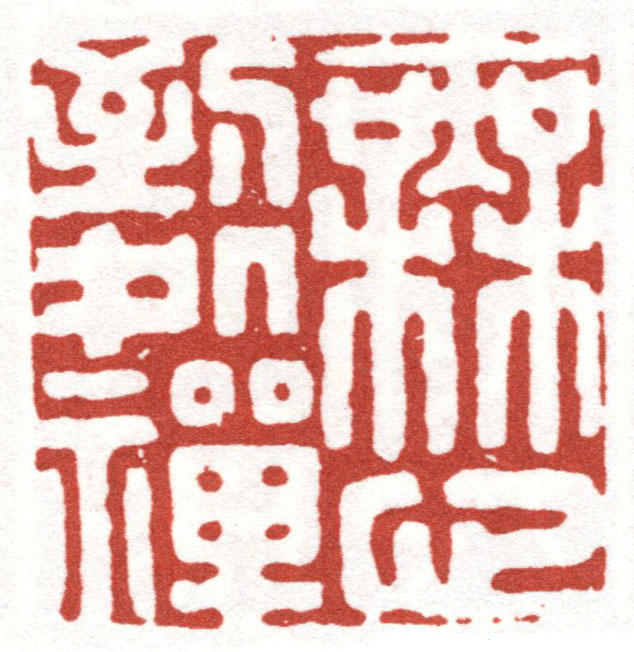
○ Suggestions for Chinese Calligraphy and Seal Carving Practice - Lesson 119: Self-Doubt After Restoration
This lesson's seal carving practice focuses on "unease after stability." As external storms subside, one begins to question whether they have stood firm enough. Seal carving is an art that allows time to settle; it reminds us that true stability comes not from constant confirmation but from the natural shaping after repeated strokes of the knife.
- Introduction to the characteristics of seal carving:
Seal carving emphasizes slowness and leaving blank spaces. The stone surface doesn't fail because of a single misstep; instead, it develops depth through repeated corrections. This corresponds to the psychological state during the restoration period. You don't need to confirm the final result all at once; stability will naturally emerge through repeated experience. - Written words (seal text):
Zen is everywhere without intention - Psychological Intention:
Self-doubt often stems from the fear of losing control of the future. Writing "being present" is a reminder that there is no need to prove anything forward or look back; the very existence of this moment is enough. - Knife skills:
Practicing the "slow cutting method" involves controlling speed and breathing so that each cut is in sync with the body's rhythm, symbolizing slowing down rather than speeding up amidst doubt. - Emotional transformation:
Transforming the recurring question of "Am I really okay?" into a sense of stability under the knife, each stroke is a physical confirmation that I am here.
○ Image Healing: Mandala Stability Guidance
Please look at a mandala with a clear structure but soft colors. There's no need to interpret it or assign it meaning. Let your gaze naturally rest on the center and then slowly expand outwards. Notice if your body experiences any urge to confirm something; simply observe it without responding.
The meaning of a mandala lies not in what it depicts, but in how you observe it. As your gaze repeatedly returns to the center, it's like returning to the present moment in a restored life. You don't need to ask yourself if you're safe; simply feel that no threat is posing a threat at this moment.
If your thoughts wander, gently bring your attention back to the repetition and symmetry of the shapes, allowing stability to enter your body through visual rhythm. This is not about checking your state, but about allowing stability to unfold on its own.
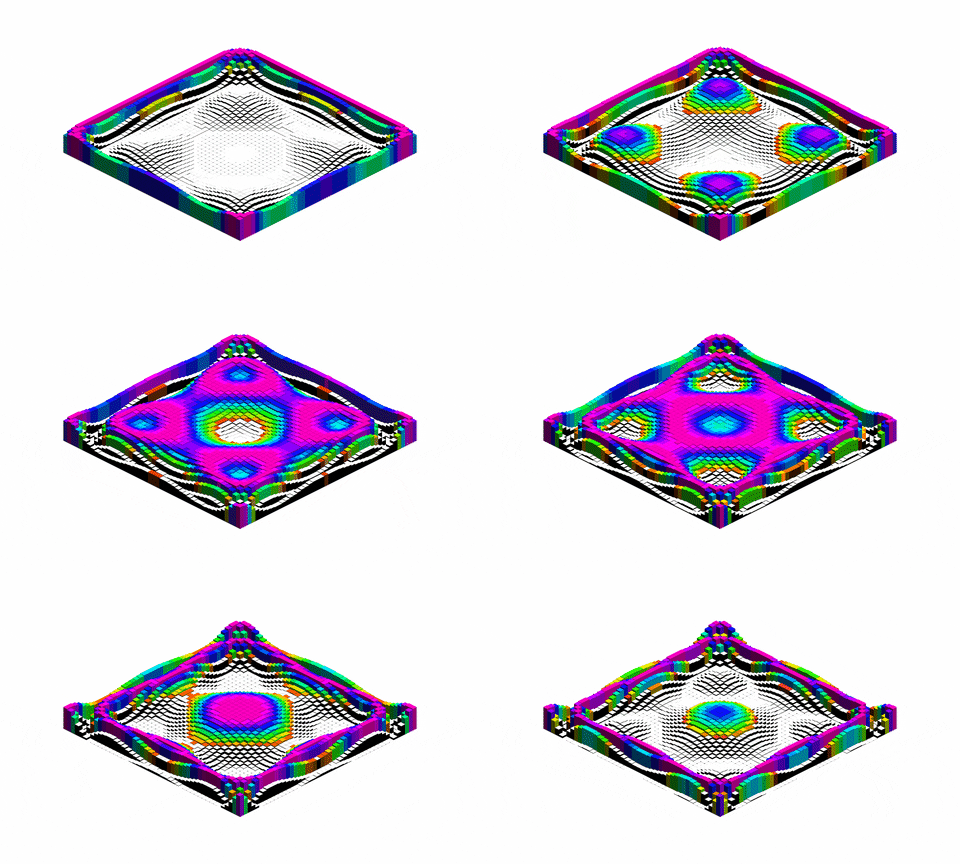
Lesson 119: The Period of Self-Doubt - Guided Drawing
① Action guidance:Draw a dark, solid central circle to symbolize "the power I have established".
② Action guidance:Draw lighter color blocks on the outer edge to symbolize "space that is not yet defined but is allowed to exist".
③ Action guidance:The thin line connecting the center and the outer circle symbolizes "moving forward despite doubt".
Please log in before submitting your drawings and feelings.
○ 119. Self-doubt period: Journaling guidance suggestions
① What doubts arose today? How strong would I rate them? (0–10)
② What real evidence can I see to prove that "I am indeed making progress"?
③ What is a small exercise I would like to do when doubt arises?
④ If I have doubts again in the future, what sentence do I want to remind myself of?
Please log in to use.
Doubt cannot erase your progress; it is merely a passing breeze on the road to growth. You are still moving forward.
 EN
EN  ZH
ZH  ES
ES  FR
FR  JA
JA