

Lesson 1190: Emotional Curve Tracking: How to Record and Identify Emotional Changes
Duration:75 minutes
Topic Introduction (Overview):
The moods in bipolar II disorder are not entirely random; they are more like a curve oscillating between highs and lows: sometimes approaching hypomania, sometimes delving into depression, with seemingly "okay" buffer periods in between. Without systematic recording, this curve will only be recorded in retrospect as "out of control again" or "couldn't hold on anymore." But when you start tracking your moods in a simple, actionable way, you will gradually discover the rhythm—which days you start sleeping less, which meetings you are particularly excited about, and which kind of fatigue always appears at certain times. Recording is not about controlling everything, but about seeing patterns in change and giving yourself more room to prepare in advance.
This lesson will guide you through practicing how to record and identify changes using an "emotional curve": including choosing appropriate scales and time units, simplifying daily scoring and notes, and extracting usable pattern clues from a cluttered diary. We will demonstrate the transformation from "present subjective feelings" to "objective visualization," allowing you to see your fluctuations on paper and in charts. A mandala is not about drawing anything, but about observation—observing the emotional curve that quietly rises and falls in daily life, observing how you gradually learn to coexist with these fluctuations, rather than being left with only confusion and self-blame.
▲ AI Interaction: Writing an "Instruction Manual" for Emotional Profiles“
First, reflect on the past week and rate your overall mood for each day (e.g., from -3 to +3). It doesn't need to be precise; just go with your gut feeling.
Next, write down keywords for three of your most common emotional states, such as "overly excited, normal, significantly depressed," and briefly label their typical manifestations (speech speed, sleep, physical sensations).
Finally, to describe it in a sentence or two: if this week were drawn as a curve, would it be more like a slow rise and fall, a sharp fluctuation, or a fluctuating rhythm without any rhythm?
Once you have this information ready, click the button below to work with AI to transform your "subjective feelings" into a clearer emotional curve chart, and learn to identify warning signals and recovery opportunities from the curve.
Emotional Curve Tracking and Music Rhythm Comparison Exercises
Choose a musical piece that contains a "steady section - crescendo section - climax section" within the same song, keeping the volume moderate and not aiming for intense stimulation.
When listening for the first time, divide the music into three sections in your mind: steady, rising, and falling, corresponding to three emotional ranges you are familiar with; when listening for the second time, draw a simple line on paper, which rises and falls slightly with the changes in the music.
On the third listen, try pausing at each point where the "rhythm changes significantly" and ask yourself: In real life, when my emotions shift from one phase to another, do I also experience similar "turning point signals"? For example, insomnia, sudden excitement, or a sudden urge to avoid everyone.
Music here is not meant to control you, but to help you gently practice the ability to "see change" with your ears and lines, laying the foundation for bodily memory in tracking emotional curves.
Herbal healing tea: A cup of quiet for "recording moments".
Recommended recipe:Chamomile + orange peel + a small amount of mint.
Chamomile helps relax tension and irritability, orange peel brings a subtle brightness to prevent your mood from becoming too depressed, and a touch of peppermint can gently refresh you, keeping you alert without over-excited while you're writing. It's suitable as a "fixed little ritual before and after your daily mood journal," letting your body know: now is the time to pause and reflect.
You can choose to sit in the same corner at the same time every day, holding this cup of herbal healing tea, and spend three to five minutes scoring your emotions and making simple notes. As this ritual gradually becomes a regular occurrence, you will find that emotion tracking is no longer an extra burden, but a stable and predictable buffer time that you reserve for yourself.
Canadian Maple Diet: Morning Maple Oatmeal Bowl for Stable Blood Sugar
When tracking mood swings over the long term, fluctuations in blood sugar levels from your diet can subtly amplify your perceived emotional ups and downs. Drawing inspiration from the Canadian Maple Cure Diet, you can reduce the sudden spikes from refined sugars and processed snacks, maintaining a smoother energy curve by balancing stable complex carbohydrates with a small amount of pure maple syrup. A basic recipe could be rolled oats or steel-cut oats, mixed with milk or plant-based milk, topped with nuts, seeds, and a small amount of fruit, and finally drizzled with a light layer of maple syrup.
This "Morning Maple Oat Bowl" is best consumed before the time of day when you're most prone to mood swings, such as within an hour of waking up. It's not meant to "solve all emotional problems," but rather to provide a smoother physiological foundation for your subsequent mood tracking and daily activities by stabilizing blood sugar and providing a longer feeling of fullness. A more stable physical curve allows for a more balanced psychological curve.
Healing Recipes
/home2/lzxwhemy/public_html/arttao_org/wp-content/uploads/cookbook/maple-1190(Alternatively, you could try relaxed="1" or use an existing filename.)
Psychological Mandala Healing · Mi Xiangwen 1190 · The Fluctuations on a Fine Line
Imagine a mandala before you, not composed of complex patterns, but a thin line that slowly extends outward from the center. This line sometimes rises slightly, sometimes gently dips, but never breaks abruptly. Don't rush to ask "why is this?"; simply follow your gaze, moving slowly along this line.
At certain bends, you see those nights of sudden surges and mornings of sudden falls; in other, more level sections, you see the records you once kept, the days you took your medication on time, the days you slept on time. A mandala isn't about drawing anything, but about observing—observing how this line connects scattered days, observing that you don't only experience extreme peaks and valleys, but also many subtle fluctuations in between, waiting to be seen and cherished.







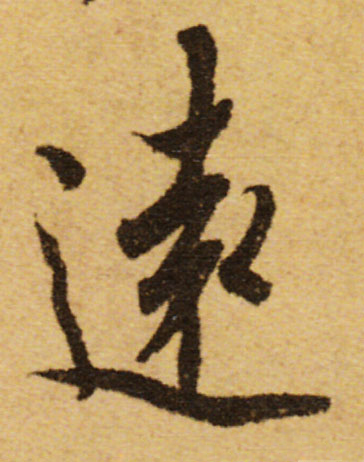
Chinese Calligraphy – Running Script: Writing "Maintaining Awareness in Curves"“
The continuity and rhythm of running script are perfect for practicing the mindset of "continuous observation," rather than only paying attention to oneself in extreme situations.
- Written words:The music has its ups and downs; the mind remains aware.
- English equivalent:I follow the waves and keep awareness.
- Writing Tips:When writing "curved and undulating," let the brushstrokes rise and fall slightly to feel the changes in the lines; when writing "consciousness," deliberately slow down and pause slightly with each stroke, as if marking the position of "emotional markers" on the paper. Don't strive for perfect characters during practice; instead, focus on whether you can maintain a stable and gentle focus as the lines flow.
Lesson 1190: Tracking the Emotional Curve - Guided Drawing
Objective: To use simple lines to transform abstract emotional changes into a visual "curve map," laying the foundation for subsequent recording.
Step 1: Draw a horizontal axis on a piece of paper, representing fourteen consecutive days; divide the paper vertically into several levels, from "high energy" at the top to "low energy" at the bottom, with "relatively stable" in between. Based on your recent memories, draw a dot for each day, and then connect these dots with lines to form an emotion curve.
Step Two: Next to several prominent peaks or troughs on the curve, use small print to mark one or two key events that occurred at that time (such as working overtime, arguing, traveling, taking an exam, or seasonal changes). No need to analyze the reasons; simply mark "what happened at the same time."
Step 3: Step back a little and look at the curve as a whole. Ask yourself: Which part is the easiest for me to overlook? Is it the small section that just starts to rise, or the small section that starts to decline? Lightly circle this section as the area to focus on most in future emotional curve tracking.
Please log in before submitting your drawings and feelings.
Lesson 1190: Emotional Curve Tracking - Journaling Guidance Suggestions
① Describe your overall mood score (e.g., -3 to +3) and your physical energy level in one or two sentences.
② Write down the three things that most significantly affected your mood today, and mark them as "rising", "falling" or "buffering".
③ Looking back on the past week, choose a moment when you felt "things were changing too fast" and try to list the top three signs in chronological order.
④ Think of a small and specific way of recording that you are willing to stick to in the long term (for example, write three lines of emotional notes before going to bed every day).
⑤ Write a reminder you would like to see when your emotions start to fluctuate, such as: "Draw out the key points for today before making any decisions."
⑥ The conclusion could be: "I don't need to understand all the curves immediately; as long as I'm willing to draw one point every day, the lines will eventually appear."“
Please log in to use.
Emotional curve tracking isn't about turning you into a "perfect self-manager," but rather giving you clearer eyes to see the rhythms and signals behind the fluctuations. Every time you're willing to record and observe, you're paving a more stable path for your future self.
 EN
EN  ZH
ZH  ES
ES  FR
FR  JA
JA