

Lesson 1193: Identifying Energy Decline and Slowed Thinking in the Depressive Stage
Duration:75 minutes
Topic Introduction (Overview):
In the depressive phase of bipolar II disorder, many people don't initially feel "very sad," but rather a systemic, indescribable exhaustion: getting out of bed feels like lifting stones, speaking requires effort, the mind feels like it's wrapped in cotton, and even simple decisions become exceptionally difficult. Decreased energy and slowed thinking are often misinterpreted as "laziness," "procrastination," or "not trying hard enough," leading to further self-blame and shame. This course will help you distinguish between the psychological feeling of "I don't want to move" and the pathological feeling of "I really can't move," teaching you how to identify energy and cognitive changes during depressive phases through specific cues such as sleep, movement speed, attention, and reaction time. It will also teach you to be more gentle with yourself and avoid overwhelming yourself with criticism when you are at your weakest.
Together, we will build an "Energy and Mindset Scale" to record changes in a more objective and detailed way, rather than simply using "good/bad" for a rough assessment. In the course, you will also practice how to schedule the minimum actionable tasks for yourself when your energy is extremely low, protecting your basic circadian rhythm. Above all this, mandala drawing is not about creating something, but about observation—observing how energy fluctuates, observing how the brain slows down, and acknowledging in this observation that this slowness is not a failure, but a state of being cared for.
▲ AI Interaction: Differentiating between "Sluggishness" and Pathological Exhaustion
Think back to the last time you felt "how useless I am, I can't do anything".
Write down the objective circumstances of that day in three aspects: sleep (duration and quality), physical sensations (heaviness, soreness, numbness), and mental state (slowed reaction, difficulty concentrating, and easy blankness).
And then, to add one more thing: If the same thing happened to someone you care about a lot, what would you say to them? Would you tell them to "cheer up quickly," or would you tell them to sit down and rest first?
Send what you've written to the AI and practice describing "low energy" and "slow thinking" in more refined terms, instead of just saying "I'm terrible."
Click the button below to rename your fatigue with AI and learn how to make room for your low energy levels instead of adding another layer of blame.
○ Music therapy for low-energy days
During a depressive phase, the brain processes information more slowly, and overly intense or complex music can actually make people more irritable or tired.
This lesson suggests choosing tracks with a slow tempo, clear melody, and no abrupt changes, at a slightly lower volume, so that the music is something that "accompanies you in the background" rather than a slogan telling you to "cheer up".
Practice method:
- Play the same gentle music as a "start signal" during the times when it's hardest for you to get up (such as early morning or evening).
- Within the length of a song, do only one small thing: sit up, drink some water, open the curtains, and write down your energy score for the day.
- The requirement is not "feeling much better", but "completing a very small movement with music as the accompaniment".
Let music be a gentle timer, reminding you that even on slow days, you can still take small steps forward.
Herbal Healing Tea: Melissa and Rose Mild Breathing Drink
Recommended reasons:Lemon balm helps relieve anxiety and tension, while rose gently soothes feelings of chest tightness. For those experiencing depression, such as "wanting to cry but unable to, feeling chest tightness but unable to pinpoint the cause," this tea is suitable for sipping during the day or evening to help soothe emotions gradually without overstimulating the nervous system.
Usage suggestions:Take 2 grams of lemon balm and 3-5 dried rose petals, and steep in hot water at around 85℃ for 5-7 minutes. Don't rush to swallow the first sip; simply hold it in your mouth, exhale slowly, and then swallow gently. You can drink a cup while listening to a lecture or making an emotional journal to let your body know that this is a "time to be cared for."
○ Canadian Maple Diet - Maple Syrup Oatmeal Warmer
During periods of depression, decreased energy levels and significant fluctuations in blood sugar can exacerbate fatigue and mood swings. An oat-based diet, infused with a small amount of pure maple syrup, nuts, and berries, provides a slow-release complex carbohydrate and healthy fats to help maintain more stable blood sugar and brain energy. The natural aroma and subtle sweetness of maple syrup also offer a touch of "permissible gentleness" during low periods.
It is recommended to eat it in the morning or afternoon, and make the "Maple Oat Warm Bowl" a fixed ritual during the depression phase: even if you have no appetite, try to eat a few small bites, and regard it as a quiet replenishment for your brain and body, rather than a task that must be completed.
Healing Recipes
/home2/lzxwhemy/public_html/arttao_org/wp-content/uploads/cookbook/coconut-mint-tea.html(Alternatively, you could try relaxed="1" or use an existing filename.)
Image Healing: Psychological Mandala Imagery 1193 · A Slower Clock
Imagine a giant clock in front of you. The hands were originally spinning incredibly fast, as if trying to empty each day. One day, it suddenly slowed down, even almost stopping. You look at it, initially panicking: Is it broken? Will it never catch up with anyone again? But as you continue to watch, you'll find that the second hand is still moving, just much slower than before.
Let this slow-moving clock become your mental mandala: at its center is you, resting right now, surrounded by concentric circles of postponed tasks and unfinished plans. You don't need to rush to fix it; just quietly observe—observe the hands still moving, observe that you haven't disappeared even as you slow down. A mandala isn't about drawing anything, but about observing: observing this space that "allows for slowness," gradually replacing the command of "you must get better quickly."





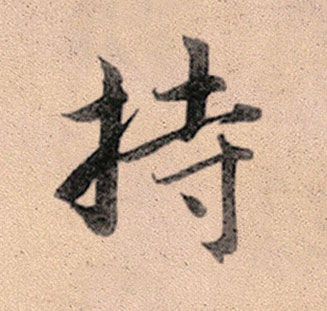


○ Chinese Calligraphy: Running Script Practice
The continuous flow and pauses of running script not only maintain structural stability but also allow lines to flow naturally, making it very suitable for practicing a sense of rhythm of "not rushing to finish, but just maintaining the breath" during a period of depression.
- Written words:Slow down, we're still on the road.
- English equivalent:A Little Slower, Still On My Way
- Writing Tips:When writing the character "缓" (huǎn, meaning slow or gradual), consciously slow down your strokes, pausing slightly for half a second at each turn, coordinating with a small exhale. When writing "路" (lù, meaning road) and "上" (shàng, meaning up), let the strokes flow slightly, reminding yourself that even if you are moving slowly, you are still moving forward. During periods of depression, practicing cursive script is not about achieving beauty, but about getting your hand, breath, and consciousness back into a unified rhythm.
Lesson 1193: Energy and Slowed Thinking - Guided Simple Image Recording
Purpose:Record your daily energy levels using extremely simple visual methods, helping you to look back without only remembering the darkest days.
Suggested steps:
- Draw a row of 7 small circles on a piece of paper to represent the 7 days of the week. They don't need to be symmetrical or perfect.
- Every night, choose a color that best represents your "energy state": gray, light blue, light yellow, orange, etc., and lightly color it in the small circle for that day.
- If your thinking is particularly slow that day, draw a loose, almost scattered line around the outside of the circle; if your mind is a little clearer, draw a more complete circle.
- At the end of the week, don't judge yourself as good or bad. Just look at this row of circles: on which days did you still try to prove you were alive with a small patch of color?
You don't have to draw beautifully; just allowing your state of mind to be seen is already a gentle form of record.
Please log in before submitting your drawings and feelings.
○ 1193. Energy and Slowed Thinking During the Depressive Phase: Journaling Guidance Suggestions
① Rate your energy level for today on a scale of 1 to 10. No explanation is needed; just write down the number.
② Write down three specific situations that made you feel "mentally sluggish" today (e.g., replying to messages slowly, reading the same line of text many times).
③ Think back: What did you say to yourself in these situations? Were these words more like encouragement, description, or judgment? Write them down briefly.
④ Choose the smallest task you completed today (even if it's just getting up, brushing your teeth, or washing a cup), and write down a positive statement: "With only X points of energy, I still managed to do it...".
⑤ Write down a small goal for tomorrow, something as small as "sit on the edge of the bed for three minutes after getting up".
⑥ Suggested closing sentence: Today's slowness is my body telling me that I need to slow down, not a judgment about my worth.
Please log in to use.
When you learn to observe declining energy and slowed thinking in a more nuanced way, you are no longer just someone dragged down by emotions, but a caregiver who can dim the lights and slow down for yourself. Slowing down is not a failure, but another form of presence.
 EN
EN  ZH
ZH  ES
ES  FR
FR  JA
JA