

Lesson 1219: Long-Term Life Management: Rhythms, Goals, and Self-Care Plans
Duration:75 minutes
Topic Introduction:This course will focus on the long-term management of bipolar II disorder, emphasizing three core elements: a stable yet flexible daily rhythm, clear and realistic long-term goals, and a sustainable self-care plan. You will learn how to establish a predictable daily structure amidst mood swings between hypomania and depression, weaving eating, sleeping, working, and leisure into a rhythm that supports emotional stability. You will also learn to break down life goals into small, actionable steps, incorporating supportive measures within these steps—including tea rituals, Chinese congee therapy, self-soothing techniques, and help-seeking strategies. This course will help you transition from being "driven by emotions" to "walking in sync with your rhythm," taking care of yourself over the long term.
○ Core Ideas of Long-Term Life Management
- Prioritize rhythm over emotion:The long-term care for bipolar II disorder focuses not on "making emotions completely stable," but on maintaining the basic rhythms of waking up, going to bed, eating, taking medication, and being active. Even if emotions fluctuate, the rhythms still exist like railway tracks, preventing life from going completely off track.
- The goal should be "decomposable" rather than "perfectly implemented in one go": Long-term goals such as completing studies, securing a stable job, and maintaining relationships should not become a huge source of pressure. Instead, they should be broken down into smaller steps that can be completed in a week or a month. Rewrite "I must immediately return to normal" as "I just need to complete two key things this week."
- Self-care should be a regular part of your routine, not something you only think about occasionally.Activities that help stabilize emotions, such as regular sleep, moderate exercise, soothing tea drinking, relaxing reading, journaling, and regular check-ups, need to be scheduled on a calendar or to-do list, rather than left as "sometimes."
- Yellow light mechanism:Design an "early warning checklist" for yourself. When you find yourself sleeping less, thinking too fast, having shopping impulses, or experiencing a significant drop in mood, immediately activate the yellow light plan: reduce workload, increase rest, communicate with trusted people, and contact professional support if necessary.
- Allow for a flexible rhythm, but retain the core fulcrum:Life cannot remain static forever. This course encourages you to establish "core pillars" (fixed bedtime, regular meals, and a fixed time for self-care once a week), while keeping the rest flexible, neither rigid nor scattered.
▲ AI Interaction: Design Your Rhythm and Self-Care Plan
Think back over the past three months. Have you experienced any periods of "sudden acceleration" or "sudden collapse" in your life? For example, suddenly staying up all night, working frantically, over-planning, or feeling listless and procrastinating on everything.
This lesson invites you to work with AI to sort out:
- ① The three times of the day when you are most likely to lose control (e.g., late at night, weekend afternoon, and before you get out of bed in the morning).
- ② Three rhythmic pivots that you hope to maintain long-term (e.g., fixed bedtime, a bowl of warm porridge every day, and 10 minutes of self-examination in the evening).
- ③ A long-term goal that you truly value but hope to approach gradually in small steps.
Click the button below to tell the AI the daily rhythm and goals you want to adjust, and together we will design an "achievable and sustainable" long-term life management blueprint, rather than an ideal list that only brings stress.
○ Long-term life management · Music therapy
Emotions may fluctuate, but rhythms can be slowly "calibrated" through music.
Please select a piece of music with a steady rhythm and slow melody, and consider it as a "daily rhythm correction piece".
During times when you're prone to losing control (such as before scrolling through your phone late at night or when you're feeling sluggish in the afternoon), put on your headphones, sit quietly for 5 minutes, and gently adjust your breathing and body rhythm along with the music.
You can silently tell yourself, "I don't need to get better all at once, I just need to make today's pace a little more stable than yesterday's."“
○ Chinese Tea Therapy: Daily Rituals with Black Tea
Recommended reasons:Black tea is warming in nature and is suitable for drinking in the morning or during cooler times of day. It helps to awaken the body and mind, warm the stomach, and avoids excessive stimulation. For people with bipolar II disorder, a cup of mild black tea in the morning can be a signal to "start the rhythm," letting the body and brain know that the new day is beginning in a controlled rhythm.
Suggested usage:Choose your favorite Chinese black tea (such as Qimen black tea, Dianhong, or Zhengshan Xiaozhong), take 3-5 grams of tea leaves, brew with boiling water, and let it cool slightly. When drinking the tea, consciously slow down: observe the color of the tea soup, smell the aroma, and feel the temperature and sensation of each sip. Set a small and clear goal for today, such as "It's enough to complete only two key tasks today."
Rhythm suggestions:Try to drink it at similar times each day, such as between 9 and 10 a.m., so that black tea becomes a warm anchor for your daily rhythm, rather than a small ritual that changes arbitrarily with your mood.
Red date and millet porridge: The basic energy for stabilizing emotions.
Red dates nourish qi and blood, while millet strengthens the spleen and calms the mind. When cooked into a smooth porridge, it helps balance blood sugar and energy, providing a stable foundation for mood regulation. A regular bowl of warm porridge is more than just food; it sends a signal to the body that "today deserves to be well taken care of," regardless of whether one's mood is mild or low.
It is recommended to arrange red date and millet porridge inA fixed breakfast or light dinnerThe time period is linked with self-care behaviors such as taking medication and writing short diaries, forming a repeatable and predictable comforting ritual.
Healing Recipes
/home2/lzxwhemy/public_html/arttao_org/wp-content/uploads/cookbook/zhou-hong-zao-xiao-mi(Alternatively, you could try relaxed="1" or use an existing filename.)Psychological Mandala: The Ring of Rhythm
Psychological Healing: Psychological Mandala Imagery 21
Please gaze quietly at the mandala—not to design a pattern, but simply to observe. You will see the lines extending outwards in concentric circles, maintaining balance within a regular division, some areas slightly denser, others with more open space. This is like your life: sometimes busy, sometimes slow-paced, but overall still revolving around a center. When you focus your gaze on the center, try to feel: even as the colors on the outer rings change, the center does not crumble. You don't need to plan your entire life immediately; simply allow yourself to remain steadfastly at the center for this moment, letting the rhythm of the outer rings gradually become clear and discernible.
Mandala drawing is not about drawing something, but about observing. Please observe it quietly three times, doing only one small thing each time: the first time, feel the overall rhythm; the second time, find the circle you want to stay in; and the third time, tell yourself in your heart, "I can take my time."
Watch Healing Mandala Animations





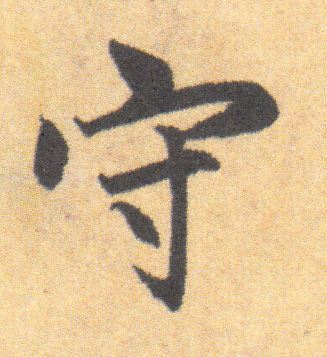


○ Ancient Roman Script · Rhythm and Commitment
Ancient Roman script is renowned for its even strokes, clear structure, and consistent spacing. Each letter stands like a solid stone, calmly enduring through the corridors of time. By practicing Roman script, you can experience the power of a "steady rhythm" in each stroke—not pursuing speed, but consistency.
- Write words and phrases (in Chinese and English):
- Daily routines, long-term goals.
- Daily Rhythm, Gentle Goals, Ongoing Care
- Writing Tips:
- When writing "Daily Rhythm, Gentle Goals, Ongoing Care", pause for one second after writing each word, allowing your breathing to follow the end of the stroke.
- I deliberately maintain consistent spacing between words, viewing this consistency as "my life can be organized into predictable grids."
- When you write the word "Care," silently repeat to yourself: "Long-term care is not about overexertion, but about allowing yourself to move slowly and steadily."
○ Long-term life management: rhythm, goals, and self-care • Art guidance suggestions
This drawing guide is not about creating a mandala, but rather about helping you organize your long-term life structure using simple images. By drawing timelines, quadrants, and resource maps, you can see more clearly where your rhythms tend to get out of control, which goals are overly concentrated in a particular period, and how self-care is often left behind.
I. The Dual Timeline of Rhythm and Emotion
- Draw two parallel horizontal timelines on a piece of paper: write "Life Rhythm" on the top and "Emotional State" on the bottom. The timeframe can be the most recent week or month.
- On the "Life Rhythm" axis, mark whether the daily sleep time, wake-up time, and meals are regular. Use straight lines to represent stability and breaks or jumps to represent disruption.
- On the "emotional state" axis, mark the days you feel better or worse with wavy lines and see if there is a correlation between the two axes: the more disordered the rhythm, the harder it is for emotions to stabilize?
- Finally, write a summary on the side of the screen, such as: "When I maintain my routine, my emotions won't be perfect, but they'll break down less often."“
II. The Four-Quadrant Diagram of Goals and Energy
- Draw a large cross and divide the paper into four quadrants: write "Important and requires appropriate effort" in the upper left, "Important but requires excessive effort" in the upper right, "Unimportant but requires a lot of effort" in the lower left, and "A goal that can be achieved slowly" in the lower right.
- Write down what you've been doing or plan to do recently in the quadrant, such as work projects, household chores, study plans, interpersonal commitments, etc.
- Observe whether there are too many things crammed into "important but overly demanding" and "unimportant but energy-consuming", and mark them with arrows: which ones can be moved to "goals that can be taken slowly" or simply deleted.
- Write a reminder next to the quadrant: "Long-term management is not about doing more, but about putting your limited energy into the right quadrants."“
III. Self-care Resource Map
- Draw a circle in the center of the paper and write "My Long-Term Care Center" on it.
- Draw several branches outwards, labeled as "Body Rhythm" (sleep, diet, exercise), "Psychological Support" (professional support, family and friends, companions), "Comforting Rituals" (tea, porridge, reading, writing), and "Safety Plan" (early warning signals, medical channels, emergency contacts).
- Under each branch, list the resources that already exist, as well as one small resource you would like to add in the future, such as: scheduling an assessment for yourself, finding a friend to talk to, or adding a regular breakfast to your schedule.
- After finishing, looking at the whole picture, I said to myself, "I am not alone in carrying this burden; I am building a net to support myself."“
Note: Drawing can only help you see structure and patterns; it cannot replace professional therapy. If you discover significant suicidal ideation, impulsive behavior, or severe functional impairment during the process, please contact a professional and emergency support first, rather than relying solely on self-help exercises.
Please log in before submitting your drawings and feelings.
○ 1219. Long-Term Life Management: Rhythm, Goals, and Self-Care Planning - Journal-Based Guidance Suggestions
① Use 3-5 sentences to review your daily routine over the past week: waking up, sleeping, meals, activities. What was the general rhythm? Where was it easiest to lose control?
② Write down the "three core rhythms" you really want to maintain (e.g., a fixed bedtime, a warm meal every day, and a short walk every day), and explain why they are important to you.
③ Choose a long-term goal (such as work, studies, health, or relationships), and break it down into three small steps that can be completed within the next month. Each step should be "specific enough but not overwhelming".
④ Design a "yellow light contingency plan" for yourself: When you find that you are experiencing significantly reduced sleep, impulsive spending, excessive social excitement, or persistent low mood, what two or three specific actions do you plan to take?
⑤ Write down one self-care ritual you would like to incorporate into your daily life (e.g., drinking black tea at a fixed time, having a bowl of calming porridge every week, short periods of writing or meditation), and record how you plan to make it as consistent as possible.
⑥ Conclusion: Encourage yourself with a sentence, such as: "I don't need to become a perfect manager immediately. Just maintaining a little bit of rhythm every day is already taking care of myself in the long run."“
Please log in to use.
Through the exercises in this lesson, you are building a "long-term sustainable" lifestyle structure for yourself: using stable and gentle rhythms to bear emotional fluctuations, using detachable goals to illuminate the future, using small rituals such as black tea and porridge to soothe your mind and body, and gradually learning to walk alongside your own rhythm through ancient Roman calligraphy and mandala contemplation.
 EN
EN  ZH
ZH  ES
ES  FR
FR  JA
JA