

Lesson 1226: Hypomania: Increased energy but not reaching the state of hypomania
Duration:75 minutes
Topic Introduction:This course focuses on "hypomanic tendencies"—a state of significantly elevated energy, thought, and activity levels, but not yet meeting the diagnostic criteria for hypomania. For many experiencing cyclothymic mood disorders, this state is often misunderstood as "being in a good mood," "being efficient," or "finally returning to normal," thus ignoring the underlying risk of imbalance. This course will help you recognize early signs of hypomanic tendencies, such as decreased sleep needs, faster talking, expanded plans, and significantly increased social interaction, and learn how to distinguish between "healthy energy" and "the prelude to loss of control." Through rhythm adjustment, green tea and soup therapy, calligraphy practice, and mood journaling, you will gradually establish a gentle self-regulation framework, applying the brakes in advance when energy levels rise, keeping yourself "light but not agitated, lively but not chaotic."
What is "hypochondriac tendency"?
- A state between calm and mild agitation:Hypomania is not a completely stable mood, nor has it reached the level of hypomania. You may feel energetic, think faster, sleep less but not feel tired, but you can still maintain your work, study and relationships, just "a little too much".
- Subjective feeling: It's like suddenly "switching to high-speed mode":Many people feel exceptionally efficient, inspired, and socially active, and even unusually optimistic about future plans; at the same time, their inner tension and anxiety are also rising, but they are not noticed for the time being or are interpreted as "finally cheering up".
- Objective signal: The rhythm is being subtly pushed up:In cases of hypomania, bedtime is delayed, sleep duration is shortened, eating becomes more casual, and schedules become increasingly packed. The body is being overdrawn, but this is masked by the excitement of being in a "good state."
- The risk lies in "sliding towards higher volatility":Without awareness and regulation, this seemingly "benign" state may gradually evolve into hyporhythmia or even more serious emotional imbalance, leading to impulsive consumption, over-commitment, relationship conflicts, or subsequent significant mood depression.
- Common patterns in cyclothymia:Cyclothymic disorder is often accompanied by recurring hypomanic tendencies and alternating mild depression. If one only pushes hard when in a hypomanic state and blames oneself when feeling down, it will lead to greater exhaustion in the long run.
▲ AI Interaction: Differentiating between "Good State" and "Hyperactive Tendencies"“
When experiencing hypomania, many people see themselves as "finally back to normal" and thus exert themselves even more, rarely asking themselves: How long can this energy last? What will be the cost?
This section invites you to gently analyze the process with AI:
- ① How long did the last period of time you felt "particularly good" last? What changes occurred in your sleep, diet, and social life during that time?
- ② Reflect on your behavior at the time: Did you make any decisions that you later felt were "a bit excessive," such as impulsively agreeing to too many tasks, spending, social, or creative projects?
- ③ Try to distinguish between "healthy and steady vitality" and "hysteria" in your own words. What are the specific manifestations of each?
- ④ Imagine the next time your energy spikes, what two things would you like to do in advance to protect your circadian rhythm (such as controlling your schedule density and maintaining a fixed sleep schedule)?
Click the button below to tell the AI your questions and observations about "good state" and "hyperactivity," and let it help you compile your own "early reminder list." This is not to suppress energy, but to learn how to take care of yourself even when your energy is rising.
○ Hysteria/Restlessness: Music Therapy – Adding a “buffer” to rising energy”
In a state of heightened agitation, overly intense or rousing music can further amplify the chaotic rhythm. This section suggests choosing music with a steady beat and clear melody that is not overly stimulating, using it to create a "buffer zone" for the rising energy.
When playing music, please try:
- Let your breathing follow the rhythm of the music, rather than the rapidly jumping thoughts in your mind.
- Throughout the entire piece of music, deliberately avoid adding new plans, simply sit in a chair or lean against the headboard, and feel "I can temporarily stop speeding up".
- When the music ends, ask yourself a question: "If I were to slow down today's pace by 10%, what would be the first thing I need to adjust?"“
○ Chinese Tea Therapy - Green Tea: Clear and Gentle Without Over-Stimulation
Recommended reasons:Green tea has a cooling effect and can refresh the mind and help keep the head clear. During periods of heightened agitation, overly stimulating drinks may further amplify the "high-speed state," while moderate amounts of green tea, if consumed at the right time, can provide a "clear but not overly agitated" support, allowing you to maintain focus without pushing yourself too hard.
Suggested usage:You can choose lightly fragrant green teas such as Longjing or Biluochun. Take 2-3 grams of tea leaves and brew with hot water at around 80℃, avoiding excessively high water temperatures that may cause bitterness. You can drink it 1-2 times a day in the morning or early afternoon, but avoid drinking large amounts in the evening or at night to prevent further disruption to sleep.
Emotional observation exercise:Before drinking tea, jot down your current state in one sentence (e.g., "A little excited, wanting to do a lot of things"). After drinking tea, sit quietly for three minutes and write another sentence describing your feelings at that moment. The goal is not to expect to "calm down" immediately, but to train yourself to add a short pause and reflection when your energy is rising.
○ Calming and soothing vegetable and chicken soup – adding a sense of groundedness to high-speed driving.
You can choose to simmer chicken with carrots, celery, shiitake mushrooms, a small amount of goji berries, and ginger to make a light yet layered soup. Chicken and vegetables provide mild protein and trace elements, preventing the body from relying solely on excitement during high-energy phases; the warmth of the soup and the process of chewing help you bring your mind back to your body from its "high-speed spin."
As your busy day draws to a close, set aside time for a bowl of soup: put down your phone and computer, focus on sipping the soup, savoring its temperature and aroma, and consider this bowl of soup a "safe deceleration" from a day of high-speed activity. You can silently tell yourself, "I've had enough today; I can slow down a bit."“
Healing Recipes
/home2/lzxwhemy/public_html/arttao_org/wp-content/uploads/cookbook/tang-qing-xin-an-shen-ji-tang(Alternatively, you could try relaxed="1" or use an existing filename.)Psychological Mandala: A Light Yet Steady Rhythm
Psychological Healing: Psychological Mandala - Thoughts 23
Observe the mandala quietly, rather than rushing to understand it. You will find that some lines extend outwards, like energy spreading in all directions; others slowly recede, as if bringing you back to the center. Some areas are bright and dense, like high-energy days; others are lighter and have more blank space, like gaps in time for rest. When you simply observe without judging "good" or "bad," you may discover that life is not black and white, but rather a series of small ups and downs. You don't need to suppress all the highs; simply acknowledge in your observation: "I am currently in a slightly upward phase." Then, slowly bring your breath back to the center.
Mandala drawing is not about what you draw, but about what you observe. Please observe it slowly three times: the first time, focus only on the overall sense of undulation; the second time, look for the color that you feel is "a bit too full"; the third time, return to the whole and whisper in your mind, "I can be lighter, but it doesn't need to float away."“
Watch Healing Mandala Animations

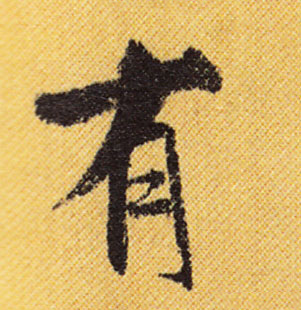



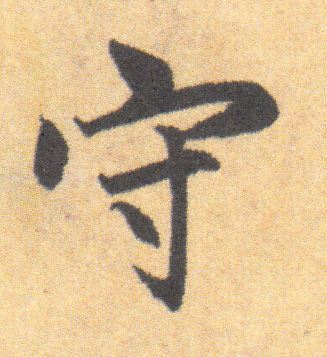
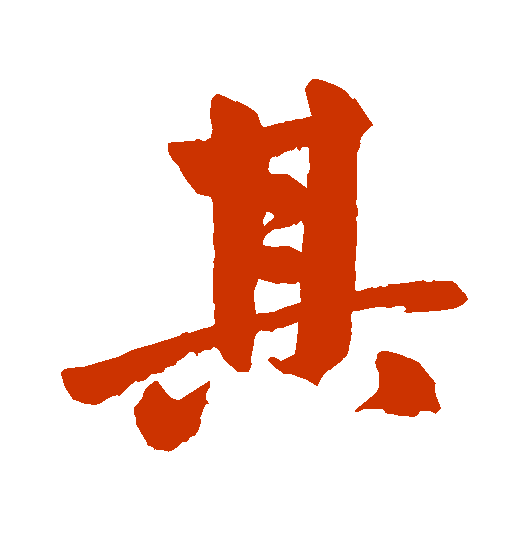

○ Chinese Calligraphy - Running Script: Striving for "lightness without floating, stability with movement"“
Running script, situated between regular script and cursive script, possesses both structural stability and fluid brushstrokes, making it ideal as a embodied exercise when discussing "lightness and restlessness": how to be "lighter and more agile" without "scattering one's energy." In running script, continuous strokes resemble the extension of energy, while the ending strokes and pauses are like the rhythm of landing again.
- Writing words and phrases:
- Light yet not flimsy, stable yet dynamic
- Soft Rise, Steady Ground Within
- Writing Tips:
- When writing the four characters “light but not floating”, make the beginning strokes slightly light and the strokes slightly curved to symbolize rising energy; but deliberately pause slightly at the end of each stroke to remind yourself that “no matter how light, it must land on the paper.”
- When writing "stability within movement", the character "stability" can be written more fully and with a slightly lower center of gravity, while the character "movement" should remain fluid, symbolizing the retention of flexibility within stability rather than the complete suppression of vitality.
- English sentences can be written in a Romanesque, semi-cursive style, slowly and deliberately, slowing down at "Steady Ground" to make these words your inner anchor during high-energy periods.
○ Hypomania tendency: Energy is elevated but not to the level of hypomania. • Art guidance suggestions
This drawing guide aims to help you visualize the structure of your "hysterical tendencies" rather than just vaguely feeling a mixture of "good/not quite right" in your mind. By drawing lines, depicting rhythms, and marking signals, you can more clearly understand when you are moving forward in healthy vitality and when you have already embarked on a slope of further imbalance.
I. Energy Rise Curve and Warning Line
- Draw a curve on paper that rises slowly from left to right to represent your energy level over a day or week, from steady to slightly rising, and then to more pronounced excitement.
- Draw a horizontal dashed line in the middle of the curve and write "Hypochondriac tendencies"; then draw another line upwards and write "Possibly approaching hypochondriac/more pronounced imbalance".
- Reflect on your past experiences and mark several scenarios at different points on the curve (e.g., staying up all night to finish a project, suddenly wanting to see many people, impulsive shopping, or talking nonstop).
- Next to the line indicating "hyperactivity," write a reminder: "When you see this, I need to slow down, not escalate the situation."“
II. Daily Schedule Density and Respiratory Space Diagram
- Draw a grid diagram divided into several squares, with each square representing half a day or a full day. Use dark squares to represent "fully booked time slots" and light squares to represent "time slots with gaps".
- Mark your typical schedule density over a recent period on the graph and see if it appears as a "continuous dark" state in certain periods.
- Draw some small circles next to it to represent the "breathing space" you want to deliberately preserve, such as drinking a cup of green tea, slowly sipping soup, writing in a journal for five minutes, or taking a quiet walk.
- Use arrows to connect parts of the dark squares to these small circles, symbolizing how you intend to insert a buffer period during high-density periods.
Tip: Drawing isn't about scoring yourself, but rather about having a "map" to look back on when your energy levels rise again, reminding you to adjust your pace and seek support before things get out of control. If you feel tense or uncomfortable while drawing, you can pause, drink some warm water or soup, and talk to someone you trust or a professional if necessary, rather than suppressing it alone.
Please log in before submitting your drawings and feelings.
○ 1226. Hypomania tendency: Energy is elevated but not to the level of hypomania. Journaling guidance suggestions.
① Looking back over the past three months, write down the period when you were in a particularly good state: How long did that period last? What was your daily sleep, diet, and activity rhythm like?
② Honestly write down what you did during that period that you later felt was a bit excessive (this could be work, study, socializing, spending, or creating). Don't blame yourself; just record it truthfully.
③ List three indicators that you believe represent "health and vitality" and three indicators that represent "hysteria (yellow light)", such as: whether you can rest on time, whether you take on too many tasks, and whether you have difficulty calming down.
④ Design a "Yellow Light Rule" for yourself: When you meet two or three "yellow light indicators" at the same time, what two things should you take the initiative to do (e.g., reduce your schedule, go to bed earlier, pause new plans, contact supporters).
⑤ Write down a small ritual you'd like to try: it could be drinking green tea at a fixed time every day, having a bowl of soothing soup every week, or practicing calligraphy for ten minutes before bed, to remind yourself that "you can slow down and don't have to use all your strength to prove your worth."
⑥ Conclusion: Summarize your new understanding of "hysteria" today in one sentence, for example: "I no longer see it as just a good state, but as an upward phase that needs gentle care."“
Please log in to use.
Through this lesson, you've not only learned to recognize subtle signs of restlessness, but you've also begun to create buffers for yourself when your energy levels rise: using green tea to maintain clarity without overexerting yourself, using soups to ground your body, and practicing calligraphy and painting to move forward in a rhythm that is "light yet not frivolous, stable yet dynamic." May you, in the ups and downs of the future, live with your energy with more awareness and gentleness, rather than being led by it.
 EN
EN  ZH
ZH  ES
ES  FR
FR  JA
JA