

Lesson 1227: Depressive Tendencies: Psychological and Behavioral Characteristics of Mild Depression
Duration:75 minutes
Topic Introduction:This course focuses on "a tendency towards depression"—that is, not yet meeting the diagnostic criteria for major depression, but already experiencing a prolonged state of mild depression and low mood. For those experiencing cyclothymia, this low mood is often explained as "I'm just like this" or "I'm just a little tired," and over time, the hidden risks are overlooked. This course will systematically outline the typical characteristics of mild depression in terms of thinking, emotions, body, and behavior, such as loss of interest, decreased self-esteem, procrastination and avoidance, slowed actions accompanied by self-blame, etc., and help you distinguish between "simple fatigue" and "persistent low mood." Through the mind-body conditioning of green tea and soups, calligraphy practice, mandala viewing, and guided drawing exercises, you will learn to gently be with yourself during low mood phases, recognize signals that need help, reduce self-blame and giving up, and view low mood as a "state" that needs care, rather than your entire "personality."
○ Depressive tendency: a major characteristic of mild depression
- Emotional level: A persistent "faint sense of gray":It's not a violent emotional breakdown, but rather a prolonged lack of interest and difficulty feeling genuine joy, as if life is shrouded in a thin fog, where one can laugh but finds it hard to truly engage.
- At the level of thinking: Gentle yet stubborn self-denial:You may not constantly criticize yourself, but you often tell yourself, "Oh well, I'm just like this," or "Others are more deserving than me." You also lack expectations for the future and tend to assume that "good things won't happen to me."
- Behavioral aspects: procrastination, avoidance, and "energy leakage":Things aren't so difficult that they can't be done, but they always procrastinate; even though they know they need to take action, they habitually lie down and scroll through their phones, daydream, or stare at the ceiling, and finally use "I'm too lazy" to explain everything.
- Physical aspect: Mild but persistent fatigue.Sleep may not be severely lacking, but you still feel unrefreshed when you wake up, your body feels heavy, your shoulders and neck are tense, or your appetite changes. Occasionally you may have a headache or chest tightness, but you can't find an obvious reason.
- On an interpersonal level: Gradually fade out, rather than abruptly cut off:You may not have completely isolated yourself, but you gradually become unwilling to take the initiative to contact others, and you feel "too tired" to reply to messages, answer the phone, or participate in activities, maintaining a distant state in relationships.
○ The "depressed zone" in cyclothymic mood disorder“
- Mild fluctuations but persistent:Compared to major depressive disorder, the low periods in cyclothymia are often not so severe as to make you "completely unable to act," but they erode motivation in a gentle and persistent way, making you always feel like you are "barely holding on."
- Alternating with hypochondriac tendencies:In the previous section, you may have already recognized the rising curve of "hypochondriac tendencies"; while depressive tendencies are the other end of a slowly declining slope. The alternation of the two can easily lead people to mistakenly believe that it is just "frequent mood swings," while ignoring the long-term wear and tear on the body and mind.
- This could easily be misinterpreted as a "pessimistic personality" or a "fragile mind":If you are in a low mood for a long time, people around you may habitually think "that's just how you are," and you may even regard it as part of your personality rather than a state that needs care and adjustment.
- The risk lies in the "slow wear and tear":If left unseen and uncared for, this state may gradually evolve into a more severe depressive episode, or cause you to slowly lose interest in and sense of participation in life, falling into a numb state of "I don't care about anything."
▲ AI Interaction: Clarify "I'm just a little down"
Mild depression is often glossed over with phrases like "I'm just feeling down" or "I haven't been feeling well lately," but it's never truly described clearly. This section invites you to work with AI to slowly deconstruct this "inexplicable low mood," transforming it into something understandable and caring.
You can do this with AI:
- ① Describe a typical day during your recent "low period" in your own words: what time you got up, what you did, what you thought, and what you most wanted to escape from.
- ② Write down the three thoughts that most often come to you when you are feeling down (e.g., "I always seem to be a burden", "No matter how hard I try, it's useless", "Others will find me troublesome").
- ③ List two things you used to enjoy doing but now lack the motivation to do, and try to discuss what they meant to you in the past.
- ④ Work with AI to rewrite "I'm just lazy/useless" into a more realistic description, such as: "When I'm depressed for a long time, I do become difficult to move around, which needs to be understood and adjusted, rather than being scolded to wake me up."“
Click the button below to tell the AI these details of your low mood. It's not to prove how bad you are, but to let yourself hear for the first time: there is a whole set of psychological and behavioral patterns behind this, rather than simply "being dramatic" or "lazy".
○ Depressed Tendencies • Music Therapy: Keeping a Thin Line in the Grayness
During periods of low spirits, you may not have the energy to listen to overly upbeat music, nor should you repeatedly listen to excessively sad tunes. This section suggests choosing music with gentle melodies that are slightly warm but not overly sentimental, letting it flow like a thin thread silently through the gray days.
Practice method:
- Play a piece of music for about 5–10 minutes during the time of day when you are most likely to "daydream and scroll through your phone" (such as after dinner or before bed).
- Sway your body slightly or nod with minimal movement, as if saying to the music, "I'm still a little bit present."“
- After the music ended, I wrote down a sentence: "The only little thing I can do right now is...", even if it's just "to wash my face" or "to pour a glass of water".
- The goal isn't to get you up immediately, but simply to let you know that even if it's slow, you can still do some small, gentle actions.
○ Chinese Tea Therapy - Green Tea: Bringing a Touch of Clarity to Drowsiness
Recommended reasons:In cases of mild depression or low mood, people often feel drowsy, have dulled senses, and find it difficult to concentrate. A moderate amount of green tea, with its refreshing aroma and mildly invigorating effect, can help you regain some clarity from a complete "shutdown mode" for a period of time during the day, preventing your mind from becoming completely foggy.
Suggested usage:You can choose a lightly fragrant green tea, such as Longjing, Biluochun, or Huangshan Maofeng. Take about 2–3 grams of tea leaves, steep in hot water at around 80℃ for 1–2 minutes, and then drink. It is not recommended to drink frequently throughout the day during a low mood. Instead, choose the time of day when you are most likely to "sink into the sofa," brew yourself a small cup, and pair it with a simple task (such as replying to an important email or organizing a drawer).
“Exercise: "A cup of tea + a small task"Before drinking tea, write down the smallest thing you want to accomplish today. While drinking tea, focus solely on the aroma and temperature, and refrain from criticizing yourself. After finishing, immediately spend 5-10 minutes completing that small task, and then allow yourself to rest. This is not high-efficiency training, but rather "micro-motor maintenance" during periods of low mood.
○ Yam, lotus root, and pork rib soup – a little boost to replenish your energy when you're feeling tired.
Yam invigorates the spleen and replenishes qi, lotus root clears the heart and moistens dryness, and pork ribs provide moderate protein and fat. This combination of ingredients makes for a soup that is neither too heavy nor too light, yet provides a certain degree of satiety and stability. For people who are chronically in a state of mild depression and often feel "lacking energy," a bowl of warm, refreshing soup, such as yam, lotus root, and pork rib soup, can provide the body with the energy to "move around" without adding any burden.
On your days off or a relatively relaxed evening, it's recommended to prepare a meal for yourself that features soup as the main dish. Instead of criticizing yourself for eating too little or too slowly, focus solely on drinking the soup, chewing the ingredients, and feeling your body gradually fill with warmth. While drinking the soup, you can tell yourself, "I may not be able to do a lot, but I can start by finishing this bowl properly."“
Healing Recipes
/home2/lzxwhemy/public_html/arttao_org/wp-content/uploads/cookbook/tang-shan-yao-lian-ou-pai-gu(Alternatively, you could try relaxed="1" or use an existing filename.)🎨 Psychological Mandala: Find a place to rest when you're feeling down.
Psychological Healing: Psychological Mandala Imagery 24
When you're feeling mildly depressed, even drawing might feel like a burden. At this time, do just one thing: quietly look at the mandala. You'll discover that the pattern doesn't only contain bright, vibrant colors, but also many soft, muted, even grayish areas. These aren't excluded from the circle; they are part of the whole. Perhaps you are, right now, like one of the darker areas—existing, but not eye-catching or dazzling. Allow yourself to simply "be there," without having to shine immediately. As your breathing becomes even, you can tell yourself, "I don't need to be liked to deserve to exist. I am this quiet color, and that's okay." Drawing a mandala isn't about painting anything; it's about observing. Simply being present in the moment of observation is already doing something gentle: no longer rushing to improve yourself, but first acknowledging, "I am seen even as I am."
Please watch this slowly three times: the first time, focus only on the overall structure; the second time, find a color block that reminds you of your current state; the third time, look at the whole picture again and silently say to that color block, "Thank you for holding on until now." You don't need to change anything, just see it.
Watch Healing Mandala Animations






○ Chinese Calligraphy - Running Script: Writing a gentle sentence for a low mood
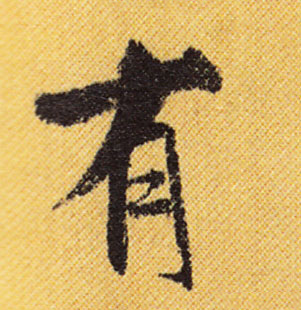
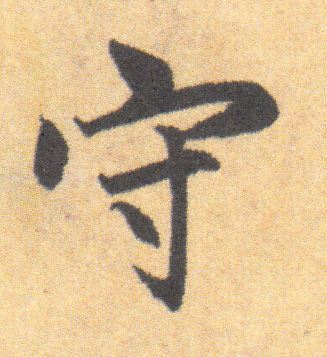
The characteristics of running script are a stable yet dynamic structure and continuous yet orderly strokes, making it very suitable as a form of practice that is "neither too strenuous nor completely abandoned" when feeling down. You don't need to write very well; you just need to let the pen move slowly across the paper, allowing your body to feel in each line, "I still have a little strength left to finish a sentence."
- Writing words and phrases:
- Despite the setback, my personality remains.
- Low Mood at Times, But I Still Remain
- Writing Tips:
- When writing the word "depressed", you can deliberately make the strokes sink slightly, acknowledging that this sense of heaviness is part of reality, not a mistake.
- When writing the word "still", make the structure more upright and apply a little more pressure at the end of the stroke, as if leaving a footprint on the paper: no matter what my mood is, I still exist as a person.
- Write English sentences slowly, pausing briefly after each word, taking a breath, and letting your breath accompany your pen strokes. When writing "I Still Remain," try to write each letter as completely as possible, symbolizing that you are making room for your presence.
○ Depressive Tendency: Psychological and Behavioral Characteristics of Mild Depression • Art Guidance Suggestions
This drawing guide isn't about creating "beautiful works of art," but rather about helping you transform that inexplicable feeling of "lowness" into a visible form. Through lines, color blocks, and simple diagrams, you can more intuitively understand that your low mood doesn't appear out of thin air, but is the result of a long-term interaction with your thoughts, behaviors, and rhythms.
I. A Depressing Day: Grayscale Timeline
- Draw a timeline on a piece of paper from morning to night, dividing the day into several segments (e.g., morning, forenoon, afternoon, evening, night).
- Use different shades of gray or line density to mark the "intensity of depression" for each time period: the more depressed the time period, the darker the color and the denser the lines.
- Write a short description next to each time period, such as: "I was very tired when I woke up", "I could barely work in the afternoon", "I started scrolling through my phone in the evening".
- Finally, write a sentence under the timeline: "It turns out that my low mood is not the same all day long; it also has ups and downs and patterns."“
II. A Dual List of Self-Blame and Reality
- Draw two rectangles side by side: the left one is titled "My Habitual Self-Reproach Sentences," and the right one is titled "A More Realistic Description."
- Write down a sentence you are familiar with on the left, such as "I'm too lazy," "I can't stick to anything," or "Everyone thinks I'm troublesome."
- Try writing a gentler version on the right, such as: "When I'm depressed for a long time, it is indeed harder to get going and I need more external support." "When I'm feeling down, it's hard for me to persevere, but that doesn't mean I'm worthless."
- Connect each sentence of self-blame on the left to its corresponding sentence on the right with an arrow, symbolizing that you are learning to translate self-blame into understandable, realistic language.
Tip: If you feel increasingly down or experience a strong sense of hopelessness while drawing, don't try to cope alone. Take a break, talk to someone you know well, or consider contacting a professional for support. Drawing and classes are supplementary tools and cannot replace real-world help and care.
Please log in before submitting your drawings and feelings.
○ 1227. Depressive Tendency: Psychological and Behavioral Characteristics of Mild Depression • Journaling Guidance Suggestions
① Describe a recent period in your life when you felt "always lacking energy": How long did it last? What was the sentence you said to yourself most often during that time?
② List the three behaviors you most often exhibit when you're feeling down (e.g., repeatedly checking your phone, cutting off contact with people, lying in bed and not wanting to get up), and try to write down what they "want to help you do" (e.g., numbing yourself, avoiding conflict, reducing feelings of failure).
③ Write down three parts of yourself that are still "not completely taken away by the low": it could be a little bit of responsibility, a little bit of curiosity about something, or an occasional lingering concern about a relationship.
④ Design a "small action principle" for yourself: On the days when you are feeling the worst, what is the very least one small thing that you hope you can still accomplish? (For example, washing your face and brushing your teeth, eating a simple meal, or making yourself a cup of tea.)
⑤ Think about one form of support you'd be willing to build for yourself: it could be scheduling a consultation, telling someone you trust that "I'm not feeling well lately," or starting to use a gentler phrase instead of "I'm just useless."
⑥ Conclusion: Respond to yourself in one sentence, for example: "I am not completely defined by mild depression, I am just going through a darker part of the road, and I am still on the way."“
Please log in to use.
This lesson isn't about immediately lifting you out of your slump, but about helping you see clearly that mild depression has its own real psychological and behavioral structure, and that there's room for adjustment and seeking help. May the fragrance of a cup of green tea, the warmth of a bowl of soup, the slowly falling strokes of calligraphy, and your few glances at a mandala become small bridges for you to stay connected with yourself during your low periods—reminding you that even if you're not feeling so strong today, you still deserve to be treated gently.
 EN
EN  ZH
ZH  ES
ES  FR
FR  JA
JA