

Lesson 1229: The Influence of Stress, Sleep, and Circadian Rhythm Changes on Mood Fluctuations
Duration:75 minutes
Topic Introduction:This course focuses on how three key dimensions—stress, sleep, and daily rhythms—jointly shape mood fluctuations in cyclical mood disorders. Many people only see "my mood has been rising again" or "it's been particularly low lately," but they overlook the often accompanying high-pressure periods, disrupted sleep schedules, reversed day-night cycles, frequent time zone changes, shift work, and other rhythmic alterations. This course will guide you through understanding how chronic stress subtly raises your mood baseline, how sleep deprivation or excessive sleep amplifies peaks and troughs, and how disrupted daily rhythms weaken your ability to regulate your emotions. Through concrete examples and self-observation exercises, you will learn to draw your personal "stress-sleep-mood" interaction diagram, identify the areas that most need priority adjustment, and try to build a more sustainable support framework for your mind-body rhythms through green tea, soup preparation, calligraphy practice, and mandala visualization.
▲ AI Interaction: Draw your "Stress-Sleep-Emotion" triangle
The goal of this section is not to teach you how to perfectly manage your life, but to first understand how stress, sleep, and emotions influence each other in your personal experience.
You can explore the following with AI:
- ① Describe the period of your most recent significant mood swing: What were your sources of stress during that time? What changes occurred in your sleep?
- ② Let AI help you create a "personal triangle model" that indicates: how your sleep usually is when stress increases; and how your mood usually changes when your sleep deteriorates.
- ③ Discuss with AI: If you could only adjust one aspect first (stress reduction, improved sleep, or circadian rhythm adjustment), which do you think is the most realistic and most likely to bring about a chain reaction of improvements?
- ④ Try to develop a "weekly rhythm experiment plan" together: not big changes, but small adjustments every day, such as fixing the bedtime, reducing screen time before bed, and reserving recovery time before high-pressure days.
Click the button below to entrust your real-life moments to AI and work together to transform "seemingly chaotic emotional changes" into observable and adjustable rhythmic patterns.
○ Stress, Sleep, and Rhythms: Music Therapy - Setting a "Start" and a "End" for Your Day“
When stress tightens your nerves and sleep is unstable, your emotions are like a rope that has been pulled apart, and it's hard to rein them in. Instead of demanding that you "be in a great state all day long," try setting two rhythmic anchors for your day: an "opening theme" in the morning and a "closing theme" at night.
Practice method:
- In the morning: Choose a piece of music with a gentle but slightly uplifting rhythm and play it within 30 minutes of waking up. Please do not listen while scrolling on your phone. Instead, do some simple physical activities, such as stretching, taking a few steps, or humming softly while washing your face.
- At night: Choose a piece of music with a slower tempo and a softer melody and play it for at least 20 minutes before bed. During this time, try not to deal with work or browse highly stimulating content, allowing yourself to gradually detach from the stressful situations of the day.
- After a week, record: When you fix these two music anchors, is it easier to tell "the day is over," thus helping to stabilize sleep and rhythm?
○ Chinese Tea Therapy - Green Tea: Refreshing during the day, not interfering with nighttime sleep.
Recommended reasons:Green tea has a moderate stimulating and refreshing effect, which can be helpful for those who feel drowsy or lethargic during the day due to stress. However, if consumed at the wrong time and in the wrong amount, it can actually interfere with falling asleep at night and further disrupt the circadian rhythm. Therefore, this lesson views green tea as a "fine-tuner of the daytime rhythm," rather than a beverage that can be consumed at any time.
Suggested usage:Drink small amounts of green tea after breakfast and lunch, avoiding consumption after 3-4 pm to minimize disruption to sleep. Use 2-3 grams of tea leaves each time, pour in hot water (around 80℃), and steep for 1-2 minutes. The goal is not a strong, bitter brew, but rather a refreshing and invigorating sensation.
Rhythmic exercises:While drinking green tea, take the opportunity to record your current stress and mental state (e.g., "My mind is a mess but still working," "I'm a little irritable," "I'm slightly tired"). After several days, you will see more clearly what time and what stress level a cup of mild green tea can best help you stay clear-headed and not overly excited.
○ Sour Jujube Seed and Lily Bulb Soup for Calming the Mind: Provides a buffer for sleep and circadian rhythms.
Sour jujube seeds and lily bulbs are often used in traditional Chinese medicine to calm the nerves, alleviate anxiety, and improve sleep quality. Adding a small amount of lean meat or pork ribs can supplement nutrition while helping the nervous system gradually return from an over-excited state. For people who are under constant pressure, have unstable sleep, or are prone to mood swings, a bowl of relatively light calming soup can be a signal to "release the brakes" at night.
It is recommended to drink this soup with dinner or two hours before bedtime, and avoid pairing it with overly oily or greasy foods. When drinking the soup, consciously slow down, focusing only on the temperature and taste, and avoid discussing the day's stressful topics. You can tell yourself, "That's enough for today, leave the rest for tomorrow." Let this bowl of soup become a rhythmic dividing line between high pressure and rest.
Healing Recipes
/home2/lzxwhemy/public_html/arttao_org/wp-content/uploads/cookbook/tang-suan-zao-ren-bai-he-an-shen(Alternatively, you could try relaxed="1" or use an existing filename.)○ Psychological Mandala: Observe the rhythm, rather than force control.
Psychological Healing: Psychological Mandala - Thoughts and Reflections 26
The relationship between stress, sleep, and emotions often leaves one feeling frustrated, as if nothing seems to work. First, let go of the idea of "immediately achieving perfect management," and focus on one thing: quietly observing the mandala. You will see that some lines are tight, some are sparse, some areas are intensely colored, and some are almost transparent. They are not forcibly aligned, yet together they form a complete pattern. The mandala is not about drawing something, but about observing. When you simply focus on looking, allowing yourself to discover the differences—"some parts are tense, some parts are more relaxed"—you are also practicing viewing your own rhythms with the same attitude: some days are destined to be busy, some nights are truly difficult to sleep on, and some phases are prone to emotional fluctuations. This does not equate to failure, but rather a reality that needs to be acknowledged. Let your breathing coordinate with your gaze, slowly moving from the center to the outer circle, and then back from the outer circle to the center, silently repeating in your mind: "I will not immediately control all rhythms, but I can first see them, and then adjust them little by little."“
It is recommended to watch it 3 times: the first time, just look at the overall structure; the second time, pay attention to which "tight" and "loose" areas remind you of your recent stress and sleep conditions; the third time, bring your attention back to your breathing and the weight of your body at this moment, and confirm to yourself: "Above all the fluctuations and rhythms, I am still sitting here, supported by the chair/bed."“
Watch Healing Mandala Animations

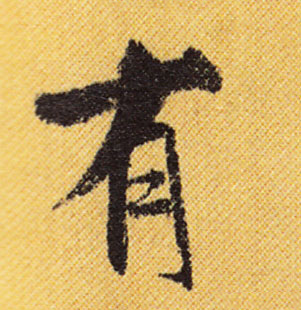



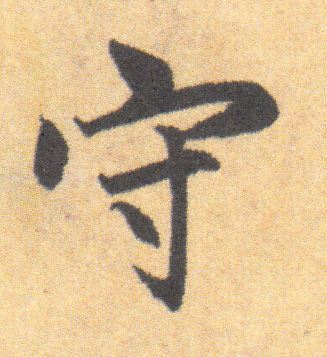


○ Chinese calligraphy, running script: Write down "Wait a while, then decide"“
When stress accumulates, sleep deprivation occurs, and emotions begin to fluctuate, people tend to make impulsive decisions at the peak and give up in extreme situations at the trough. The goal of this calligraphy exercise is to create a "buffer sentence" for yourself on paper: remind yourself to slow down slightly when your rhythm is out of balance, rather than immediately giving a major answer.
- Writing words and phrases:
- Let's wait and see before deciding.
- Pause a little, then Decide
- Writing Tips:
- When writing "take it easy", you can start with a slightly lighter stroke and end with a slightly heavier stroke, as if you are slowly stretching out a breath and then steadily putting it down, symbolizing relaxing a part of the tension.
- When writing "decide again", the structure can be slightly more compact, representing making a judgment after a buffer, rather than making a hasty decision during a peak or trough.
- When writing English sentences, you can make "Pause a Little" more expansive and "Then Decide" slightly tighter to remind yourself that pausing is a strength, not a delay; and that truly important decisions are best left to your more stable rhythm.
○ The Influence of Stress, Sleep, and Circadian Rhythm Changes on Mood Fluctuations • Drawing Guidance Suggestions
Through drawing, you can transform abstract concepts like "stress," "sleep," and "rhythm" into visual lines and shapes, allowing you to see more intuitively how they work together to affect your emotions. This exercise does not pursue aesthetic beauty; it emphasizes only honest recording and self-awareness.
I. Three Tracks: Stress-Sleep-Emotion Diary Chart
- Draw three parallel horizontal axes on a piece of paper, labeling them from top to bottom as "stress intensity," "sleep quality," and "emotional state." Each horizontal axis represents a consecutive 14 or 30 days.
- Simply draw a point on each of the three axes each day: the greater the stress, the higher the point; the worse the sleep, the lower the point; the lower the mood, the lower the point; and the more stable the mood, the closer the point is to the midline.
- Connect the points on the same axis with thin lines to form three broken lines.
- Observation: During which periods do the three lines change almost synchronously? During which periods do they show a sequential relationship (e.g., increased stress first, then poor sleep, then mood swings)? Write a summary observation below the graph.
II. Pressure Thermometer and Sleep Power Bar
- Draw a "pressure thermometer" on the left side of the paper, and label it from bottom to top as "mild tension", "moderate pressure", "high pressure warning" and "off the charts" and write down your physical and emotional feelings about each level next to it.
- Draw a "sleep battery bar" on the right side of the paper, from 0% to 100%, and write down the typical performance at different battery levels (e.g., unable to get out of bed at 30%, barely able to operate at 60%, and able to handle most tasks at 80%).
- Think about it: At what range of pressure thermometer readings does your sleep battery level typically drop significantly? Draw a line connecting these points on the graph to indicate this relationship.
- Write a reminder in the corner of the drawing paper: "When the thermometer approaches a certain mark, I need to prepare for sleep and circadian rhythm in advance."“
If you experience renewed stress or anxiety about sleep while painting, allow yourself to stop, drink some water, or get up and move around. Painting is simply a tool to help you understand your rhythms, not just another "task" to be done well; what truly matters is that in the process, you gradually become more willing to view your fluctuations in a gentler way.
Please log in before submitting your drawings and feelings.
○ 1229. The Influence of Stress, Sleep, and Circadian Rhythm Changes on Mood Fluctuations: Journaling Guidance Suggestions
① Reflect on a recent period of significant mood swings and record in 3-5 sentences the main source of stress, sleep patterns (sleep time, sleep quality, whether you woke up early), and your deepest emotional experience.
② Write down three things you often say to yourself when under pressure (e.g., "Just hang in there a little longer," "I can't give up now," "Everyone else is working hard"). Then write down three things you often say to yourself when your sleep gets worse (e.g., "Why can't I sleep well again?" "I'm doomed if this continues"). Observe the tension and self-criticism in your language.
③ Try to describe the typical cycle of "stress, sleep, and mood" in your life in one sentence (e.g., increased workload → working overtime late into the night → harder to sleep at night → more anxious or depressed the next day). It doesn't have to be perfect, just be honest.
④ Write down three "rhythm protection principles" for yourself, such as: "Don't look at your phone in the early morning during high-pressure periods," "Try to have a fixed wake-up time," and "Don't make major decisions if you don't sleep well for two consecutive nights."
⑤ Imagine someone who truly understands you. How would they view your emotional fluctuations under pressure and insomnia? Write a short passage to yourself in the second person: "You are not a failure, you are just..."“
⑥ Conclusion: Conclude this lesson with a short sentence, such as: "I can't fix all the rhythms right away, but I've begun to understand what's pulling me."“
Please log in to use.
When you begin to notice how stress, sleep, and circadian rhythm changes collectively affect mood swings, you'll no longer be simply startled by sudden ups and downs, but gradually gain the ability to understand and anticipate them. May a cup of green tea drunk at the right time, a bowl of calming soup, a set of music played morning and evening, a note on paper saying "Take it easy, then decide," and quiet moments of contemplation with a mandala become your daily practices for restoring your personal rhythm and gently caring for your emotional fluctuations.
 EN
EN  ZH
ZH  ES
ES  FR
FR  JA
JA