

Lesson 1233: Patterns of Increased and Decreased Interpersonal Sensitivity
Duration:75 minutes
Topic Introduction:
In the emotional cycle of cyclothymia, interpersonal sensitivity exhibits drastically different patterns during the hypomanic and mildly depressed phases. During the hypomanic phase, interpersonal sensitivity often decreases due to increased confidence and energy, leading to ignoring others' emotions, misjudging boundaries, or being overly blunt. Conversely, during the mildly depressed phase, interpersonal sensitivity may significantly increase, causing over-interpretation of subtle facial expressions, tone of voice, and even unintentional silences, resulting in a sudden increase in relationship stress. This course will guide you to understand how interpersonal sensitivity fluctuates with rhythm and to identify specific signals, such as sudden increased sensitivity to evaluation, fluctuating needs in relationships, and misinterpreting others' intentions. Through rhythmic awareness, interpersonal boundary practice, and maintaining a stable daily rhythm, you will be able to maintain relationships more steadily and avoid being swayed by fluctuations and losing your judgment. (229 words)
○ Overview of Cyclothymic Disorder
- Symptom characteristics:Cyclothymic mood disorder is characterized by alternating periods of hypomania and mild depression lasting for more than two years, causing individuals to fall into a rhythmic fluctuation that is "never completely stable".
- Rhythm Pattern:Although the mood swings are not as severe as those in bipolar disorder, long-term fluctuations can still affect interpersonal relationships, work, and life structure.
- Risks and delays:Because the symptoms are not "severe" enough, many people go undiagnosed for years, leading to long-term functional impairment and chronic mental fatigue.
▲ AI Interaction: Find Your Rhythm Point on the Interpersonal Relationship Curve
Fluctuations in interpersonal sensitivity often reflect early changes in emotional rhythms.
Please write down the three most recent social moments when you were "particularly sensitive" and the three most recent moments when you were "particularly insensitive".
And record the emotional state and physical signals at that time.
Awareness is the beginning of a stable relationship.
Click the button below to analyze your interpersonal rhythm patterns with AI.
○ The Restoration and Recovery of Interpersonal Rhythms: Music Therapy
Choose a piece of music with a steady rhythm and gentle melody to help you rediscover "inner distance" when interpersonal pressure increases.
When you are overly sensitive, music helps you avoid being overwhelmed by your emotions; when you are underly sensitive, music reminds you to reconnect.
A stable rhythm is the foundation of a relationship.
🍵 Refreshing and Balancing Green Tea
Recommended reasons:Green tea has a refreshing and mild aroma, and theanine can regulate the "social blunting" during the hypochondriac phase and soothe the "hypersensitivity" during the depressive phase, helping to maintain a more stable level of interpersonal responsiveness.
usage:Take 3g of green tea, brew at 80°C for 2–3 minutes, and drink 1–2 cups daily to help maintain a stable circadian rhythm.
○ Soothing and Qi-Regulating Lotus Root and Pork Rib Soup
Lotus root soothes the mind and calms the nerves, while pork ribs replenish energy and stabilize emotions, making this soup suitable for when experiencing significant fluctuations in interpersonal sensitivity. The soup's gentle and mild nature helps the body regain stability, thus promoting a more balanced emotional and interpersonal response.
Reduce sensitivity
Help connect
Healing Recipes
/home2/lzxwhemy/public_html/arttao_org/wp-content/uploads/cookbook/kao-ji-xiong-rou-quan-mai-mian-bao.html(Please confirm that the following has been uploaded: kao-ji-xiong-rou-quan-mai-mian-bao.html)
🎨 Psychological Mandala
Psychological Healing: Psychological Mandala - Thoughts 07
Interpersonal sensitivity is like an inner ring that sometimes tightens and sometimes loosens. When viewing a mandala, let your eyes slowly move from the outer circle towards the center, symbolizing that you are returning to your own stable point from the complex stimuli of the outside world. Observe, rather than analyze, and you will find that your "heart distance" is being restored.
When your sensitivity increases or decreases, watch it three times to re-clarify your self-positioning.
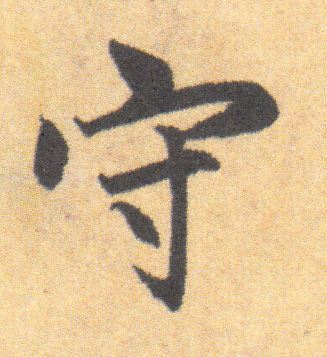
○ Chinese calligraphy – Running script
Running script emphasizes a sense of proportion in its flow, making it very suitable for practicing "inner stability of brushstrokes" when experiencing sensitive fluctuations in interpersonal relationships.
- Written words:
- Maintain a calm and balanced mind; find stability in moderation.
- Hold the Heart, Find Balance in the Middle
- Writing Tips:
- Let your brushstrokes naturally shift between tightness and looseness, and feel your "inner ease" amidst the sensitive changes in interpersonal relationships.







○ Interpersonal Sensitivity Pattern: Drawing Guidance Suggestions
Drawing is a visual way to understand changes in interpersonal sensitivity. In this exercise, please first draw two types of circles: one that is too tight, symbolizing excessive absorption of external stimuli when your interpersonal sensitivity is too high; and another that is too loose, symbolizing interpersonal sluggishness or alienation during a period of heightened sensitivity. Then, in the third drawing, draw a circle that is neither too tight nor too loose, maintaining a soft and flexible feel, symbolizing the interpersonal boundaries during a stable phase. Please mark the three most recent moments when your sensitivity suddenly increased or decreased, along with the triggering events. In this way, you can see how external influences change your interpersonal responsiveness and learn to find the most suitable stable circle for yourself within the fluctuations of rhythm. (216 words)
Please log in before submitting your drawings and feelings.
○ 1233. Interpersonal Sensitivity - Journal Guidance Suggestions
① Write down the moment when you most recently "suddenly became very sensitive".
② Write down the moment when you most recently "suddenly became insensitive".
③ Identify two triggering factors (emotions, sleep, stress, physical response).
④ Write a sentence to support yourself: "I am learning to adjust my 'internal social distance'."“
⑤ Tomorrow, set up a "gentle boundary operation".
Please log in to use.
This course will help you understand the internal mechanisms of interpersonal sensitivity fluctuations and establish a more stable rhythm and self-position in relationships.
 EN
EN  ZH
ZH  ES
ES  FR
FR  JA
JA