

Lesson 1238: A Behavioral Dynamic Analysis of Repeated Starts and Half-finished Projects
Duration:75 minutes
Topic Introduction: In the long-term rhythms of cyclical mood disorders, the pattern of "repeatedly starting and then repeatedly abandoning" is very common, but it is often simply attributed to "lack of perseverance." The reality is: when emotions and energy rise slightly, motivation, interest, and self-expectations are simultaneously boosted, creating a strong urge to "start again"; however, as the rhythm naturally declines, attention slows, physical fatigue increases, self-esteem decreases, and the original plan becomes increasingly difficult to maintain. This lesson will analyze why this cycle recurs and how it subtly erodes self-esteem from the perspectives of emotional curves, executive function, stress load, and self-expectations. We will practice together how to transform "starting again" into "small, sustained steps," allowing behavioral motivation to gradually take root in the subtle rhythms of daily life, rather than solely relying on emotional peaks. (243 words)
○ Overview of Cyclothymic Disorder
- Symptom characteristics:Cyclothymic mood disorder is characterized by alternating periods of hypomania and mild depression lasting for more than two years, causing individuals to fall into a rhythmic fluctuation that is "never completely stable".
- Rhythm Pattern:Although the fluctuations are not as intense as those of bipolar disorder, they are enough to affect work performance, motivation, and self-evaluation.
- Risks and delays:Because the symptoms "do not meet the diagnostic criteria," many people go unrecognized for a long time, leading to chronic procrastination, repeated interruptions to goals, and a cycle of self-blame that lasts for many years.
▲ AI Interaction: Self-Observation Through Repeated Starts and Half-Starts
Please write down the scenario of "starting over" that you are most familiar with, such as: getting back into the gym, writing, studying, or organizing your life.
Reflection: Under what emotional and energy states do you usually make the decision to "make this time different"?
Write down the moment you most recently "put on hold": What were your sleep, stress, interpersonal environment, and mood like that day?
Finally, a gentle reminder: "Behavior needs to be in accordance with rhythm, not obey momentary impulses."
○ From a hesitant start to steady progress: Music therapy
Choose a piece of music with a steady rhythm and a not overly upbeat melody, and use it as a "pre-action alignment ritual".
When you feel like you want to start over, listen to the lesson once and decide to take only a small step today, instead of arranging all the tasks at once.
Let the rhythm of the music gradually settle into your body, rather than remaining as a grand plan in your mind.
🍵 Chinese Tea Therapy: Green Tea – Energizing without Over-Inflating Energy
Recommended reasons:Green tea can refresh the mind without being as stimulating as strong coffee, which helps to clarify thoughts, see realistic limitations, and avoid over-planning when "resetting goals".
Usage suggestions:Take 2–3 grams of green tea and steep it in hot water at about 80°C for 2–3 minutes. It is suitable to drink slowly before planning your day's tasks or preparing for action, allowing your body and brain to enter a more stable rhythm.
○ Yam and Lotus Seed Stew
Yam invigorates the spleen and replenishes qi, while lotus seeds nourish the heart and calm the mind, making this a gentle tonic suitable for those experiencing cycles of repeated starts and easy abandonment. This soup helps improve basic physical strength and focused endurance, allowing actions to be taken less reliant on emotional peaks and more effectively even in a stable state.
Healing Recipes
/home2/lzxwhemy/public_html/arttao_org/wp-content/uploads/cookbook/kao-ji-xiong-rou-quan-mai-mian-bao.html(Please confirm that the following has been uploaded: kao-ji-xiong-rou-quan-mai-mian-bao.html)🎨 Psychological Mandala
Psychological Healing: Psychological Mandala - Thoughts 07
Starting and stopping repeatedly is like circling the outer edge of a mandala, unable to reach the center. Don't draw; just observe: let your gaze slowly move from the complex lines of the outer circle to the simplicity of the inner circle, finally settling on the stable point of light at the very center. You don't have to complete the entire plan at once; just allow yourself to move from the "many plans" on the outside back to one or two small steps towards the center. Observe three times consecutively, feeling yourself slowly descend from the anxiety of "always starting over" back to the center line where you can gradually move forward.
Please gaze at the mandala three times, shifting your attention from "I haven't done much yet" to "What can I do right now?"
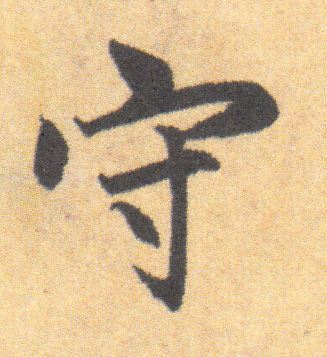
○ Chinese calligraphy – Running script
The characteristics of running script are that it has both continuous flow and clear pauses, making it very suitable as a rhythmic medium for practicing "continuous but not excessive" writing.
- Written words:
- Less is more, more stable, and more effective over time.
- Small but Stable, Lasting in Time
- Writing Tips:
- After writing each word, pause briefly to observe your breathing and the pressure of your grip on the pen, reminding yourself that what truly changes your life are small, repeatable actions, not one-off, massive plans.







○ Repeatedly starting and stopping halfway: Drawing guidance suggestions
Draw a simple horizontal line on a piece of paper, dividing it into three consecutive sections: write "Restart Zone" on the left, "Sustainable Zone" in the middle, and "Halfway Zone" on the right. You don't need elaborate designs; just mark a few symbols or keywords above each section: In the "Restart Zone," write down your usual declarations and impulses (e.g., This time I must, I want to change completely); in the "Halfway Zone," write down your common forms of stagnation (e.g., procrastination, avoidance, helplessness, self-blame); in the "Sustainable Zone," write down three minimally achievable actions (e.g., Ten minutes a day, completing only one small step). Then simply observe the line quietly, from left to right and back to the middle, feeling how you are constantly pulled between the two ends, and also feeling that "that small middle section" is the truly worthwhile place to slowly practice pausing.
Please log in before submitting your drawings and feelings.
○ 1238. Repeated Starts - Log Guidance Suggestions
① Write down your most typical experience of "starting over and then abandoning it halfway", and try to be specific about the time and the scene.
② Mark which of the four dimensions—emotion, sleep, stress, and interpersonal environment—was the most unstable at that time.
③ Write down a new self-narrative: "I am not a failure, but learning to take small steps for longer."“
Please log in to use.
When you understand the dynamic structure of "repeatedly starting and abandoning halfway", you will no longer only feel guilty, but will have another path to stable action.
 EN
EN  ZH
ZH  ES
ES  FR
FR  JA
JA