

Lesson 1239: How Emotional Fluctuations Affect Decision Quality
Duration:75 minutes
Topic Introduction: In cyclothymic mood disorder, emotions are not a static backdrop, but rather an invisible force that fluctuates continuously, subtly influencing the quality of decision-making. When hypomania prevails, people are more likely to overestimate their abilities and resources while underestimating risks and time costs, leading to impulsive purchases, hasty commitments, and taking on too many tasks. Conversely, when mood leans towards mild depression or low mood, threats are amplified, self-worth is underestimated, and opportunities are more likely to be missed, actions delayed, or defensive choices made. This course will guide you through a detailed understanding of how the emotional curve affects each step of the decision-making process from the perspectives of rhythm, attention, risk assessment, and self-narrative. You will learn how to create buffers for yourself amidst emotional highs and lows, allowing important decisions to move beyond momentary mood swings and gradually return to clearer, more realistic judgments.
○ Overview of Cyclothymic Disorder
- Symptom characteristics:Cyclothymic mood disorder is characterized by alternating periods of hypomania and mild depression lasting for more than two years, causing individuals to fall into a rhythmic fluctuation that is "never completely stable".
- Rhythm Pattern:Although the fluctuations are not as intense as those of bipolar disorder, they are enough to affect work performance, motivation, and self-evaluation.
- Risks and delays:Because the symptoms "do not meet the diagnostic criteria," many people go unrecognized for a long time, leading to chronic procrastination, repeated interruptions to goals, and a cycle of self-blame that lasts for many years.
▲ AI Interaction: How do you make decisions when your mood is fluctuating?
Think back to a decision you made when you were in a particularly good mood: What did you promise, buy, or undertake? How did your assessment of the risks and consequences change at that time?
Think back to the decisions you made when you were "particularly down": What opportunities did you give up, what actions did you postpone, and what did you say to yourself?
Finally, write down a sentence you'd like to remind yourself of before your next important decision, such as: "Make your decision after you've had a night to calm down."“
○ Emotional Alignment Before Decision Making: Music Therapy
Before or after making an important decision, play a piece of music with a steady rhythm and soothing melody to allow the nervous system to return to the midline from over-excitation or over-inhibition.
With music as a accompaniment, gently ask yourself: Is your current decision driven by emotions, or by values and reality?
You don't have to give an answer right away. Just allow yourself a little bit of delay in the rhythm of the music, giving your brain a chance to reassess.
🍵 Chinese Tea Therapy: Green Tea – Keeping Judgment Clear and Gentle
Recommended reasons:Green tea can refresh the mind and eyes without being overly stimulating, making it a good companion for clear thinking and reducing emotional interference before making decisions. It symbolizes a neutral awareness of "neither rushing in nor immediately retreating."
Usage suggestions:Take 2–3 grams of green tea, brew with hot water at about 80°C, let it steep for a moment, and then drink slowly. You can drink a cup before thinking about important issues or organizing your options. Use the time spent drinking tea to deliberately bring your attention back from the peaks or troughs of your emotions to your breath and the present moment.
○ Goji Berry and Lotus Seed Mild and Nourishing Soup
Goji berries nourish the liver and replenish essence, while lotus seeds nourish the heart and calm the mind, helping to gently support the stable functioning of the brain and nervous system during long-term emotional fluctuations. For those who often make impulsive decisions when excited or deny everything when depressed, this soup is like providing a gentle buffer for the brain, allowing more room for thinking and preventing them from being solely driven by momentary emotions.
Healing Recipes
/home2/lzxwhemy/public_html/arttao_org/wp-content/uploads/cookbook/kao-ji-xiong-rou-quan-mai-mian-bao.html(Please confirm that the following has been uploaded: kao-ji-xiong-rou-quan-mai-mian-bao.html)🎨 Psychological Mandala
Psychological Healing: Psychological Mandala - Thoughts 07
Emotions pull decisions in circles on the outer ring, sometimes exhilarating like exploding lights, sometimes so dim the future is almost invisible. Simply observe the mandala: first, let your gaze slowly wander over the complex, varying patterns on the outer ring, acknowledging the fluctuations in your emotions; then slowly guide your gaze to the simpler structure of the inner ring, finally settling on the stable and quiet center. Don't rush to make any decisions; simply allow yourself those few seconds of observation to shift from the inertia of emotional pull to a more stable internal frame of reference. Repeat three times, making "returning to the center before making a choice" a new rhythmic memory.
Please gaze at the mandala three times, and gradually bring your decision from being "driven by your emotions" back to "determined by your inner center".
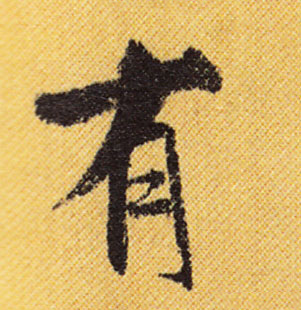
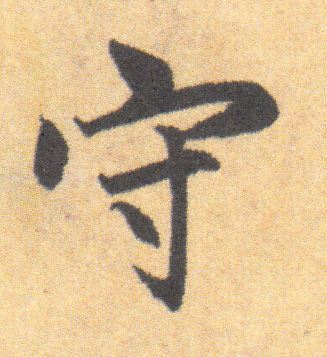
○ Chinese calligraphy – Running script
The running script, with its continuous strokes and pauses, trains the ability to "flow with the momentum and stop at the right time," just as when making decisions amidst emotional fluctuations, one needs to feel the emotions but not be overly driven by them.
- Written words:
- The heart moves with emotions; the will is its own.
- Feel the Mood, Keep the Mind
- Writing Tips:
- When writing, I deliberately slow down the moment of finishing each stroke, feeling that instant of "stop" and "stillness," as if reminding myself: emotions may fluctuate, but I am the one who finishes the last stroke, and I am the one who decides whether to make a choice now.






○ Emotions and Decision-Making Quality: Drawing Guidance Suggestions
Please draw a simple cross-shaped coordinate system on a piece of paper: the horizontal axis represents "emotional level," from low mood on the left to high mood on the right; the vertical axis represents "decision quality," from impulsiveness or withdrawal at the bottom to clarity and stability at the top. You don't need to draw it elaborately; just use small symbols or keywords to mark some of your past important decisions in each quadrant: for example, where do purchases, contracts, or promises made when you were in a high mood usually fall—in the lower right or upper right? Where do decisions to refuse, give up, or avoid when you were in a low mood usually fall? After completing this, simply observe the diagram quietly, letting your eyes slowly move between the four quadrants, feeling how your emotions push you towards different decision-making areas, and also seeing that what's truly worth cultivating is the upper right space where "emotions are seen, but judgment remains clear." You don't need to change immediately; just start by seeing clearly.
Please log in before submitting your drawings and feelings.
○ 1239. Emotions and Decision-Making: Journal-Guided Suggestions
① Write down the three most recent decisions that impressed you: were you in a high, low, or confused emotional state at the time?
② Record whether these decisions, in retrospect, were closer to the upper right or to other quadrants, and what the respective consequences were.
③ Write down a reminder you hope will guide you through your next important decision, such as: "When I'm excited or frustrated, I take a moment to calm down before making a decision."“
Please log in to use.
When you begin to see the connection between emotions and decision-making quality, you are already building a bridge for yourself from being driven by emotions to making clear choices.
 EN
EN  ZH
ZH  ES
ES  FR
FR  JA
JA