

Lesson 124: Talking with "Anticipatory Anxiety"
Duration:90 minutes
Topic Introduction:“Anticipatory anxiety is the most stubborn psychological phenomenon among panic disorder and social anxiety—the brain enters "disaster rehearsal mode" before the event even occurs. It makes people afraid of recurrence, afraid of embarrassment, and afraid of losing control. This course will guide you on how to engage with this anxiety instead of being dominated by it, and how to regain a sense of control through cognitive restructuring and body awareness.
○ The formation mechanism of anticipatory anxiety
- 1. Memory circuit:The brain marks a past anxiety experience as "dangerous," and will immediately trigger an alarm when encountering a similar situation in the future.
- 2. Hypervigilance:Preemptive scanning for potential discomfort can cause the body to enter a state of stress prematurely.
- 3. Avoidance and suppression:The more you fear and feel anxious, the more you reinforce your brain's focus on that anxiety, thus creating a vicious cycle.
○ A Three-Step Approach to Talking to Anxiety
- Identification:To realize, "I'm starting to rehearse the future," before the anxiety even erupts.
- name:Say softly, "This is anticipatory anxiety, not reality."“
- Transformation:Treat anxiety as a signal, not a command; make it "visible" through breathing or writing so that it no longer drives action.
Lesson 124: Talking to Anticipatory Anxiety, Click to listen to the reading, View the content
Anticipatory anxiety isn't the fear of what's happening now, but rather a preemptive reaction to the possibility of things spiraling out of control again at some point in the future. Many people start to feel anxious and worry about a sudden relapse even without any symptoms. This worry itself constantly consumes attention, allowing life to be consumed by premature fear. The first step in dealing with anticipatory anxiety is recognizing its temporal misalignment; it focuses not on the present moment but on a hypothetical scenario that hasn't yet occurred. When the brain constantly rehearses future dangers, the body is forced into a state of alert prematurely, and over time, the system remains in a state of chronic tension. The second step is distinguishing between preparation and repetitive rehearsals. True preparation is knowing how you can cope if something happens, while anticipatory anxiety is repeatedly imagining the worst-case scenario without generating new information. When you find yourself repeating the same worry in your mind, you can gently tell yourself, "I already know this possibility; I don't need to continue rehearsing." The third step is shifting the dialogue from control to negotiation, rather than trying to eliminate anxiety. You can respond to it in your mind: "I know you want to protect me, but there's no immediate danger right now. If it does happen, I'll deal with it." This response isn't suppression but a redistribution of power, allowing anxiety to no longer monopolize your attention. The fourth step is to bring your attention back to the details of your present, perceptible life, such as what you are doing, your body posture, and the sounds in your environment. Anticipatory anxiety is most afraid of being pulled back to reality because reality is often much safer than imagination. The fifth step is to allow uncertainty to exist. Many people try to gain a sense of certainty by worrying in advance, but in fact, uncertainty is a part of life. When you practice continuing to act in uncertainty, anxiety will gradually lose its reason to control you. It needs to be understood that anticipatory anxiety does not mean you are weak, but rather it is a transitional reaction of the nervous system during the learning phase. Every time you don't back down because of worry, your brain updates its experience; the future doesn't unfold according to the worst-case scenario. Talking to anticipatory anxiety is not about making it disappear, but about letting it return to its proper place. When you are no longer led by the future, the present truly returns to your own hands.
▲ AI Interaction: Engaging with "Anticipatory Anxiety"
Do you often rehearse the worst possible outcomes in your mind before anything even happens?
They worry about "what if something goes wrong again" or "what if I can't hold on this time," and are already exhausted while waiting.
Anticipatory anxiety keeps you living in a "future where things might go wrong," instead of the present moment that is actually happening.
Here, you can describe your most specific "expected vision," and we'll break it down together: what's real, and what's just your brain's alarm bells.
○ Audio: Gentle Exercises for Conversational Anxiety
Play the audio track and follow the instructions to complete the "Anxiety Dialogue Meditation":
- Close your eyes and imagine anxiety as a tense friend, not an enemy.
- Say to it, "I know you're reminding me, but I'm safe now."“
- With each breath, draw your attention away from the frightening image and back to the weight of your body and the rhythm of your breathing.
○ Eastern Tea Therapy: Albizia and Lily Tea for Calming the Mind
Recommended reasons:Albizia flowers can relieve depression, while lilies can calm the mind and soothe the nerves. They are suitable for drinking when anticipation of rising anxiety, helping to ease emotions.
practice:Steep 2 grams of mimosa flowers and 2 grams of lily bulbs in hot water for 5 minutes. After enjoying the aroma, drink slowly while taking deep breaths to experience the tranquility of "waiting."
○ Soothing Sweet Potato and Milk Soup (ID124)
During periods of heightened anticipation and anxiety, the body needs gentle and consistent comfort. The sweetness of sweet potatoes provides stable support for the energy depleted by prolonged stress, while the warmth of milk helps the nervous system slow down its rhythm. This soothing soup is best enjoyed in the evening or when thoughts tend to wander, allowing the body to return to the present moment through warmth and a feeling of fullness. It symbolizes that there's no need to rush into the future; the present is safe enough.
Open Recipe
◉ Warming and Nourishing Food: Sweet Potato and Milk Soup (ID 124)
Sweet potato and milk soothing soup is a gentle dish that falls somewhere between a "sweet soup" and a "soft, creamy meal." The sweet potatoes, after steaming and blending, have a smooth and creamy texture with a natural sweetness; the addition of a small amount of milk or plant-based milk makes the soup even smoother and more mellow. Compared to high-sugar desserts or heavy cream soups, this is more like a "mild and comforting drink" that is acceptable to both the body and the mind, suitable for after working overtime, relaxing in the evening, or when feeling tired but not wanting to eat too much solid food.
gentle and satisfying Warming up and relaxing Natural sweet aroma
I. Recommended Dietary Therapy and Reasons
Recommended dishes:Sweet potato and milk soothing soup (ID 54)
Recommended reasons: Sweet potatoes provide slow-release carbohydrates and dietary fiber, resulting in a more stable energy intake. When blended into a soup, it's gentle on the stomach, making it suitable for those who are not fully digesting but want a light meal. A small amount of milk or plant-based milk is all that's needed to enhance the smoothness and aroma, making this soup even more comforting. It's perfect as a transitional evening snack, a light meal about two hours before bed, or a warming drink when you're feeling stressed.
2. Recipe and Method
Recipe (1–2 servings):
- 200–250 g sweet potatoes (peeled and cut into chunks; yellow or orange-fleshed sweet potatoes can be used).
- 120–160 ml of milk or unsweetened plant-based milk
- 80–120 ml of water (adjust according to consistency)
- 3–5 g of butter or unsalted butter (optional)
- A pinch of salt (optional, for flavor enhancement)
- A small amount of honey or maple syrup (optional, but not recommended to be too sweet).
- A pinch of cinnamon powder or vanilla extract (optional, to enhance aroma).
practice:
- Peel and cut the sweet potatoes into small pieces, then steam them for 15–20 minutes, or until they can be easily pierced with chopsticks.
- Place the steamed sweet potato chunks into a blender, add some milk or plant-based milk and a small amount of water.
- Blend with a blender until smooth and creamy. If it is too thick, add small amounts of milk or water in batches to adjust the consistency.
- Pour the blended sweet potato soup into a small pot and heat over low heat, stirring gently and constantly to prevent it from sticking to the bottom.
- If using butter or cream, add it at this point to give the soup a smoother texture; it does not need to be boiled vigorously, just simmering with small bubbles is ideal.
- Add a pinch of salt to taste. If you want a little sweetness, you can add a small amount of honey or maple syrup and stir well after turning off the heat and letting it cool slightly.
- If you prefer a stronger aroma, sprinkle with a little cinnamon powder or add a very small amount of vanilla extract, mix well, and then serve.
- Drink it slowly while it's still warm, allowing the temperature to travel from your mouth to your stomach and other parts of your body.
3. Small rituals for body and mind
When handling sweet potatoes, pay attention to their color and texture, and shift your focus from the screen and information flow back to the action at hand.
The process of blending into soup is like slowly integrating the scattered emotions of the whole day into a state that can be accepted, allowing you to tell yourself, "That's enough for today, let your body rest first."“
When you take your first sip, you can silently say, "I allow myself to recover in a gentler way." Let this bowl of soup be a small transitional space to end your busy schedule.
4. Dietary Therapy Experience Record
- Record the time of consumption (such as after dinner, after working overtime, 2 hours before bedtime, etc.) and the physical and mental state at that time.
- Observe whether there are any changes in satiety, stomach comfort, drowsiness, or relaxation 1–2 hours after drinking.
- If you consistently use this soup as a regular evening ritual or after working overtime for a period of time, you can record changes in sleep quality, morning mental state, and mood fluctuations.
V. Instructional Videos (approximately 3–5 minutes)
◉ Video Title:Sweet Potato and Milk Soup: A gentle, warming drink to end a busy day.
6. Precautions
- Sweet potatoes contain a lot of carbohydrates, so people who need to manage their blood sugar should control their portion sizes and include them in their daily carbohydrate intake calculations.
- If you are not tolerant to dairy products, you can choose unsweetened plant-based milk such as oat milk or almond milk instead of cow's milk, or make it with just water and sweet potato.
- Those with sensitive stomachs can dilute the soup further and drink it slowly to reduce the digestive burden.
hint:This recipe is for daily dietary guidance and does not replace professional medical and nutritional advice. If you have chronic illnesses or special dietary needs, please consult a doctor or nutritionist first.
○ Suggestions for Modern Calligraphy Writing Practice
The topic of this lesson:Cutting the fuse of "expectation"—returning to the present moment at the tip of the pen.
In-depth analysis:
At its core, anticipatory anxiety is "living in the future." Your body may be sitting in a chair, but your mind is already racing to tomorrow or next year, preparing for disasters that haven't yet occurred. This temporal and spatial dislocation makes the present unbearable. Modern art calligraphy is a mandatory "practice in the present moment". You can't use yesterday's ink to write tomorrow's words. Every stroke demands absolute focus: if your eyes are fixed on the end of the line, the letter in the present moment will be distorted. We practice narrowing our attention from the "entire article (the future)" to "this single millimeter of ink (the present moment)."
Writing Techniques (Physiological Adjustment Version):
- The Entrance Stroke:Modern calligraphy often features a decorative lead-in stroke. Don't rush into the main text. Spend more time on this initial movement, treating it as a ritualistic deep breath. Tell your anxiety, "I haven't started yet; I'm just drawing this line."“
- Lift and Reset:Unlike cursive script, modern calligraphy allows for frequent brush lifts between strokes. Utilizing this feature, after completing each stroke, deliberately lift your hand and pause for a second. This breaks the anxious "continuity." Each stroke is a new beginning, free from the burden of the previous one and the pressure of anticipating the next.
- Wet Ink Focus:Anticipatory anxiety creates terrifying images through imagination. By staring at freshly written, still-wet, reflective ink on paper, it forces the visual senses back to reality. Watching the ink slowly seep into the paper's texture is a microscopic process that the brain cannot fabricate out of thin air.
- No layout planning:Normally, writing requires anticipating the position of characters, but this lesson practices "blind writing." Don't worry about whether you can write the word on a certain line; just write as far as you can, even writing outside the paper. Break free from the compulsive mindset of "having to perfectly plan the future" and experience the physical feeling that "there's always a way out."
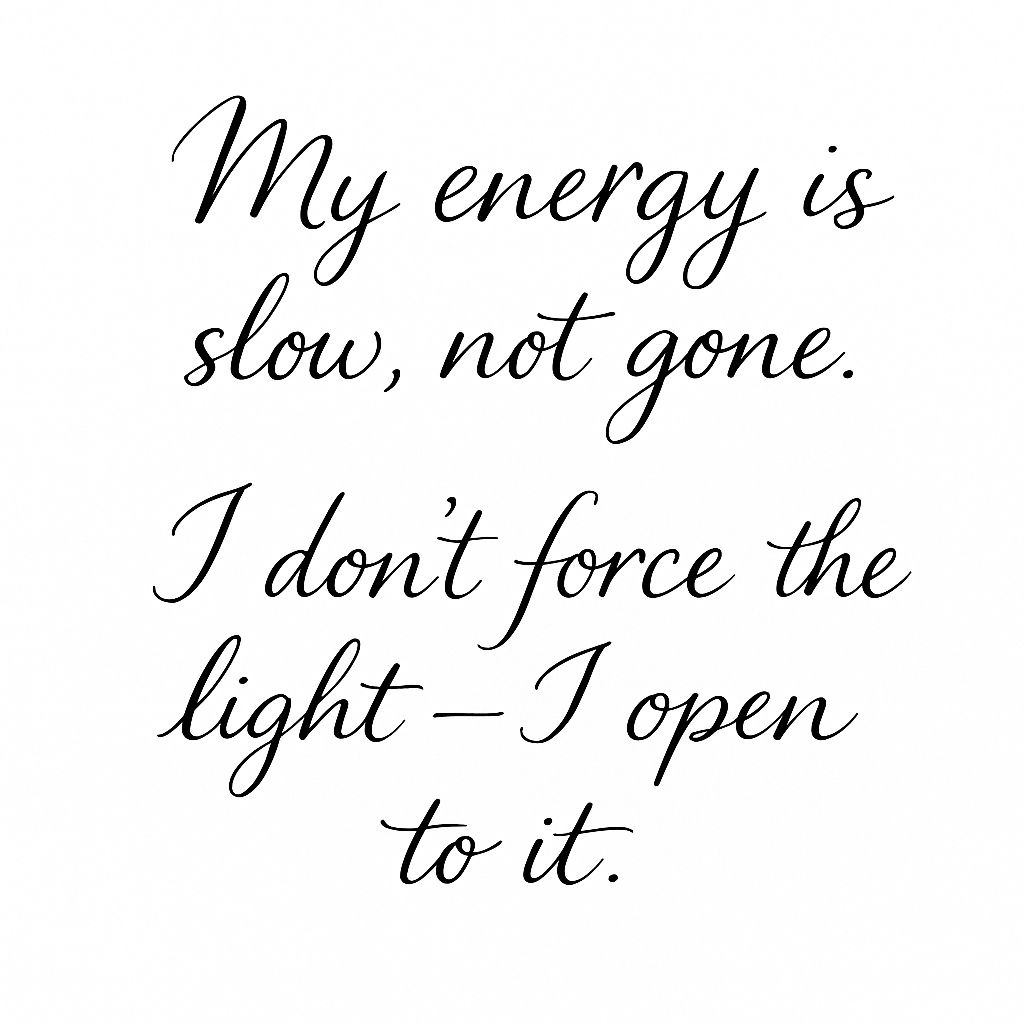
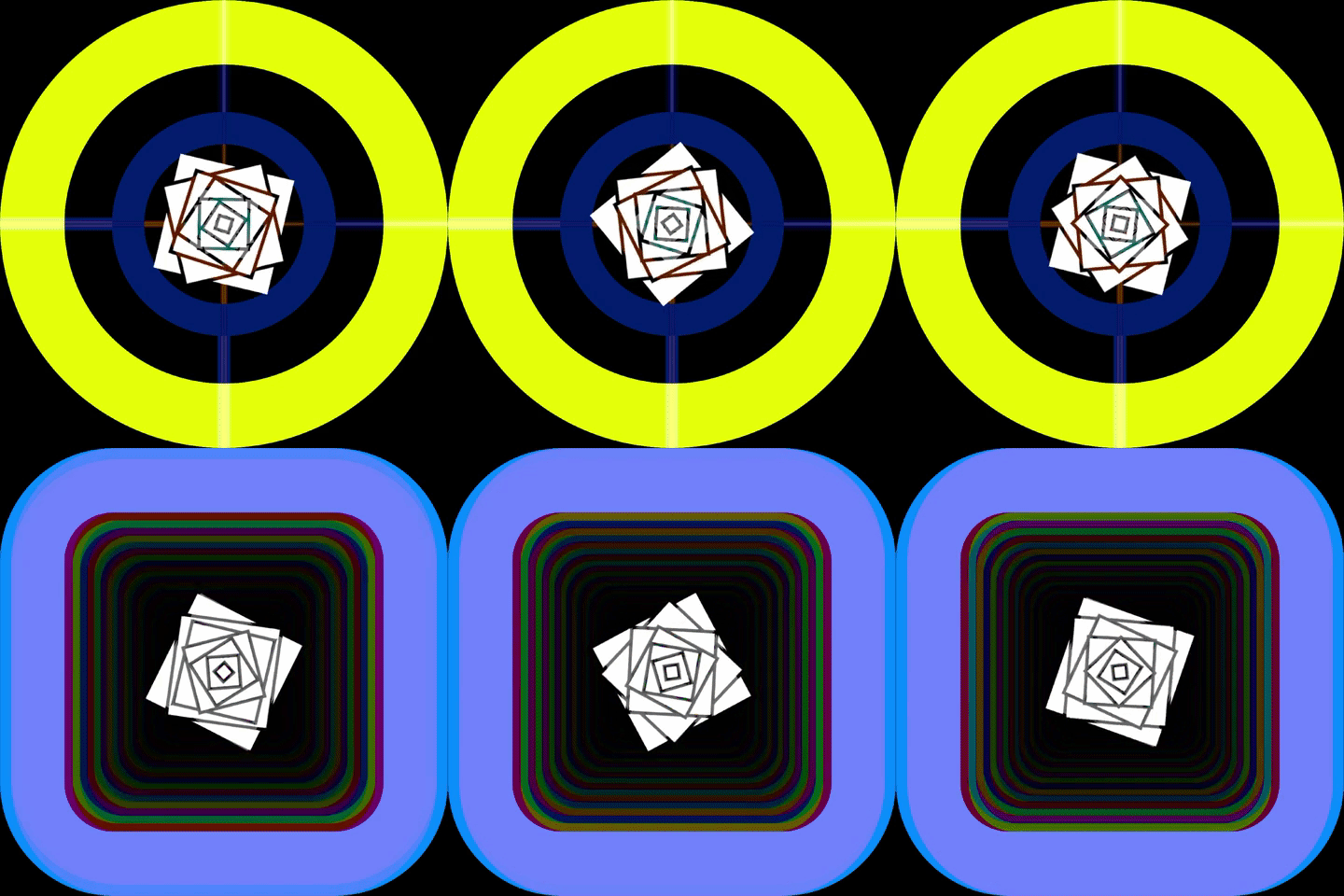
Image Healing: Mandala Stability Guidance 124
Imagine anticipatory anxiety as a thick fog, obscuring your path. Your mind then projects various monsters into the fog. The mandala is like a lantern in your hand. It cannot illuminate the entire path, but it clearly illuminates the step you take (the center of the circle). You don't need to dispel all the fog, nor do you need to see the destination. You only need to focus on this small, illuminated circle. As long as this step is firm, the next step will naturally be illuminated as you take it. Rest peacefully within the circle of light; the monsters in the fog are merely phantoms.
Traditional mandalas typically feature a harmonious and intricately varied circular structure, symbolizing the wholeness of the universe and the cycle of life. By viewing mandala images, individuals can perceive inner peace and strength, achieving psychological balance.
◉ Gaze at the mandala twice, while taking deep breaths.
Lesson 124: Talking with "Anticipatory Anxiety"
Objective: To externalize the image of "anticipatory anxiety" through painting, transforming it from a vague fear into an understandable emotional object.
Steps: Draw an extended timeline on paper, using colors to represent the intensity of anxiety: red for peaks, orange for slight fluctuations, and blue for relaxation. Then, write down a self-response for each stage, such as "I see you," "I allow you," or "I am here."
Please log in before submitting your drawings and feelings.
○ 124. Suggestions for using an anticipatory anxiety journal
① What situations are most likely to make me anxious in advance?
② What am I afraid of, the event itself or the feeling of "anxiety again"?
③ What signals does my body send when anxiety occurs?
④ How can I talk to my anxiety instead of suppressing it?
⑤ Write down a comforting sentence for yourself today, such as: "I don't need to rehearse the future."“
⑥ Small steps for tomorrow: Before anticipating an anxiety-inducing situation, take three deep breaths and smile.
Please log in to use.
Anxiety is not the enemy; it just comes to protect you too early. Talk to it gently.
 EN
EN  ZH
ZH  ES
ES  FR
FR  JA
JA