

Lesson 1240: Self-Awareness: Identifying the "Emotional Fluctuation-Behavioral Chain Reaction"“
Duration:75 minutes
Topic Introduction: In cyclothymic disorder, mood swings are not like a passing breeze, but rather an invisible chain that influences behavior, rhythms, and judgment. When hypomania increases, behavior often "accelerates": thoughts jump around, plans surge, commitments are excessive, and decisions are impulsive; while when mild depressive tendencies appear, actions suddenly slow down: procrastination, avoidance, lowered expectations of oneself, and a bleak outlook on the future. Many people mistakenly believe this is "personality volatile," but in reality, it is a series of automatic reactions triggered by mood swings. This course will help you learn to identify the complete chain of "mood change → behavioral tendency → consequence pattern" from subtle clues, enabling you to recognize the cycle before it starts and to press the pause button when behavior becomes unbalanced. Awareness is not judgment, but seeing how you are pulled by rhythms, thereby regaining the initiative in making choices and preventing life from being solely driven by emotions.
○ Overview of Cyclothymic Disorder
- Symptom characteristics:It presents as alternating periods of hypomania and mild depression lasting for more than two years, keeping people in a state of incomplete mood for an extended period.
- Rhythm Pattern:While high and low rhythms may not cause serious functional impairment, they are enough to affect motivation, judgment, self-perception, and the pace of action.
- Risks and delays:Because the symptoms remain in the ambiguous range of "not yet severe" for a long time, they are often overlooked or even go undiagnosed for many years, causing continuous and recurring distress in life.
▲ AI Interaction: What chain reactions will occur in your behavior after emotional fluctuations?
Think about it: When you're in an unusually good mood, what things do you do more, faster, and more recklessly than usual?
Think about it again: When your mood suddenly drops, how do your behaviors decline in tandem? For example: abandoning plans, reducing contact, becoming pessimistic about the future?
Please write down three of your most frequent "emotion → behavior" patterns, and then choose the one you most want to improve first.
○ A pause before the emotional chain: Music therapy
Play a piece of music with a steady rhythm and clear melody to gradually slow down the speed of the nervous system's automatic reactions.
Ask yourself a simple question while listening to music: "Is my current action driven by emotion or by a goal?"“
Let music be a "buffer zone for observation," giving you more breathing space before a chain reaction occurs.
🍵 Chinese Tea Therapy: Green Tea – Enhancing Awareness
Recommended reasons:The refreshing and invigorating properties of green tea are suitable for bringing a gentle clarity when you are easily swayed by emotions, making it easier for you to see the prelude to a chain reaction rather than being swept away by it instantly.
Usage suggestions:Take 2–3 grams of green tea, brew with hot water at about 80℃, let it sit for a while, and then drink it. You can drink a cup when you feel your "state suddenly speeding up" or "state suddenly slowing down" to allow your body to slow down or regain its rhythm in advance.
○ Yam and Lily Bulb Soup for Calming and Regulating
Yam invigorates the spleen and replenishes qi, while lily bulbs calm the mind and soothe the nerves. The combination of these two ingredients can help restore a stable bodily rhythm during prolonged emotional fluctuations. It is suitable for people whose emotions fluctuate and whose behavior is easily swayed, gently replenishing the body and mind with sustained energy and the power to stabilize rhythm, making it easier to recognize the starting point of a chain reaction.
Healing Recipes
/home2/lzxwhemy/public_html/arttao_org/wp-content/uploads/cookbook/kao-ji-xiong-rou-quan-mai-mian-bao.html(Please confirm that the following has been uploaded: kao-ji-xiong-rou-quan-mai-mian-bao.html)🎨 Psychological Mandala
Psychological Healing: Psychological Mandala - Thoughts 07
Emotions are like a constantly rotating outer wheel, while behavior is like the inner gears driven by the outer wheel. Once the outer wheel accelerates, the inner wheel immediately synchronizes; once the outer wheel slows down, the inner wheel immediately stops. When observing a mandala, pay attention to the difference between the complexity of the outer layer and the simplicity of the inner layer: you can first let your eyes rest on the rapidly changing texture of the outer layer, acknowledging that "emotions are moving"; then gradually guide your gaze into the rhythm of the inner layer, finally resting on the center, this point that does not waver with the changes of the outside. The more you can find this center in your observation, the more you can perceive the starting point of chain reactions in your daily life, transforming from "being led by the wheel" to "I decide what to do next."
Please gaze at the mandala three times, allowing yourself to gradually return from "automatic reaction" to "conscious awareness".
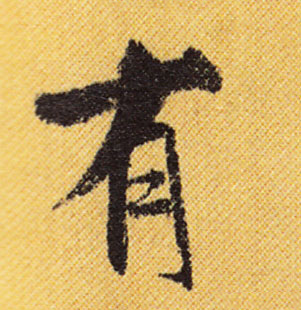
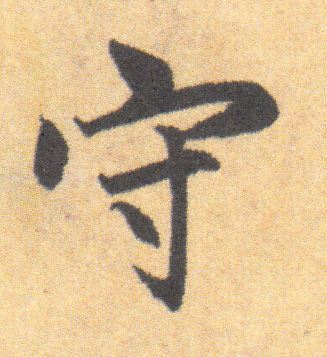
○ Chinese calligraphy – Running script
The "continuous yet unbroken, broken yet orderly" nature of running script is very suitable as a symbol for practicing observing chain reactions: every stroke is flowing, but each ending stroke allows one to reposition oneself.
- Written words:
- Be aware of thoughts as soon as they arise; know when to stop in your actions.
- When Thoughts Rise, Awareness Follows
- Writing Tips:
- When practicing writing, focus your attention on "awareness" and "stopping." Each pause symbolizes that you are pressing the pause button in the chain of actions.






○ Emotional-Behavioral Chain Reaction: Drawing Guidance Suggestions
Please draw a simple three-part chain: the left side represents "emotional changes," the middle side represents "automatic thoughts," and the right side represents "following behaviors." It doesn't need to be beautifully drawn; just write down three recent reactions you've experienced, for example: when feeling agitated, "suddenly wanting to do many things → I should handle it immediately → taking on too many tasks at once," or when feeling down, "feeling powerless → feeling incapable → starting to postpone plans." After drawing, please don't analyze it; just observe it: let your eyes slowly move between the three segments, as if you were seeing your internal mechanical structure. Simply observing is the first step in bringing the chain reaction from the unconscious into consciousness, and it also gives you new possibilities: adding a little space to the "middle segment."
Please log in before submitting your drawings and feelings.
○ 1240. Emotion-Behavior Chain: Journaling Guidance Suggestions
① Write down your most recent significant emotional fluctuation and the first behavioral change it brought about.
② Record what your automatic thoughts were at that moment? How did these thoughts drive you to the next step?
③ Write down a reminder you would like to give yourself when the next chain reaction begins.
Please log in to use.
Emotions may arise, but you don't have to be led by them. Every chain of events you see is a step towards regaining your direction.
 EN
EN  ZH
ZH  ES
ES  FR
FR  JA
JA