

Lesson 1241: The Cycle of Overcommitment and Social Withdrawal
Duration:75 minutes
Topic Introduction: Within the rhythms of cyclothymia, the cycle of "overcommitment-withdrawal" is an extremely common yet difficult-to-detect behavioral pattern. When in a high mood, a person quickly experiences a strong desire to participate, social motivation, and an impulse to take excessive responsibility for others, making numerous commitments: agreeing to projects, proactively contacting friends, taking on extra tasks, and making idealized plans. However, when the mood turns low or fatigued, these commitments suddenly become unsustainable, and the individual enters a state of withdrawal, disconnection, procrastination, or avoidance. This is often mistakenly perceived as "unreliability" or "unpredictable behavior," but in reality, it is a natural consequence of rhythmic shifts in behavior. This course will help you identify the subtle signals before "increased commitment" and before "withdrawal," and learn to create buffer zones between rhythmic transitions to reduce impulsive expansion and subsequent self-blame, allowing interpersonal relationships and personal rhythms to gradually return to stability.
○ Overview of Cyclothymic Disorder
- Symptom characteristics:The long-term alternation between hypomania and mild depression causes the rhythm of emotions and behavior to exhibit a chronic and incompletely unstable fluctuation pattern.
- Consequences of the behavior:Changes in dynamics can easily affect the quality of commitments, the frequency of interpersonal interactions, and expectations for the future, leading to a series of "fluctuating decisions."
- Common Misconceptions:The seemingly repetitive behavior is actually a natural reaction driven by emotional rhythms. Identifying the pattern is the first step.
▲ AI Interaction: How do you make a commitment between high and low rhythms?
Think back: When you're in a good mood, are you more likely to agree to things than usual?
When you are in a low period, do you suddenly lose motivation for your original commitments or take the initiative to back down?
Write down a recent example of "overcommitment-sudden withdrawal" and indicate the emotional context at the time.
○ Commitment to slowing down the rhythm - Music therapy
Play a piece of music with a steady rhythm and a well-structured rhythm, and let yourself feel the speed of your body before you act impulsively.
Ask yourself: "Am I doing this because I want to, or is it because my emotions are pushing me to do it?"“
Let music be your "wait a minute" before making a commitment.
🥛 Warm Milk - Golden Milk (Healing)
Recommended reasons:Golden Milk, with its gentle warming combination of turmeric, black pepper, and milk, helps stabilize nighttime rhythms, relax the nervous system, and reduce impulsive decisions and excessive social engagement caused by mood swings.
How to drink:Heat 250ml of warm milk with a small amount of turmeric powder, then gently stir in black pepper. Drinking this in the evening helps stabilize your circadian rhythm and reduce the "emotional inflated commitment" of the following day.
○ Kosher Food - Mild and Balanced Vegetable Soup
Choosing root vegetables, onions, and a small amount of olive oil in accordance with kosher principles, and slow-cooking them creates a soup with a refreshing yet stable taste. Kosher diets emphasize purity, order, and rhythm, which can symbolically help you establish a sense of "structure" between impulsive behavior and withdrawal, making it easier for both body and mind to maintain a consistent pace.
Healing Recipes
/home2/lzxwhemy/public_html/arttao_org/wp-content/uploads/cookbook/kao-ji-xiong-rou-quan-mai-mian-bao.html(Please confirm that the following has been uploaded: kao-ji-xiong-rou-quan-mai-mian-bao.html)🎨 Psychological Mandala
Psychological Healing: Psychological Mandala - Thoughts 07
When you commit too much and suddenly want to retreat, look at the dense lines of the outer circle of the mandala, which symbolizes "overexpansion"; then slowly draw your gaze to the emptiness of the inner circle, which symbolizes "retreating to yourself." The space between the outer and inner circles is your buffer zone for the future. You don't need to stand only in the outer or inner circle, but can learn to stop in the middle, allowing the rhythm to stop pulling you to extremes.
Please watch the mandala 3 times to cultivate awareness before committing and before withdrawing.
○ Medieval Gothic Script
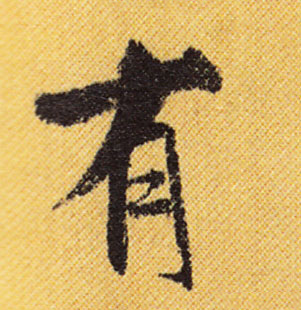
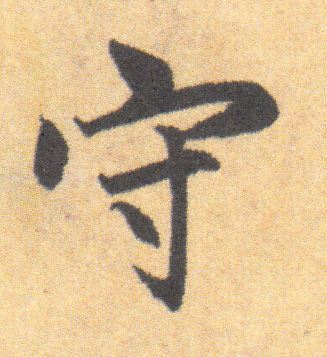
Gothic script, with its thick strokes and strong black-and-white contrast, is naturally suited to symbolizing the dramatic shifts between "overcommitment" and "sudden retreat," allowing you to practice finding a stable rhythm and sense of structure while writing.
- Written words:
- Hold Steady · Keep Balance
- Writing Tips:
- Finding the "middle line" amidst the strong contrasts of thick and thin, black and white, symbolizes that you are learning to establish a smooth path between the two extremes of your actions.






○ Behavioral Rhythm Cycle: Drawing Guidance Suggestions
Please draw an "arc-shaped cycle": write "Overcommitment" at the top and "Social Withdrawal" at the bottom. Mark the three phases of your most recent cycle along the arc: Motivation Rise → Commitment Inflation → Emotional Decline → Withdrawal Initiation. After drawing, there's no need to explain or analyze; simply observe the arc. Notice that the arc is not closed; it always has adjustable entry points. As long as you can sense, while observing, that "this part can be slowed down, that part can be gentler," the cycle will no longer be completely automatic.
Please log in before submitting your drawings and feelings.
○ 1241. Behavioral Cycle · Log-Guided Suggestions
① Describe the moment when you most recently "promised too much".
② Write down your first signal before you begin the evacuation.
③ Write a reminder message that you would like to place at the beginning of the loop.
Please log in to use.
Commitment and withdrawal are not your mistakes, but rather the trajectory of rhythm. The more you see, the more you can choose your own pace.
 EN
EN  ZH
ZH  ES
ES  FR
FR  JA
JA