

Lesson 1250: Management Methods for Fluctuating Work Efficiency
Duration:75 minutes
Topic Introduction:
Cyclic mood disorder often manifests as a recurring pattern of "sudden high efficiency – rapid decline": during the hypomanic phase, ideas increase, execution speed accelerates, and excitement propels tasks forward, but over-commitment and neglect of details are common; during the depressive phase, attention decreases, procrastination increases, and systematic thinking ability is insufficient, forming a cycle of "too high peaks and too deep troughs." This course will help you understand the psychological and physiological mechanisms that influence efficiency fluctuations, including circadian rhythm disruption, energy management imbalance, excessive pursuit of perfection, or sudden loss of motivation. You will learn how to re-establish a stable work rhythm using "small chunk tasks," "energy pacing," "behavioral initiation techniques," and "transition rituals" as core strategies. The goal is not to maintain consistently high efficiency, but to make it "reliable," "adjustable," and "not excessively volatile," allowing work to become a supportive structure for life, rather than a victim of emotional fluctuations.
○ Key methods for managing fluctuations in work efficiency
- Block-based task scheduling:Break tasks into smaller chunks of 15–25 minutes to reduce the impact of emotions on the execution pace.
- Energy pacing method:During periods of mild excitement, avoid over-progression; during periods of low activity, focus on maintaining basic tasks.
- Triple Transition Ceremony:Help stabilize your work rhythm for 1–3 minutes before, between, and after the start of the session.
- Small achievements accumulated:Instead of pursuing "high output during moments of excitement," we should focus on building sustainable results.
▲ AI Interaction: Your Efficiency "High and Low Lines"“
Reflecting on the past three days, write down the periods when you were most and least productive.
Write down three factors that trigger a decline in efficiency, and three scenarios that improve efficiency.
Choose a rhythm strategy you're willing to try (blocking, initiation ritual, pacing).
○ Structured Work · Music Therapy
Choose a piece of music with a moderate tempo and clear layers, and play it before starting your work.
Let music replace "emotions" and become the primary driving force for getting work started.
The orderly nature of music can subtly guide your thoughts back to a controllable rhythm.
Warm Milk & Golden Milk: Healing
Recommended reasons:Drinking stimulating beverages before work can amplify restlessness and impulsiveness, while golden milk can keep the body warm and stable, reducing the risk of over-excitement or sudden energy drop, and making efficiency fluctuations more controllable.
How to drink:As a "slow-down ritual" before or after the start of a task.
○ Kosher's refreshing and focused soups enhance longevity
Kosher's clean, simple, and low-irritant ingredients make it ideal as a "stable meal at work."
A clear broth made with chicken, carrots, celery, olive oil, and whole grains provides stable nutrition to the brain without causing irritation or drowsiness, allowing your attention to remain focused on your emotions.
Improve focus
stable rhythm
Healing Recipes
/home2/lzxwhemy/public_html/arttao_org/wp-content/uploads/cookbook/kao-ji-xiong-rou-quan-mai-mian-bao.html(Please confirm that the following has been uploaded: kao-ji-xiong-rou-quan-mai-mian-bao.html)
Psychological Mandala
Psychological Healing: Psychological Mandala - Thoughts 07
When work efficiency fluctuates, gaze at the mandala. The complexity of the outer ring resembles the chaotic rhythm of your day, while the stability of the center represents the focus you wish to rebuild. Simply observe, allowing the visual order to guide you back to rhythmic order, rather than relying on willpower to force yourself to concentrate.
Watch it three times to allow your mind to gradually return to sustainable focus.
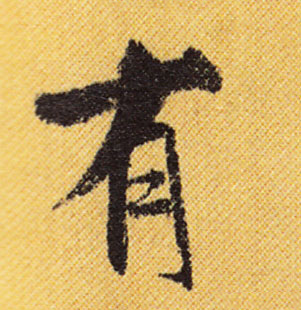
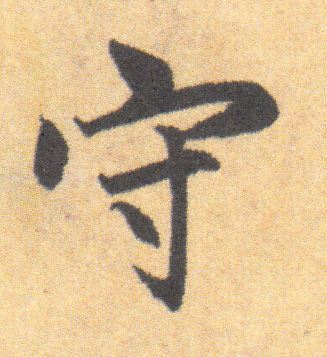
○ Medieval Gothic Script
The structural sense of Gothic script helps establish "boundaries between tasks and rhythms." Writing itself is a way to train focus.
- Written words:Steady Work · Steady Mind
- Writing Tips:Maintain equidistant strokes and let the structural sense of characters become part of your work rhythm training.






○ Drawing Guidance: Your Efficiency Fluctuation Chart
Draw a horizontal timeline, marking the times of day when you are "most focused" and "most easily distracted".
Use different colors to mark the moments when emotions affect efficiency, and then label your physical state (fatigue? excitement? tension?).
Finally, use a waveform to outline your ideal efficiency rhythm: not one that is completely smooth, but one that is predictable, with moderate fluctuations, and acceptable.
Please log in before submitting your drawings and feelings.
○ 1250. Efficiency Rhythm · Log-Guided Suggestions
① Record what happened during your 30 least productive minutes today.
② Write down one rhythm method you would be willing to try.
③ Imagine that once your efficiency stabilizes, what is the first thing you want to accomplish?
Please log in to use.
Work efficiency isn't driven by emotions, but rather sustained by rhythm. May your work pace become predictable, and may you rediscover your sense of power within stability.
 EN
EN  ZH
ZH  ES
ES  FR
FR  JA
JA