

Lesson 1256: Self-Tracking: Methods for Using Emotion Diaries and Drawing Emotional Fluctuation Curves
Duration:75 minutes
Topic Introduction:
In cyclothymic mood disorder, mood swings are often not sudden but rather cyclical, and these rhythms only become clear after being recorded and observed. This course will guide you in building your own "mood tracking system," using a combination of mood diaries, sleep logs, activity changes, and daily energy curves to help you create a personalized "mood fluctuation curve." This curve not only reveals the precursors to hypomania and depression but also helps you identify triggers related to events, seasons, sleep, and stress. You will learn how to record in the simplest way: just a few sentences, a small table, and a line segment each day. Tracking is not about strict management but about seeing trends before fluctuations occur, maintaining direction amidst change, and giving you more room for proactive adjustment and preventative measures. As you begin to record consistently, you will be surprised to find that even chaos has rhythm, and observation itself can bring stability.
○ Four Core Dimensions of Emotion Tracking
- Emotional intensity:Tag your daily mood on a scale of 0–10 to create a comparable baseline.
- Energy curve:Recording energy changes throughout the day, both peaks and troughs, is of informational value.
- Sleep rhythm:The length and quality of sleep are often the earliest warning signs of mood fluctuations.
- Key events and bodily signals:Mark stress points, impulse points, and physical symptoms such as tension, fatigue, and heart rate changes.
▲ AI Interaction: Draw your mood curve for today
Please write down your emotional intensity and energy level for three time periods today (e.g., morning, afternoon, and evening).
Let AI help you turn it into an "emotional fluctuation curve".
Then let the AI suggest a possible trigger to help you start building your own pattern recognition system.
○ Stability Before the Emotional Curve: Music Therapy
Listening to 3-5 minutes of soft, rhythmic music before emotion tracking can help you detach from your emotions and enter "observer mode".
This is the "stabilizing boundary" before drawing the curve, making the recording clearer and gentler.
Golden Milk Healing
Recommended reasons:The warmth and calming effect of golden milk can help the brain enter a "slow zone," making it easier to notice subtle emotional fluctuations. Especially during periods of information overload or periods of low mood when attention is scattered, golden milk can become a ritual to "return to the center."
Drinking tips:Drinking it at night before plotting your mood curve or writing in your mood diary helps reduce mental noise and makes the curve more realistic and trackable.
○ Kosher Vegetable Soup: A dietary therapy that supports long-term energy stability
Long-term mood tracking requires a stable and non-overstimulating energy source. A light vegetable soup prepared according to Kosher principles, emphasizing clean ingredients, light seasoning, and minimal burden, helps maintain mental clarity and sustained focus, allowing you to record your mood curves without being distracted by bodily noise.
The combination of carrots, celery, white onions, and a small amount of potatoes provides "slow-on energy," which is especially suitable for people who are prone to fluctuations due to high-sugar and high-salt foods during periods of irritability.
emotional stability
Low-noise diet
Healing Recipes
/home2/lzxwhemy/public_html/arttao_org/wp-content/uploads/cookbook/kao-ji-xiong-rou-quan-mai-mian-bao.html(Please confirm that the following has been uploaded: kao-ji-xiong-rou-quan-mai-mian-bao.html)
Psychological Mandala
Psychological Healing: Psychological Mandala - Thoughts 07
Drawing an emotion curve is like transforming the waves of life into a visual pattern.
The center of the mandala reminds you that no matter how the curves rise and fall, there is always a position that does not move with the fluctuations.
When you look at a mandala, let the complexity of the outer rings return to the background and let your attention fall on the "center point".
Observation itself is a form of stability.
Please gaze at this image three times, allowing your eyes and heart to slow down before you begin drawing your emotional curve.
○ Medieval Gothic Script
Gothic script is known for its vertical lines, compact structure, and sense of order, making it ideal for writing practice as part of an emotional diary, adding a "solid ritual" to the recording process.
- Written words:Track · Pattern · Rhythm
- Writing Tips:Each straight line symbolizes "seeing a trend," and each horizontal line symbolizes "connecting today to tomorrow."

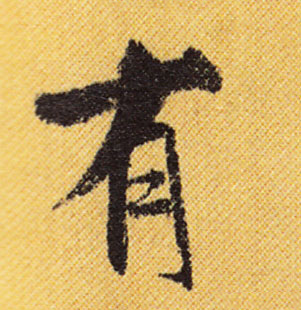



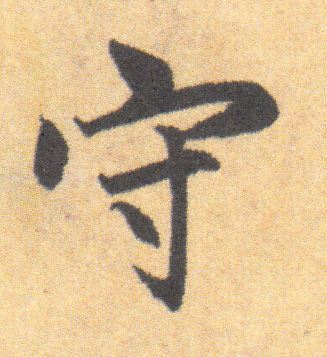


○ Drawing guidance: Draw a graph of your emotional fluctuations.
Draw a horizontal axis on the paper to represent time (from morning to night), and a vertical axis to represent the intensity of emotions or energy levels.
Based on your state of mind throughout the day, mark the emotional points for each time period on the graph in sequence, and then connect these points to form a fluctuating curve.
Next, use different symbols to label the "event points" (such as meetings, arguments, exercise, caffeine, sleep, etc.) and observe their relationship with the fluctuations of the curve.
Finally, look at the entire image for 10 seconds, letting it become a "panoramic view of your emotional rhythm".
This isn't analysis; it's learning how to see the rhythm of the day—one of the most crucial skills for managing cyclical moods.
Please log in before submitting your drawings and feelings.
○ 1256. Mood Curve - Journal Guidance Suggestions
① What kind of curve does your day resemble? (Wave-like, step-like, sudden drop-like)
② Mark a "key point" and write down its emotional impact on you.
③ Write a sentence about the rhythm of your mood curve tomorrow.
Please log in to use.
Emotion tracking is not about judging yourself, but about seeing. Only through seeing can you gradually master the rhythm and rebuild your inner stability.
 EN
EN  ZH
ZH  ES
ES  FR
FR  JA
JA