

Lesson 1259: Long-Term Treatment Plan: Combining Psychotherapy, Medication, and Daily Management
Duration:75 minutes
Topic Introduction:
The core challenge of cyclothymia is not the "fluctuations in mood" themselves, but rather the gradual accumulation of these recurring rhythmic changes over time, ultimately impacting life structure, key relationships, career stability, and self-worth. Therefore, this course focuses on how to establish a truly "long-term effective" treatment plan, combining psychotherapy, medication, and daily rhythm management to form a stable recovery path. You will understand that psychotherapy helps you identify triggers in your emotional rhythms and build a more robust behavioral structure; medication provides a physiological foundation for stability; and daily management (sleep, routines, diet, exercise, stress management) determines whether the "fluctuation amplitude" can be reduced. These three are not substitutes for each other, but rather complement each other, like three ropes supporting a frame. As you gradually establish a stable life rhythm, combined with long-term therapy, your life trajectory will slowly return from repetitive fluctuations to a predictable, plannable, and more sustainable rhythm.
○ The Three Cornerstones of a Long-Term Treatment Plan
- Psychotherapy (CBT / IPSRT / Interpersonal Therapy):It helps identify the precursors of emotional fluctuations, correct the response patterns of triggering factors, and establish a rhythmic behavioral structure.
- Drug treatment (e.g., mood stabilizers):Strengthening the consistency of physiological rhythms reduces the amplitude of mild and depressed fluctuations, making the fluctuations more controllable.
- Daily rhythm management:Including sleep, diet, exercise, stress management, and social rhythm, once a fixed framework is established, the relapse rate can be significantly reduced.
▲ AI Interaction: Create Your Own "Long-Term Three-Axis Stabilization Plan"“
Please write down three types of support you currently have: ongoing psychotherapy, current medication, and your current daily rhythm.
Tell the AI: What do you think is the area that most "needs improvement"? The AI will help you design an actionable "weekly stability plan".
You can also ask AI to help you reintegrate your therapy team (doctors, therapists, family members) into a "support loop diagram".
○ Stabilizing the therapeutic rhythm: Music therapy
Choose a piece of music with a consistent rhythm and gentle undulations to symbolize the "long-term therapeutic structure" you are building.
Observe while listening: Does your breathing gradually slow down? Does your body sway slightly to the rhythm naturally? These are signs of stable treatment.
Long-term treatment is not a sprint, but rather like music: it takes shape slowly through repetition, fine-tuning, and perseverance.
○ Golden Milk – A calming nighttime ritual
Recommended reasons:The turmeric, cinnamon, and black pepper in golden milk can promote relaxation and warmth, and have a supportive effect on sleep and mood rhythms during long-term treatment. As a small ritual at the end of each day, it reminds you: today's treatment is complete, and I am willing to gently close this day.
Drinking suggestions:Drink it at a fixed time in the evening, and you can take three deep breaths to help transition into the rhythm of the next day.
○ Kosher Refreshing Bean and Vegetable Soup for Treatment
This bean and vegetable soup, made according to the Kosher principle, involves slowly simmering chickpeas, carrots, celery, and tomatoes to create a light yet comforting soup that provides stable energy.
During long-term treatment, the body is often more sensitive to stimulation, and this mild, clean soup without excessive seasoning can provide nutritional support without causing any burden.
You can link it to your daily rhythm, for example, by doing a rhythm review before eating this soup, making the diet a part of a stable plan.
Stable energy
Kosher Cleanse
Healing Recipes
/home2/lzxwhemy/public_html/arttao_org/wp-content/uploads/cookbook/kao-ji-xiong-rou-quan-mai-mian-bao.html(Please confirm that the following has been uploaded: kao-ji-xiong-rou-quan-mai-mian-bao.html)
Psychological Mandala
Psychological Healing: Psychological Mandala - Thoughts 07
Imagine a mandala that is constantly rotating but gradually slows down: at first the speed is fast and the pattern is blurry, but as the rotation slows down, you begin to see each line and each area clearly.
This is like a long-term treatment process: instead of stopping abruptly, the fluctuations are gradually reduced within the structure until a stable rhythm that can be maintained for a long time is found.
When you gaze at a mandala, ask yourself:
“"In which area would I be willing to build just one more centimeter today?"”
Long-term treatment is a long road, but it is a road that becomes more reassuring the longer you walk it.
Gaze three times, focusing your attention on "long-term consistency".
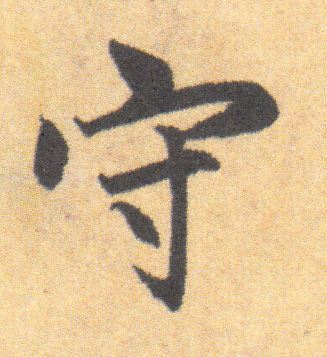
○ Medieval Gothic Script
The vertical lines and compact structure of Gothic script symbolize "clarity and direction," making it particularly suitable as a writing exercise for long-term treatment plans.
It reminds you that every stroke should be steady, slow, and clear, just like the attitude required for long-term treatment.
- Written words:Stability · Practice · Patience
- Writing Tips:Keep your shoulders relaxed while writing, and use even pressure to write vertical lines, letting your handwriting be a commitment to stability.







○ Drawing Guidance: Long-Term Treatment Triaxial Integration Diagram
Draw a large circle in the center of the paper and write "long-term stability" on it.
Draw three equidistant branches outwards: psychotherapy, drug therapy, and daily rhythm.
Write down the projects you are currently working on on each branch, such as: "Weekly treatment", "Evening medication", "Go to bed at 11:30 pm", "Morning walk", etc.
Next, write down a sentence next to each branch: "The direction I want to strengthen next," such as: "Reduce temporary treatment cancellations," "Fix medication time," and "10 minutes of morning sunlight."
Finally, the three branches are enclosed again with a soft outline, symbolizing the stable structure of the three becoming one.
Once you've finished, watch quietly: you're not just randomly experimenting in your life, but building a truly sustainable healing system.
Please log in before submitting your drawings and feelings.
○ 1259. Long-term treatment plan - journal-guided suggestions
① Write down your current situation in three areas: "psychotherapy - medication - daily rhythm".
② Choose one of the parts you most want to improve and write down why.
③ Design a "small, actionable step for this week".
Please log in to use.
Long-term treatment is not a burden, but a path to a predictable, controllable, and secure life.
You don't need to arrive at the destination all at once; you just need to take a step toward stability every day.
 EN
EN  ZH
ZH  ES
ES  FR
FR  JA
JA