

Lesson 1274: Dissociation Phenomenon: Reality Testing and Returning to the Present Moment
Duration:75 minutes
Topic Introduction:
In cyclothymic disorder, some people experience a sudden feeling of "not being here" when their emotions fluctuate wildly or stress levels rise sharply. It's as if they are watching their body move, or the world around them seems distant and unreal. This dissociation itself doesn't equate to "going crazy," but rather a protective shutdown of the nervous system when overloaded. However, it can weaken your sense of reality, making it harder to judge what is truly happening in the present moment. This course won't force you to "wake up immediately," but will guide you step-by-step to identify common dissociation signals, such as a loss of time perception, sounds seeming distant, and difficulty concentrating on conversations. Simultaneously, you will practice several simple reality checks and methods to return to the present moment, such as stating today's date and location, counting nearby objects, and using touch and breath to bring your attention back to your body.
○ Common subjective experiences of dissociation
- My sense of self has become unfamiliar:It felt like someone was watching me speak and act from a distance, making me feel like my body didn't completely belong to me.
- The environment becomes unreal:The room felt like a stage set, the sounds seemed to come from a great distance, and the colors became either grayish-white or overly bright.
- A fragmentation of time:I only remember fragments; the events that just happened are blurry and hazy, as if a section had been cut out.
○ The relationship between dissociation and cyclic mood fluctuations
- Overload during the hypo-hysterical phase:Excessive information intake, speaking too quickly, and excessive social interaction can overwhelm the brain, making it easy to avoid a breakdown by "detaching" from it.
- Numbness during periods of depression:When emotions are too painful, dissociation acts like a shield, temporarily making you feel less uncomfortable, but also causing you to lose connection with the world.
- The effects of sleep and fatigue:Staying up late, irregular eating habits, and prolonged tension can all make dissociation more likely to be triggered.
○ Returning to the present reality for testing and practicing ground awareness
- Three questions:What is the date? Where am I? What specific objects are around me? Use these words to "call yourself back."
- Five senses scan:Name three things you can see, two sounds you can hear, and one tactile sensation you can feel, bringing your attention back to the connection between your body and your environment.
- Safety signal:Find a fixed action, such as putting both feet on the ground, clasping hands together, or touching the corner of a table, and associate this action with "I am still here".
▲ AI Interaction: Identifying your dissociation warning signals and returning to the present moment
Tell the AI: the last time you felt "people weren't present" or "the world felt unreal" - you can write just a sentence or two.
You can also add:
- What was the situation at the time (e.g., after an argument, after staying up all night, in a crowded place, etc.)?
- What sensations do you feel in your body (emptiness, numbness, feeling lightheaded, or ears feeling blocked)?
AI will assist you:
- Compile your personal list of dissociation warning signals;
- Here's a short "reality test line" for you (you can read it during dissociation).
- This will help you design your own "Three-Step Method to Return to the Present Moment".
○ Reconnecting with the Body After Dissociation: Music Therapy
After the dissociation or trance, you may feel empty, cold, and as if all your strength has been drained from your body. At this time, intense music is not suitable; instead, pieces with regular rhythms and gentle timbres are appropriate, such as soft drumbeats, slow piano, or low-frequency strings.
You can do this while listening:
- While listening, gently tap your thigh or the table with your fingers, letting your body follow the beat and rediscover the rhythm;
- Synchronize your breathing with the music, inhaling for four counts and exhaling for four counts, confirming in the rhythm that "I am connected with this moment".
The purpose of music is not to "immediately wake you up," but to gradually guide you from the edge of ambiguity back to the middle ground where you can think and feel.
○ Eastern Healing Tea: Tangerine Peel and Osmanthus Oolong Tea for Rejuvenation
Recommended reasons:Oolong tea, situated between green and black tea, is neither too light nor too heavy. Combined with the delicate aroma of aged tangerine peel and the gentle sweetness of osmanthus, it offers a warm, tangible, and perceptible "rejuvenating experience" amidst the emptiness that follows dissociation. The aroma and temperature themselves are a test of reality: I am here, before this cup of tea.
usage:Use 4g of oolong tea, a small amount of dried tangerine peel, and a few osmanthus flowers. Steep in water at approximately 90℃ for 2–3 minutes. Before drinking, smell the aroma three times, feeling it linger in your nasal cavity and chest. Then, sip slowly, allowing your attention to follow the tea as it slides down your throat, gradually returning from your mind to your body.
○ Lily and Goji Berry Soup for Calming the Mind
Lily bulbs nourish yin and calm the mind, while goji berries tonify the liver and kidneys. When combined with a small amount of red dates and yam, they can provide the body with continuous and gentle energy support after emotional fluctuations and decongestion.
When dissociation occurs repeatedly, it is often accompanied by long-term fatigue, sleep disorders, and dietary imbalances. This soup focuses on "stabilizing" the body, allowing you to gradually regain your strength and also feel more "back to your own body".
benefit
Soup therapy
Healing Recipes
/home2/lzxwhemy/public_html/arttao_org/wp-content/uploads/cookbook/san-wen-yu-he-tao-jiang.html(Please confirm that the following has been uploaded: san-wen-yu-he-tao-jiang.html)
Psychological Mandala
Psychological Healing: Psychological Mandala Imagery 14
A mandala is not about drawing something, but about observing it.
Imagine a mandala: the outer circle has a slightly blurred pattern and indistinct colors, symbolizing the remoteness and unreality of the world when it is dissociated; while in the center, there is a clear geometric shape, such as a small square or dot, with stable lines and clear boundaries.
Simply observe, do not try to "understand". Let your gaze slowly move back and forth between the blurry outer circle and the clear center, and feel yourself gradually fix your attention on that stable center.
He whispered to himself, "The outer circle may be blurred, but I can still return to the center."“
The purpose of a mandala is not to provide answers, but to remind you through images that even if you feel adrift, your center still exists.
It is recommended that after dissociation or trance, you spend a few minutes watching this short text, letting your eyes guide you slowly back to the center from the outer circle.
○ Chinese Calligraphy - Running Script
The characteristic of running script is that it flows without breaking, like a stream of consciousness moving forward on the paper: sometimes stretching, sometimes contracting, but always remaining on the paper, with weight and direction.
When practicing running script, you can deliberately focus your attention on the friction between the pen tip and the paper, making each stroke a "real-world test": I am indeed here, my hand is moving, and the pen is on the paper.
- Written words:“"Be here and now" or "See the present moment".
- Writing Tips:When writing the last stroke of each character, slow down slightly, let your fingers feel the pen tip pause and the end of the stroke, then gently lift it up and tell yourself, "This stroke is finished, I'm moving on to the next one."“
- Practice method:When you feel confused or disoriented, take three deep breaths, then write these words three times. Not for the sake of looking pretty, but simply to experience "returning from drifting back to concrete action".

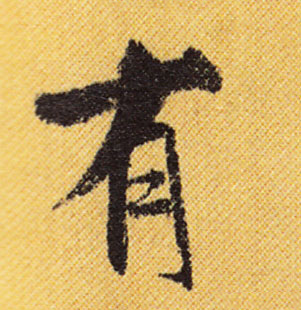



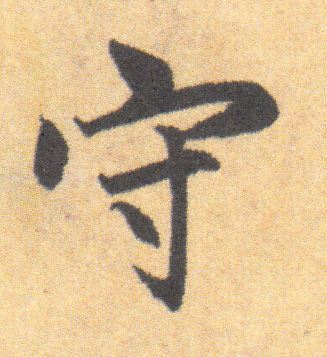


“`
○ Drawing guidance: Current anchor point map
Draw an irregular, large shape on paper to represent the "fuzzy world." It can be cloud-like, wavy, or whatever you feel.
Draw a small dot or square in the center of this shape and write "At this moment".
Then, near the edges of the large shape, write down a few things that are actually in your life right now: table, chair, window, phone, light, etc.; near the small dot in the center, write down a few facts related to your body: I am breathing, my feet are on the ground, my heart is beating.
After you finish drawing, put down your pen and look at this "present anchor point map" and tell yourself: "Even if the world is a little abstract, I am still connected to these concrete things."“
This painting is not meant to be judged as beautiful or not, but rather as a "reminder of reality" that you can look at when you are dissociating.
Please log in before submitting your drawings and feelings.
“`
○ 1274. Dissociation Phenomenon: Reality Testing and Returning to the Present Moment - Journal Guidance Suggestions
① Write down the last time you felt "not here" or "the world seems far away". Just describe the feeling and the scene at that time.
② Record whether you tried any reality testing or methods to return to the present moment (e.g., touching the table, saying the date, calling someone), and how effective they were.
③ Write down a "three-step return to the present moment" plan that you are willing to try, such as "name your location → count the surrounding objects → focus on the feeling of your feet on the floor", as a reference when dissociation occurs in the future.
Please log in to use.
When you learn to examine reality step by step and return to the present moment, you are not denying pain, but building a path for yourself to return from a blurred world to a clear self.
 EN
EN  ZH
ZH  ES
ES  FR
FR  JA
JA