

Lesson 1275: Crisis Response and De-escalation Script
Duration:75 minutes
Topic Introduction:
In the emotional fluctuations of cyclothymia, crises often don't erupt suddenly, but rather accumulate from a series of subtle, unnoticed triggers: rapid breathing, increased heart rate, racing thoughts, impulsive speech, relationship sensitivity, or intense self-blame. This course will guide you through "De-escalation Scripts," helping to stabilize emotions before they escalate out of control. De-escalation is not suppression, but rather shifting the brain from a threat mode back to a conscious state. This course will assist you in identifying the most common escalation trajectories and developing immediately usable crisis scripts through "three stabilizing phrases," "three-step disengagement techniques," and "reality-testing rhetoric," enabling you to maintain judgment even at the tipping point of hypotension or depression, preventing impulsive actions from escalating into harmful consequences.
○ Typical signs before a crisis escalates
- Physical signs:Symptoms include chest tightness, tinnitus, hand tremors, shallow breathing, stiff neck and shoulders, and a sudden rise or fall in body temperature.
- Thought signs:Jumping, becoming extreme, unable to stop, and having recurring automatic thoughts like "I'm doomed," "I can't take it," and "I'm going to break down."
- Behavioral signs:Speaks faster, tone harsher, unable to listen to others, begins to avoid, wants to escape or rush out.
○ Core principles of downgrade scripts
- Specific and concise:In a crisis, the brain cannot process complex sentences, so scripts must be short, stable, and direct.
- Principles of temperature decrease:The tone of voice, breathing, and movements are all aimed at "slowing down 20%". Stability comes from rhythm, not rational persuasion.
- Real-world testing:Use facts to draw attention back to the present moment from the emotional storm: "I am in my room right now," "The door is closed," and "No one is going to attack me."
○ Three types of downgrade scripts that can be used immediately
- Three stabilizing statements:
① “Pause for five seconds first.”
② “I am here.”
③ “I’ll make a decision after my emotions have calmed down.” - Three-step escape method:
① Sit down or lean against a wall to stop moving your body;
② Take three deep breaths;
③ Name three items around you to bring your consciousness back to reality. - Degradation of Relationship Tone:For example, "I need some time now, but I'm not leaving you" or "Let me calm down before we continue."
▲ AI Interaction: Create Your Personal Crisis Downgrade Script
Tell the AI: What was the last situation in which you felt "it would get out of control if things continued like this"? You can write just one sentence.
AI will assist you:
- Analyze your crisis escalation trajectory;
- I'll write you a set of "three personal stability phrases";
- Design a custom "downgrade script" based on your trigger points.
○ Crisis De-escalation: Music Therapy
During a crisis, the brain is in a highly alert mode, unsuitable for strong rhythms or complex melodies. Please choose music with a stable beat, gentle timbre, and high repetition, such as soft piano or slow strings.
Listening methods:
- While listening, tap your fingers lightly to the rhythm to help your body return from chaos to rhythm;
- Focus your attention on the lowest notes of the music to help your brain switch from "excitement" to "stability".
Music doesn't solve crises, but rather cools you down and gives you the ability to think about your next steps.
○ Eastern Healing Tea: Goji Berry and Longan Warming Tea
Recommended reasons:Goji berries nourish the liver and kidneys, while longan calms the mind and nourishes the heart. When emotions are approaching a dangerous level and the body is tense, cold, and chaotic, this tea can provide a stable and warm "body reboot." It doesn't make emotions disappear, but rather allows the body to slowly descend from a state of high alert.
usage:Steep 3-4 longans and 6-8 goji berries in hot water for 6 minutes. Smell the aroma three times before drinking; this is a simple "downgrade start-up" action.
○ Yam and Lily Bulb Soup for Stabilizing Emotions
Yam strengthens the spleen, lily nourishes the heart and calms the mind, and when combined with red dates and wheat, it can help the body recover its energy and reduce feelings of weakness after a crisis.
After a crisis, the body often experiences weakness, chest tightness, and dizziness. This soup focuses on "stability," helping you regain a sense of security from a physical perspective and reducing the risk of further escalation.
Calm
Soup therapy
Healing Recipes
/home2/lzxwhemy/public_html/arttao_org/wp-content/uploads/cookbook/gan-lan-you-kao-shu-cai.html(Please confirm that the following has been uploaded: gan-lan-you-kao-shu-cai.html)
Psychological Mandala
Psychological Healing: Psychological Mandala Imagery 15
A mandala is not about drawing something, but about observing it.
Imagine a mandala: the outer ring's texture resembles a rapidly spinning storm, symbolizing an escalation of emotions; the closer to the center, the slower the rotation and the more stable the lines.
Please just watch; you don't need to understand the meaning.
Let your gaze slowly shift from the chaos of the outer circle to the slow rotation of the center, and feel the rhythm change from "so fast that you can't breathe" to "so slow that you can breathe".
Tell yourself, "I'm heading towards the center. I don't need to get there all at once. As long as I'm heading in the right direction, that's enough."“
Watch it three times, so that the visual "slowing down" becomes your anchor point of stability during a crisis.
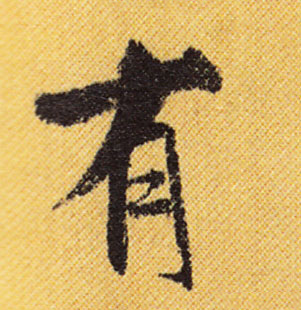
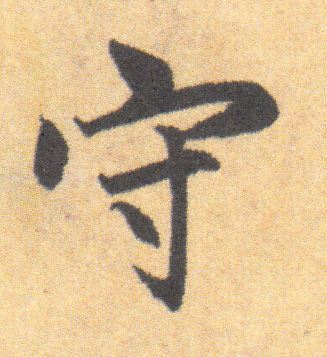
○ Chinese Calligraphy - Running Script
The flowing, gentle rhythm of running script makes it the most suitable form of calligraphy for "crisis de-escalation exercises." When writing, you can deliberately slow down each stroke by 201pT3T compared to your usual speed to train your body to enter a cooling rhythm.
- Written words:“"Wait a minute," "Stop for five seconds," "I'm here."
- Writing Tips:Pause for half a second at the last stroke of each character, letting the pause of the hand become a pause of emotion.
- Practice method:When you're at the brink of a crisis, just write three words—not for aesthetic reasons, but simply to slow things down.






○ Art-guided activity: A "cooling-down ladder" for emotions“
Draw a structure on paper that looks like a staircase—from top to bottom, the steps gradually become wider and more stable.
The top layer reads "My emotions are about to explode," the middle layer reads "I can still stop for a bit," and the bottom layer reads "I've calmed down a little."
Then write down a useful demotion phrase for each level, such as "stop for five seconds," "take a sip of water," or "call your name three times to bring yourself back."
After you finish drawing, don't rush to explain it; instead, observe the entire staircase.
This ladder reminds you that emotions don't only have a top level; you can always move down a little bit, and you already have the methods to do so.
Please log in before submitting your drawings and feelings.
○ 1275. Crisis De-escalation: Log Guidance Suggestions
① Write down the situation and trigger point where you were "almost out of control" the most recent time.
② Write down the three sentences you most needed someone to say at that moment (these will become your personal downgrade phrases).
③ Record the "three-step downgrade method" that you are willing to use in the future.
Please log in to use.
A crisis is not a failure, but rather an emotional signal that "I can't hold on any longer."
When you learn to downgrade, you are not suppressing yourself, but learning to protect yourself.
 EN
EN  ZH
ZH  ES
ES  FR
FR  JA
JA