

Lesson 13: Perfectionist Anxiety – “Imperfection equals failure”
Duration:90 minutes
Topic Introduction:Perfectionism isn't just about "pursuing high standards," but rather a constant internal pressure—"I must be the best, or I'll be rejected." This lesson helps you recognize the psychological trap of "all-or-nothing thinking," learn the "good enough" principle, and find a balance between continuous effort and gentle relaxation.
○ Three Modes of Perfectionist Anxiety
- Achievement-oriented perfectionism:Fear of failure and a habit of self-blame.
- Interpersonal perfection:Fear of disappointing others and excessive concern about their opinions.
- Moral perfectionism:They are demanding and always feel that "it's not good enough".
Lesson 13: Perfectionist Anxiety – “Imperfection equals failure” 🎧 Click to watch/listen to the reading
Perfectionist anxiety often masquerades as "high standards" and "taking responsibility for oneself." On the surface, you simply want to do things well; but deep down, there exists a hidden and harsh equation: **anything not perfect equals failure**. This equation weighs heavily on you before you even begin, keeps you highly tense during the process, and leads to constant review afterward, leaving almost no real moments of relaxation. Perfectionism is not the same as pursuing excellence. Pursuing excellence means effort, adjustment, and growth, while perfectionism is more like a defense mechanism: as long as I'm flawless, I won't be criticized, blamed, or abandoned. The problem is, reality never cooperates with this strategy. Once the standard is set as "must be perfect," anxiety becomes an inevitable byproduct. A typical manifestation of perfectionist anxiety is extreme sensitivity to mistakes. A small error, a setback, will be quickly magnified into a denial of self-worth. "How could I make such a mistake?" "Others must think I'm incompetent." "This shows I'm simply not good enough." In this internal logic, behavior and identity are tightly bound together: not doing things well equals "I'm bad." A more subtle point is that perfectionism often leads to procrastination. Because once you start, you face potential imperfections, so the brain chooses to avoid risk with phrases like "I need to prepare more" or "I'll wait until I'm in a better state." Superficially, it's waiting for the optimal moment, but actually, it's avoiding the feeling of failure. The first step in recognizing perfectionist anxiety is to understand the equation itself. You can ask yourself: "Does imperfection really equal failure?" In most cases, the answer is no. Real-world learning, collaboration, and growth almost all occur within imperfection. The real issue isn't whether things are done perfectly, but whether you allow yourself to be in the process. Next, practice shifting your "judgment standard" from the result to the process. For example, instead of just asking "Am I good enough?", ask "Have I put in reasonable effort?" and "Am I trying and revising?" This shift isn't lowering standards, but making them closer to how humans actually function. At the same time, practice being open to "good enough." A 70% completion rate doesn't mean being perfunctory; it often means sustainability. Many long-term, stable abilities are not built through repeated perfect bursts of performance, but rather through continuous, imperfect, yet progressive actions. As you gradually loosen the belief that "perfection equals security," your anxiety will also change. You no longer need to protect yourself with harshness, but begin to believe that even with flaws, you can still be accepted, corrected, and allowed to continue moving forward. Imperfection is no longer evidence of failure, but a normal marker of living, learning, and growing.
○ Audio - Perfect Breathing Training for Letting Go
Please play the audio track and follow the instructions to complete the "Release Breathing": As you inhale, imagine "I did my best," and as you exhale, imagine "I allow myself to be imperfect." Each breath is a reconciliation with anxiety.
○ Eastern Tea Therapy: Chrysanthemum and Goji Berry Balancing Tea
Recommended reasons:Chrysanthemum soothes the liver and improves eyesight, while goji berries replenish qi and blood, making them suitable for those who are under constant stress and overwork their brains. They can alleviate the feeling of "thinking nonstop."
practice:Steep 3 chrysanthemums, 5 goji berries, and a little honey in hot water for 5 minutes.
○ Stable Dietary Therapy - Lemon and Kelp Cold Salad (ID13)
When the body feels hot or the mind is in a state of hypervigilance, cold dishes can provide instant cooling and soothing. Kelp, rich in minerals, helps stabilize nerve conduction, while the refreshing tartness of lemon helps awaken the senses without being overwhelming. This cold dish is suitable for consumption during periods of mental tension or hot weather, helping the body return to a balanced and refreshed state.
Open Recipe
◉ Japanese Food Therapy: Cold Lemon and Kelp Salad (ID 13)
This is a refreshing side dish that can instantly awaken the senses. Kelp (seaweed) is rich in minerals, bringing a sense of depth and stability like the ocean, while the bright sourness of freshly squeezed lemon juice can quickly cut through the chaotic thought circuits in the brain. When you feel hot in the head, your mind is stuck, or you are inexplicably irritable, this refreshing and cool salad can help cool down your mind like a cold compress, restoring clarity and calmness.
Qingli Head Regulate irritability Produces body fluids and quenches thirst
I. Recommended Dietary Therapy and Reasons
Recommended dishes:Lemon and kelp salad (ID 13)
Recommended reasons:Anxiety and stress often cause the body to exhibit "false heat" symptoms, such as dry mouth, flushed face, and red ears. The sourness of lemon has an astringent effect, which can quench thirst and calm overactive physiological reactions; the alginic acid and minerals in kelp help stabilize the nervous system. This dish, through the dual effects of "sour stimulation" and "chewing pleasure," forcibly pulls attention back to the present moment.
2. Recipe and Method
Recipe (1–2 servings):
- Dried kelp strips (or salted kelp strips) 10–15 g
- Juice of 1/2 fresh lemon
- A little lemon zest (for added flavor)
- 1 tablespoon of light soy sauce
- Add 1 tablespoon of drinking water or broth (to dilute the soy sauce).
- Add 1/2 teaspoon of sugar or honey (to neutralize the sourness).
- An appropriate amount of roasted white sesame seeds
- A little minced ginger (to balance the cooling properties, optional)
practice:
- Processing kelp:If using dried kelp strips, soak them in cold water for 10 minutes beforehand, then wash and drain. If using salted kelp, wash it several times to remove excess salt, cut it into thin strips, blanch it for 2 minutes, then rinse it in cold water and drain.
- Prepare the sauce:In a bowl, combine freshly squeezed lemon juice, soy sauce, water, sugar (or honey), and a little minced ginger, stirring until the sugar dissolves.
- mix:Place the drained kelp strips into a large bowl, pour in the prepared sauce, and mix well.
- Seasoning and cooling:Refrigerate for 15–20 minutes to allow the kelp to absorb the aroma of lemon; the low temperature will enhance its crisp texture.
- Plating:After serving, sprinkle with white sesame seeds and a little bit of freshly ground lemon zest to enhance the visual refreshing feel.
3. Small rituals for body and mind
While making it, focus on the action of squeezing lemon juice, watch the juice drip, smell the strong sour aroma, and tell yourself, "This aroma is purifying my mind."“
When eating, focus on the soft "crunching" sound as you bite through the kelp strips. This rhythmic chewing sound (bone concentration) has a natural stress-relieving effect.
The moment you feel the sour taste explode on your tongue is a signal that your body is regaining its vitality.
4. Dietary Therapy Experience Record
- Record your physical sensations while consuming the product, especially whether you experience a "cooling" or "relaxing" sensation in your head.
- Observe whether the furrowed brows naturally relax during the chewing process.
- Record the degree to which thirst and irritability are relieved after consumption.
V. Instructional Videos (approximately 3–5 minutes)
◉ Video Title:Lemon and kelp salad - a refreshing moment to awaken your senses.
6. Precautions
- For those with excessive stomach acid:Please reduce the amount of lemon juice you use, or consume it after meals to avoid irritating the gastric mucosa on an empty stomach.
- People with thyroid problems:Kelp is high in iodine, so patients with hyperthyroidism need to strictly follow their doctor's advice to control their intake, or use cucumber strips instead of kelp.
- Use fresh lemons whenever possible, as bottled lemon juice often lacks the invigorating aroma of natural essential oils.
hint:This dietary therapy focuses on regulating emotions through taste stimulation and is not a substitute for medical treatment. If you have digestive system disorders, please consume acidic foods with caution.
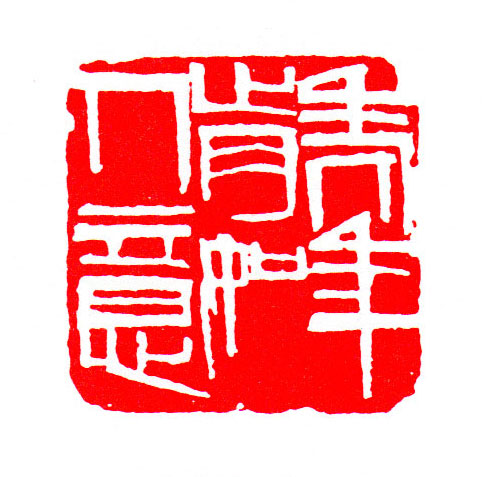
○ Seal Carving Practice Suggestions • Lesson 13: Perfectionist Anxiety – “Imperfection Equals Failure”
The seal carving practice in this lesson is designed to break the mindset of "only one success is possible," helping you experience the security of allowing deviations and continuous correction.
- Introduction to the characteristics of seal carving:
Seal carving itself involves refining and adjusting the knife; it is never a one-time process, making it naturally suitable for practicing imperfect techniques. - Written words:
Old age may be as one wishes
- Psychological Intention:
Writing "It's okay even if it's incomplete" is about loosening the belief that "failure is dangerous" and establishing more realistic safety standards. - Knife skills:
Accept the slight unevenness of the lines; do not rush to cover or deny them, but allow them to exist. - Emotional transformation:
Transform the fear of making mistakes into trust in the ability to correct them.
🎨 Image Healing: The Imperfect Circle
Draw a hand-drawn circle, allowing it to be neither perfectly symmetrical nor completely closed. Then fill the circle with colors and lines representing your "true self." As you gaze at this drawing, whisper to yourself, "I allow myself to be imperfect."“

Lesson 13: Allow yourself to feel anxious right now, instead of forcibly suppressing it.
Objective: To make "anxiety" a permitted feeling, rather than an enemy that must be eliminated immediately.
Steps: Draw a circle, write "Anxiety" inside the circle and "I" outside the circle. Keep the two words a certain distance apart but still connected. Use a color gradient to represent the action of "allowing"—from a tense dark color to a gentle light color. Finally, write a sentence below the drawing: "Anxiety is just passing through, and I am not it."“
Please log in before submitting your drawings and feelings.
○ 13. Suggestions for using a perfectionist anxiety journal
① In what aspects do I demand "perfection" from myself?
② When I fail to do something, what are the most common critical statements that come to mind?
③ Do these standards come from myself, others, or culture?
④ Write down my past experiences of being "imperfect but still accepted".
⑤ One thing I allowed myself to let go of today is ______.
⑥ Tomorrow's small action: Do something that's "good enough for 70 points".
Please log in to use.
Perfection is not the goal; simply being alive is the wholeness of life.
 EN
EN  ZH
ZH  ES
ES  FR
FR  JA
JA