

Lesson 131: High-Frequency Heart Rate Monitoring and Psychological Dependence
Duration:70 minutes
Topic Introduction:
Many people experiencing panic or high anxiety develop a habit of "frequent heart rate monitoring": constantly checking their pulse, looking at their watch, and staring at their phone's heart rate app.
What appears to be self-protection is actually the brain establishing a false connection that "safety depends on monitoring."
This lesson will guide you to understand the formation mechanism of this dependence, the psychological logic behind it, and how to gradually reduce the control that heart rate monitoring has over your emotions.
Why can't I live without heart rate monitoring? (Core Knowledge)
- The illusion that surveillance equals security:The brain believes that "as long as you stare at the numbers, you can avoid danger."
- Instant reassurance reinforces dependence:Seeing a normal heart rate → feeling relieved → forming a habit cycle.
- Anxiety drives up risk expectations:Fearing unexpected events, they constantly check to reduce uncertainty.
- Amplified bodily sensations:The more they monitor, the more sensitive they become; the more sensitive they become, the more afraid they become, creating a closed loop.
Lesson 131: High-Frequency Heart Rate Monitoring and Psychological Dependence (Click to listen to the reading and view the content)
During the recovery process from panic and anxiety, some people gradually develop a high dependence on heart rate data. Whether it's a smartwatch, fitness tracker, or a mobile app, their heart rate is frequently checked to see if it's normal, high, or fluctuating abnormally. This high-frequency monitoring often brings temporary reassurance at first, as the data seems to provide objective evidence. However, over time, it quietly transforms into a new source of insecurity. The problem isn't with the tools themselves, but with the heart rate data being given excessive meaning. When the brain becomes accustomed to judging its own state through numbers, the body's subjective feelings are constantly questioned. You might feel okay and immediately tense up upon seeing a high number, or you might feel unwell and repeatedly check the data to confirm if the danger is real. This constant comparison keeps attention glued to the body, keeping the alert system constantly on the verge of activation. It needs to be understood that heart rate is a highly volatile indicator, affected by posture, emotions, caffeine, sleep, and even the content of your thoughts. When you treat it as a judge of safety, any natural fluctuation can be misinterpreted as abnormal. Over time, psychological dependence develops, leading to a lack of peace of mind without data, and amplified anxiety the moment the device is unavailable or the data is abnormal. The first step to breaking this dependence is recognizing that data is merely a reference, not a judgment; it cannot predict panic or prevent attacks. The second step is to gradually reduce the frequency of checking, for example, by setting fixed times to check instead of constantly refreshing, allowing the brain to relearn that stability can be maintained without relying on immediate confirmation. The third step is to shift the focus from numerical values to functional experiences, such as whether I can walk, talk, or concentrate—these real abilities reflect safety far better than any heart rate number. The fourth step is to allow the data to exist without interpreting it; when seeing elevated values, practice not immediately assigning meaning, letting it pass like background noise. It needs to be understood that breaking free from psychological dependence is not about discarding tools but about rebuilding a sense of agency. When you stop entrusting safety to external indicators and instead return it to your own experience, the body and brain will gradually regain coordination. True stability does not come from perfect numbers but from being able to continue living even without looking.
▲ AI Interaction: How would you feel if you couldn't check your heart rate today?
Anxiety? Loss of control? Or fear of something going wrong?
These feelings stem from the old logic that "no monitoring = danger".
We can practice together: let your body speak for itself, instead of letting numbers dictate how you feel.
Continuous monitoring keeps the brain in "alert mode." Music can break this cycle, bringing attention away from the numbers and back to the body.
Let the melody be a transitional space for you to temporarily put aside your monitoring.
○ Eastern Healing Tea: Mulberry Leaf and Mint Tea
Recommended reasons:Cooling and ventilating can reduce chest tightness and soothe palpitations caused by high-frequency monitoring.
practice:Steep 2g of mulberry leaves and 1g of mint in 90℃ hot water for 3 minutes, then drink slowly to make your breathing easier.
○ Stable Dietary Therapy - Tricolor Quinoa Vegetable Salad (ID131)
In the phase of loosening psychological dependence on heart rate data and external monitoring, the body needs a refreshing and tangible nourishment. Tricolor quinoa provides stable and sustained energy, while a variety of vegetables offer rich texture and a satisfying chewing experience, allowing attention to naturally return to the senses in the present moment. This salad is suitable for consumption during daily periods of reduced monitoring, helping the body confirm safety and satisfaction through the authentic experience of eating rather than abstract numbers. It symbolizes reclaiming control from screens and data, returning it to life itself.
Returning to authentic feelings
Stable energy
Open Recipe
◉ Dietary Therapy: Three-Color Vegetable and Quinoa Salad (ID 131)
Quinoa is rich in high-quality protein and dietary fiber, providing a feeling of fullness while remaining relatively light. Pairing it with three or more colors of vegetables (such as red and yellow bell peppers, cucumbers, and purple cabbage) not only enhances the visual appeal but also helps in the comprehensive intake of various phytonutrients. Seasoned with olive oil, lemon juice, or a small amount of apple cider vinegar, it creates a "lightweight energy bowl" without relying on heavy sauces, perfect for those moments at lunchtime or in the evening when you need a refreshing and filling meal but don't want anything too greasy.
Refreshing and filling High in fiber Colorful Phytochemicals
I. Recommended Dietary Therapy and Reasons
Recommended dishes:Three-color quinoa salad (ID 23)
Recommended reasons:This salad uses quinoa instead of traditional refined grains, which can reduce rapid fluctuations in blood sugar; the colorful vegetables provide various antioxidants and fiber. The main source of oil is olive oil, which is closer to the principles of a cardiovascular-friendly diet. It is suitable as a "light staple food" before or after studying or working, and can also be used to replace part of rice or pasta at dinner.
2. Recipe and Method
Recipe (1–2 servings):
- Quinoa 50–60 g (dry weight)
- 150–180 ml of water (for cooking quinoa)
- 1/4 red bell pepper, diced
- 1/4 yellow bell pepper, diced
- Cut 1/3 to 1/2 of a small cucumber into small cubes or half-moon slices.
- A small amount of purple cabbage, finely shredded (optional)
- Use 4–6 cherry tomatoes, cut in half (optional)
- 1–1.5 tablespoons extra virgin olive oil
- 1–2 tablespoons lemon juice (or a small amount of apple cider vinegar)
- a pinch of salt
- A pinch of ground black pepper (optional)
- A small amount of chopped parsley or cilantro (optional, for added flavor).
practice:
- Wash the quinoa gently with water several times to remove surface saponins, then drain and set aside.
- Add water and quinoa to a small pot, bring to a boil over high heat, then reduce to low heat, cover and simmer for about 12–15 minutes, until most of the water is absorbed and the quinoa grains become plump and soft.
- After turning off the heat, keep the lid on and let it sit for 5 minutes. Then open the lid, gently break up the quinoa with a fork, and let it cool naturally to lukewarm or room temperature.
- Prepare the vegetables: dice bell peppers and cucumbers, shred purple cabbage, and halve cherry tomatoes; you can adjust the types and proportions of vegetables according to your personal preferences.
- In a large bowl, combine the cooled quinoa and all the vegetables, then add olive oil, lemon juice (or apple cider vinegar), a pinch of salt, and black pepper.
- Gently mix with a fork or spoon, being careful not to overcrush the quinoa. Finally, you can sprinkle a small amount of chopped parsley or cilantro on top as a garnish.
- It can be eaten immediately, or refrigerated for 15–30 minutes to allow the flavors to meld together and enjoy as a refreshing salad.
3. Small rituals for body and mind
When cutting vegetables of different colors, you can deliberately slow down and pay attention to the brightness and shape of each color, allowing your vision and attention to be detached from the screen and information flow.
When mixing a salad, observe the process of quinoa and colorful vegetables being "evenly embraced," and imagine that you are preparing a bowl of stable energy and gentle emotions for yourself.
When you take the first few bites, you can gently tell yourself, "I am replenishing my body with slow and steady energy." Let the eating process become a confirmation of self-care.
4. Dietary Therapy Experience Record
- Record the time of consumption (lunch/dinner/before or after working overtime) and the mental and emotional state at the time.
- Observe the duration of satiety 2–3 hours after consumption, and whether it causes less sudden fatigue or drowsiness compared to refined staple foods.
- If you replace part of your refined staple food with this salad multiple times within a week, you can record changes in bowel movements, bloating, and mood stability.
V. Instructional Videos (approximately 4–7 minutes)
◉ Video Title:Three-Color Quinoa Salad: A Light Yet Powerful Bowl of Colorful Energy
6. Precautions
- Those with sensitive stomachs or prone to bloating should reduce the amount of quinoa they consume at one time and chew it thoroughly.
- For individuals who react strongly to raw or cold vegetables, some vegetables can be blanched briefly and then cooled before consumption.
- If you need to control the amount of oil, please reduce the amount of olive oil used appropriately, but it is not recommended to remove it completely, so as to ensure a certain level of satiety and flavor.
hint:This recipe is suitable as part of a light main course or side dish in your daily diet and does not replace professional nutritional or medical advice. If you have gastrointestinal issues or specific metabolic problems, please consult your doctor or nutritionist before adjusting your overall diet.
○ Seal Carving Practice Suggestions · Lesson 131: High-Frequency Heart Rate Monitoring and Psychological Dependence
The seal carving practice in this lesson aims to break free from the "compulsive monitoring" of physiological indicators. Frequent monitoring of heart rate often stems from an attempt to gain a sense of security through "control," but the heart is an autonomous organ, and excessive conscious intervention can disrupt its natural rhythm. Seal carving requires "the knife moving and the stone crumbling," trusting the feel rather than repeated measurements, which is the best metaphor for training "letting go."
- Introduction to the characteristics of seal carving:
Seal carving emphasizes "carving and polishing, then returning to simplicity." During the carving process, excessive embellishment and repeated checks (such as constantly stopping to see the effect) will destroy the "metallic and stone-like" quality of the lines. Learn to trust your intuition from the first cut and stop dwelling on it.
- Written words (seal text):
Qin Xin - Psychological Intention:
“"Concern" refers to worries and monitoring in one's heart. Constantly paying attention to one's heart rate is the greatest "concern." Inscribing these four characters is intended to remind oneself that the heart has its own wisdom and does not need your consciousness to act as a "supervisor."
- Knife skills:
practise“"Pushing Knife Method"”Instead of carefully cutting (like cautiously counting heartbeats), use a shovel to cut straight through the stone in one smooth motion. Feel the irreversible propulsion of the blade through the stone; this decisive momentum can overcome any hesitation or monitoring.
- Emotional transformation:
Transform that anxious urge to "check your watch/feel your pulse" into the downward stroke of the carving knife in your hand.thrustEvery moment I resisted looking was a deep inscription on the stone.

Image Healing: Traditional Mandala Imagery 131 · Invisible Rhythms
The circle closes naturally without your prompting; the flower blooms naturally without your command. Your heart is the same; it possesses wisdom older than your brain. Turn your gaze away from "monitoring," find peace in the stillness of the mandala, and trust in that invisible life rhythm.
Forget about surveillance, and you'll find true freedom.
◉ Gaze at the image twice, then slow your breathing to 6 seconds per cycle.
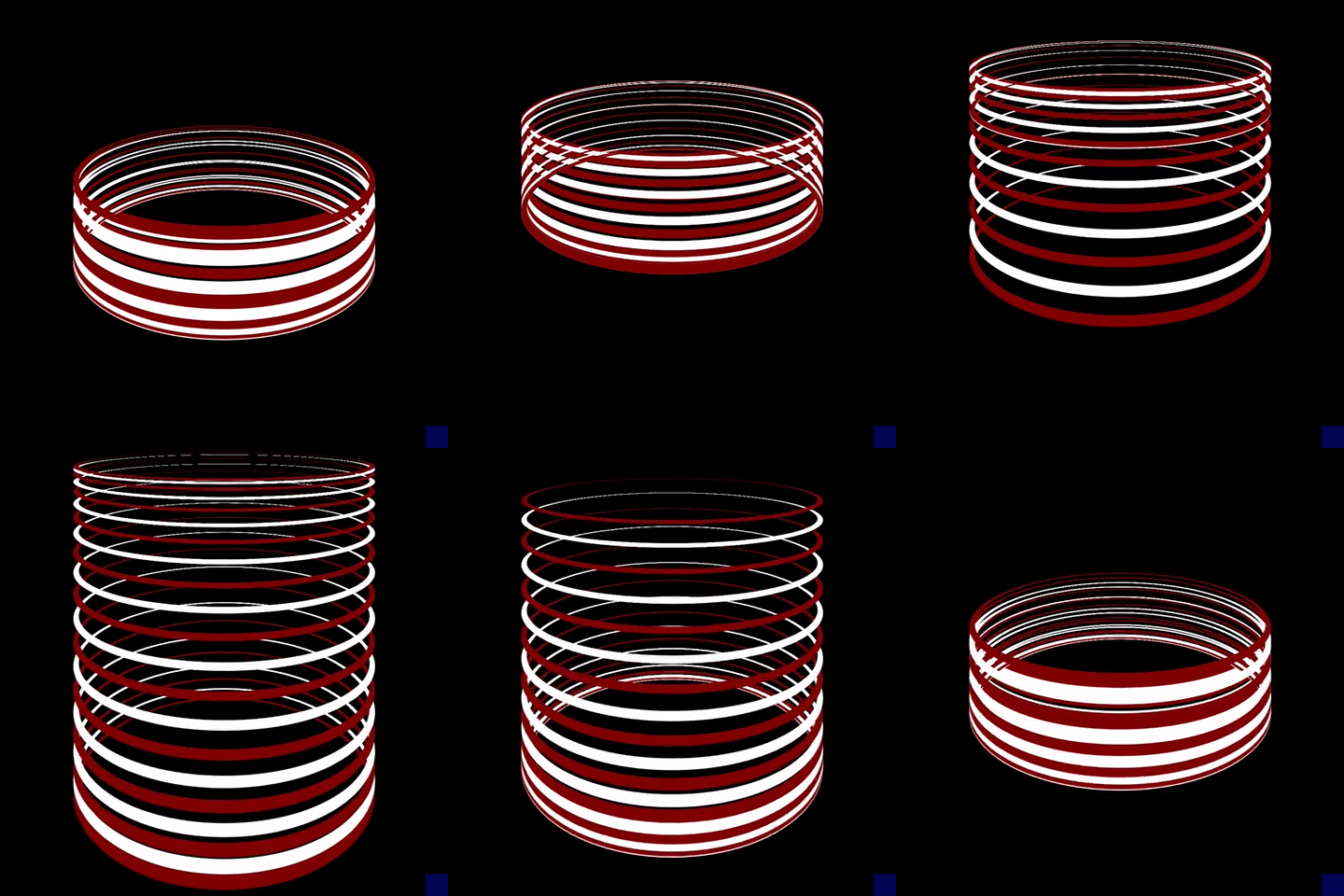
Lesson 131: Heart Rate Dependence - Guided Drawing
① Action guidance:Draw a constantly pulsating zigzag line, and then add smooth color blocks around it to symbolize "greater stability beyond numerical values".
② Action guidance:The canvas is divided into a "digital area" and a "body area," and the two are connected by a gradient color, representing the transition from monitoring to feeling.
③ Action guidance:Draw a slowly expanding halo, allowing yourself to feel the expanding safety zone, rather than being trapped by numbers.
Please log in before submitting your drawings and feelings.
○ 131. Heart Rate Dependence: Log-Guided Recommendations
① How frequently did I monitor my heart rate today? What emotions were behind it?
② At what moment did I realize that "the body is actually more stable than numbers"?
③ If the number of monitoring sessions for 10% is reduced, what am I most worried about? What is the probability that it will actually happen?
④ Write a new body belief: "I don't need numbers to prove I'm safe."“
Please log in to use.
Heart rate monitoring won't give you a sense of security—understanding your body will. You're moving from numbers back to life itself.
 EN
EN  ZH
ZH  ES
ES  FR
FR  JA
JA