

Lesson 1320: I'm not a bad kid, I'm just facing attention difficulties and emotional storms at the same time.
Duration:75 minutes
Topic Introduction:
Many children and teenagers experiencing disruptive mood disorder (DMDD) also struggle with attention deficit and impulse control difficulties (characteristics similar to ADHD). To others, you might be seen as "restless," "inattentive," "deliberately disruptive," or a "talkative brat"; but your own experience is closer: your mind feels like it's constantly jumping between different channels—what the teacher is saying, where you are in your homework, how high your emotions have risen—all crammed together, ultimately becoming a storm with no end in sight. This course will help you understand that attention deficit is not laziness, and emotional storms are not intentional, but rather a natural result of the brain's executive functions, emotional regulation system, and sensory sensitivity all being overloaded simultaneously. We will practice distinguishing between "I really don't care" and "I actually care but can't control myself," learning how to achieve a more suitable brain rhythm and emotional care for yourself. The course combines the gentle calming effects of aromatherapy drinks, the symbolism of "reducing excess burdens" from the Christian Fasting Diet, the steady writing practice of Humanist Script, and the gazing exercise that "a mandala is not about drawing something, but about looking at it," gradually replacing the label of "bad kid" with the true image of "a brain and heart that are desperately trying to hold on."
[arttao_Healing_Course_tts_group1320_1324]
▲ AI Interaction: Write a true record of a "day of mental chaos"
Think back to a recent day when you were particularly told that you "performed poorly" or had a "bad attitude"—perhaps at school, at home, in a tutoring class, or in a social setting.
Write down what happened that day step by step: your state when you woke up, whether you were already very tired before you arrived at the scene, and what your brain went through during the process (distraction, tension, anger, dazedness, wanting to escape).
Then, after each scene, add a sentence: "What was my attention and emotions going through at that moment?" For example: "I wanted to concentrate, but ten thoughts were running through my mind at the same time." "It's not that I wasn't listening, I was just too tired."“
Click the button below to rewrite that day into a "real brain documentary" with AI, instead of just leaving behind comments like "You messed up again."
○ When the brain and emotions are both overloaded: Music therapy
When you spend the whole day trying to control your attention and suppress your emotions, only to be accused of "deliberately" or "not cooperating properly," your brain and heart feel like a marathon runner who has run several laps but no one has seen them.
Choose a piece of music with a clear rhythm but not too stimulating, giving you a space to "slow down and just follow a rhythm".
In the music, gently tell yourself: "I'm not bad, I'm just trying too hard to fight against the unseen chaos." Allow your eyes to sting a little, your body to soften a little, and you don't need to prove anything anymore.
○ Aromatherapy Drink: Orange Blossom, Chamomile, and Lavender - Brain-Reducing Drink
Recommended reasons:Attention deficit and emotional storms often keep the nervous system in a complex state of "tension + distraction + alertness" for a long time. Orange blossom brings a feeling of being seen gently, chamomile relieves nervous tension, and lavender helps to gradually descend from a state of high arousal.
usage:Steep 1.5g of orange blossom, 2g of chamomile, and 1g of lavender in 90℃ hot water for about 4–5 minutes. While drinking, try to mentally complete the sentence: "Today I have difficulty concentrating and am easily emotionally volatile, not because I am bad, but because..." Let this drink witness your honesty, rather than just serving as an order to "be good."
○ Simple Grain and Root Vegetable Bowl (Christian Fasting Style)
In a world that constantly demands that you be "faster, more focused, and more mature," your brain has almost no chance to truly return to a "just right" rhythm.
The symbol of fasting is to temporarily set aside the excessive expectations that have been crammed in, leaving only the most essential question: What is truly necessary for me at this moment?
A simple meal consisting of whole grains, root vegetables, and a small amount of beans, without complicated seasonings or stimulation, quietly replenishes your basic energy—allowing your brain to not have to deal with blood sugar fluctuations, sensory confusion, and emotional storms at the same time.
While eating, tell yourself, "I don't deserve this food because I want to perform, but because I deserve to be taken care of." Let this most basic nourishment slowly loosen the knot in your heart that makes you "always have to be good and always be strong."
Basic Nourishment
Drop the label
Healing Recipes
/home2/lzxwhemy/public_html/arttao_org/wp-content/uploads/cookbook/lotus-soup.html(Please confirm that lotus-soup.html has been uploaded)
Psychological Mandala (Viewing)
Psychological Healing: Psychological Mandala - 67 Thoughts
A mandala is not about drawing something, but about observing it.
Imagine the center of the mandala as a brain that works hard but is often criticized; the outer lines symbolize various tensions such as homework, exams, social interactions, family expectations, teacher evaluations, and emotional fluctuations.
When you focus on the center, gently say to yourself, "This brain is always working, just in a different way."“
Then slowly examine the lines of the outer ring, and see how they simultaneously pull on the center, yet never quite define its full value.
During the viewing process, there is no need to solve any problems; it is simply a training exercise: shifting your focus from "the bad labels others have given me" back to "what I am actually experiencing," allowing your inner self-perception to be gradually corrected.
○ Italian Renaissance · Humanist Script
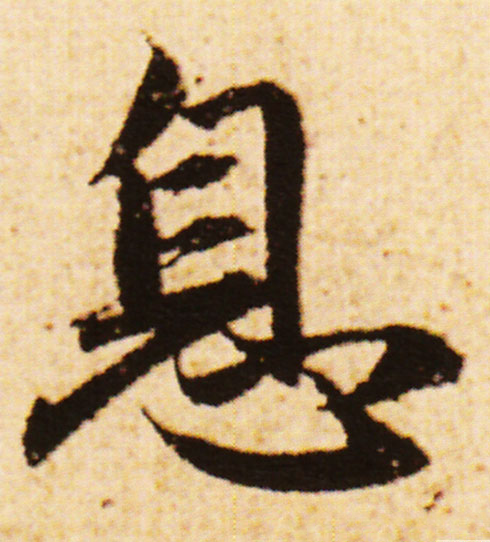
When you are repeatedly labeled as a "bad kid," "inattentive," or "troublemaker," you can easily start calling yourself that in your mind.
Humanist Script's even, clear, and humane font can help you rewrite who you are in a new tone: not a question, but someone who is standing shoulder to shoulder with you to face attention difficulties and emotional storms.
- Sentence writing:
- I am not a bad kid; I am facing attention struggles and emotional storms at the same time.
- I'm not a bad kid; I'm just facing both attention difficulties and emotional turmoil at the same time.
- Writing Tips:
- Please slow down and write these two sentences stroke by stroke, so that each letter stands firmly on the paper, as if it is defending you and bearing witness for you.
While writing, you can say to your past self in your heart: "I'm sorry, I used to join others in cursing you; from now on, I want to try to stand on your side."“







○ Be aware of the coexistence of difficulties and emotional storms: Guiding suggestions for art therapy
When your brain and emotions are battling at the same time, it's hard to explain yourself with just words; drawing can help you depict "how chaotic, tired, and stressed you are inside," giving you and those who understand you a shared visual reference.
I. A Two-Sided Brain Map: External Appearance and Internal Structure
- Draw a brain outline on a piece of paper, and write down what others see of you on the left half: distracted, procrastinating, forgetful, temperamental, argumentative, uncooperative.
- The right half depicts your true inner world: too many voices at the same time, emotions crashing in waves, high sensitivity to failure, and fear of being scolded again.
- Write a sentence below the painting: "Both sides are me, but no one ever really looks at the right side." Let the image defend your authentic experience.
II. The Tug-of-War Between Attention and Emotion
- Draw a horizontal line, write "Attention" on the left end and "Emotional Storm" on the right end.
- Use lines of different colors to represent: sometimes you try hard to hold your attention, but your emotions suddenly collapse; sometimes you are busy suppressing your emotions, but your attention is scattered into fragments.
- In the corner of the image, she wrote a gentle comment for herself: "I have been doing my best in this invisible tug-of-war."“
Please log in before submitting your drawings and feelings.
○ 1320. I'm Not a Bad Kid - Log Guidance Suggestions
① Write down the three labels that are most often attached to you in your life (e.g., lazy, bad-tempered, inattentive), and what misunderstandings these labels have caused you to have about yourself.
② Recall the most recent situation where you experienced "simultaneous difficulty in attention and emotional breakdown," and honestly describe what your brain and heart were going through at that time, instead of glossing over it with a simple "I messed up again."
③ Write a message to the version of yourself that was called a "bad kid," acknowledging what he/she was actually fighting against.
④ Complete the sentence: "I'm not a bad child, I'm just facing difficulties with attention and emotional turmoil at the same time; starting today, one small thing I'm willing to do for myself is..."“
Please log in to use.
You are never a "list of problems", but a person who struggles to live amidst a complex mind and emotional storms;
May this lesson help you slowly translate the accusation of being a "bad kid" back into a more truthful statement—I've worked hard and put in a lot of effort, and I deserve to be understood and supported.
 EN
EN  ZH
ZH  ES
ES  FR
FR  JA
JA