

Lesson 1327: A five-minute corner of my own where I can slowly come back
Duration:75 minutes
Topic Introduction:
For children and adolescents with disruptive mood disorder (DMDD), the world is often too noisy, too fast, too bright, and too close, and they can easily be swept away by their emotions. It's not that you don't want to be stable, but that there's no "pause button." Others expect you to "calm down immediately" and "behave right away," but your brain and nervous system can't stop at their pace. So, outbursts, screaming, crying, and running away become the only language you have left. This course will guide you to create your own "five-minute corner"—a small, physically accessible or mentally imagined space where you can take a step back from overstimulation, and then another, slowly pulling yourself back from the brink of collapse. It doesn't need to be big or particularly beautiful; it just needs to belong to you, be safe for you, not require you to perform, and where no one forces you to explain yourself. Together, we will learn how to use our bodily senses, breathing rhythms, fixed postures, visual focus, and external cues to create this "emotional buffer zone." We will also incorporate the calming rituals of 24 types of Eastern healing teas, the nourishing symbolism of 40 types of Chinese food therapy soups, the steady rhythm of clerical script calligraphy, and the inner focus exercise of "a mandala is not about drawing something, but about observing." This will give you a real or symbolic place to return to, stop, recombine, and then face the world again when you feel overwhelmed.
[arttao_Healing_Course_tts_group1327_1331]
▲ AI Interaction: Write your own "Five-Minute Corner Instruction Manual"“
Close your eyes and recall the last time you were on the verge of an emotional outburst. What kind of space did you most want to hide in: a corner? Beside a chair? The edge of the bed? The open space behind a door? By the window? Or just a place where you could bury your head?
- ① Write down three conditions your ideal corner should have: Quiet? Warm? Soft lighting? Water nearby? No one talking?
- ② Write down the rules you want others to know: for example, "These five minutes are not meant to disrespect you, but to prevent me from losing my temper."
- ③ Write a sentence you would like to tell yourself here: "I am here to come back, not to escape."“
Click the button below to work with AI to turn your "five-minute corner" into actionable instructions, letting others know how to support you, not misunderstand you.
○ Five-Minute Corner: Music Therapy
Choose a piece of music that is not stimulating, not jarring, and has a simple, repetitive melody, and set it as your "corner signal." When it plays, your body will gradually learn: it's time to enter the safe zone.
You can do anything in five minutes to get back into your body: breathe slowly, sway gently, hug a pillow, sit and daydream, stare at a small light—anything goes. The music simply helps you go from being "pushed along" back to "walking on your own."
While listening to this music, please silently repeat in your mind: "I am returning to my body. I am not out of control. I am just slowly coming back."“
○ Eastern Healing Tea - Lily and Jujube Scented Soothing Tea
Recommended reasons:Lilies have a symbolic power to soothe the mind and body, while dates bring warmth and help you return from a state of chaos to internal stability.
usage:Steep 2g of lily bulbs and 2 red dates in boiling water for 5 minutes. Drink slowly before or after your "five-minute break," letting the temperature remind your body that you are recovering, not being abandoned.
○ Lotus Seed and Lily Bulb Heart-Nourishing Soup (Chinese Food Therapy - Soup)
When you're constantly in an environment of misunderstanding, demands, and pressure, your nerves are like a taut bow. A five-minute break is the perfect time to gently lower that bow.
The combination of lotus seeds and lilies symbolizes "turning off external noise and allowing the heart to be refreshed."
Once you're in a corner, slowly sip your soup, letting your body receive the message: "Nobody expects you to perform now, nobody's waiting for you to say the right thing, nobody's watching you."“
These five minutes are not a time of weakness, but a time to reconnect your mind and body.
When you leave the corner, it's not an escape, but rather a re-emergence in a more stable state.
Suitable for recovery after emotional exhaustion
Symbolizing a return to the rhythm of the body
Healing Recipes
/home2/lzxwhemy/public_html/arttao_org/wp-content/uploads/cookbook/hotate-yaki.html(Please confirm that hotate-yaki.html has been uploaded)
Psychological Mandala (Viewing)
Psychological Healing: Psychological Mandala - 78 Thoughts
A mandala is not about drawing something, but about observing it.
Imagine your "five-minute corner," then gaze at the center of the mandala and treat it as that spot:
——Little
—Not to be forced
—Won't get scolded
No one will suddenly barge in.
You can breathe quietly.
You can come back slowly.
Look at the center, and let yourself retreat from the chaos, noise, and pressure of the outer circle back to the inner island, circle by circle.
Every breath felt like a message to myself:
“"I'll come back here first, and then decide how to face the outside world."”
A mandala is a corner in your mind that you can open at any time.
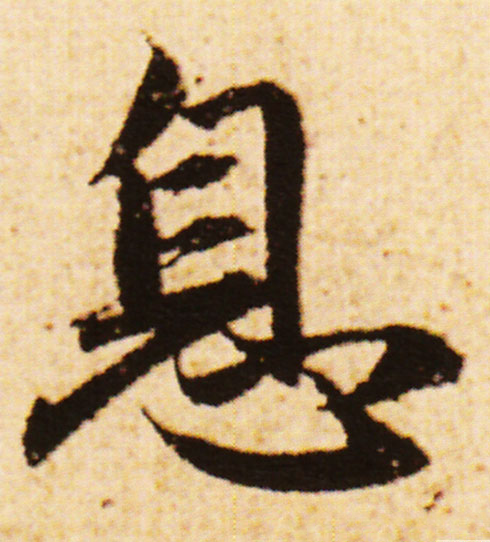
○ Chinese Calligraphy - Clerical Script (Write a declaration for a small corner)
The slow rhythm and broad strokes of clerical script will automatically slow your breathing, lower your shoulders, and relax your jaw when you write.
It's like entering your own emotional corner—not to hide away, but to reconnect with yourself.
- Sentence writing:
- This little corner, which lasts for five minutes, is where I come back.
- This five-minute corner is the place where I come back to myself.
- Writing Tips:
- With each stroke of the pen, he took a breath; with each stroke of the pen, he exhaled.
When you're writing, imagine you're building a small house for yourself: stable, sturdy, and not easily knocked down.
Write each word as a small ritual of "returning to yourself".







○ Five-Minute Corner: Art Therapy Practice
If reality doesn't give you space, then let's build one on paper, let your heart live in it first, and then slowly extend it into your life.
I. Small Corner Floor Plan
- Draw a minimalist corner: a corner of the wall, a chair, and a lamp.
- Write down the three conditions you need next to it: quiet / a soft cushion / dim light / undisturbed.
- This is the basic sketch you will use to discuss with your family or teachers in the future.
II. Returning to one's own route map
- Draw a route: from "external stimuli" to "my corner".
- Mark the three key steps, for example: leave → sit down → breathe → drink tea → return.
- Let your body and emotions know that this is a path you can take at any time, instead of rushing to escape after an outburst.
Please log in before submitting your drawings and feelings.
○ 1327. Five-Minute Corner: Suggestions for Guiding Your Journal Log
① Write down what your ideal five-minute corner would look like (location, lighting, sound, whether you are alone).
② Describe the place you most wanted to escape to when you were on the verge of an emotional breakdown.
③ Complete the sentence: "I needed five minutes in a small corner because I was..."“
④ Write down a sentence you wish someone would say to you, something that would make you want to step into that corner rather than feel ashamed.
Please log in to use.
This world is often too fast-paced, and what you need is a space where you can slow down. May this lesson help you build that five-minute little corner that's right in your heart.
It allows you to find your way back every time you leave yourself.
 EN
EN  ZH
ZH  ES
ES  FR
FR  JA
JA